


For many travelers, learning how to use the London Underground feels intimidating before the first ride even begins. When I first approached a Tube station, I paused outside the entrance and questioned whether I understood enough to continue. That hesitation happens often, especially for visitors who come from cities where public transport feels simpler or less layered.
Why the Map Creates Unnecessary Doubt
The Underground map often triggers confusion because it looks dense and unfamiliar. Bright colors, intersecting lines, and long station names can overwhelm first-time readers. Many people believe they need to understand the entire system before entering. In reality, the map only needs to guide one journey at a time. When used that way, it becomes far less intimidating.
For travelers who want a broader understanding of how buses, trains, and airport connections work together, this guide fits naturally into the complete London transport guide for first-time visitors.
How the Size of London Affects Confidence
London’s scale shapes how visitors think about transport. When a city feels enormous, movement feels risky. Travelers worry about missing stops, choosing the wrong direction, or ending up somewhere unfamiliar. These fears feel reasonable at first, but they usually disappear after the first successful ride. The Underground supports gradual learning rather than perfection.
How the System Guides You at Every Step
The London Underground relies on repetition rather than memory. Clear signs appear at entrances, corridors, platforms, and exits. Digital boards display destinations and waiting times. Audio announcements reinforce visual information. If you miss one sign, another appears almost immediately. This design helps visitors who feel unsure about how to use the London Underground without requiring constant attention.
Fear of Choosing the Wrong Train
Many first-time users worry about boarding the wrong train or standing on the wrong platform. That fear often comes from not knowing how forgiving the system is. Taking the wrong train rarely creates serious problems. Most mistakes add only a few minutes. Stations allow easy direction changes, and staff members regularly assist visitors who ask questions.
How Pre-Trip Warnings Increase Anxiety
Before arriving, travelers often hear warnings about crowds, peak hours, and strict rules. While these warnings contain some truth, they often lack context. Crowds depend on time and location. Rules remain simple once you see them in practice. Overexposure to warnings can make learning how to use the London Underground feel harder than it actually is.
A Transport System Designed for Everyone
The Underground serves daily commuters, tourists with luggage, families with children, and older travelers. It does not exist only for locals. Its success depends on helping people who arrive with no prior experience. That design principle works in your favor as a visitor trying to understand how to use the London Underground efficiently.
Why Experience Teaches Faster Than Preparation
Many travelers attempt to master the Underground before using it. Confidence rarely comes from studying maps alone. It grows through experience. The first ride often feels slow and cautious. The second feels easier. By the third, patterns start forming naturally. Line colors, station layouts, and signage begin to feel familiar without effort.
How Confidence Builds Quickly
Most visitors feel surprised by how fast comfort replaces fear. What felt confusing on the first day often feels routine soon after. Once that shift happens, the Underground transforms from a source of stress into a practical tool. It allows you to explore London without constant planning or hesitation.
Setting the Right Expectations Before Moving Forward
If uncertainty still exists, that is normal. Almost every first-time visitor starts at this point. This guide aims to remove hesitation and replace it with clarity. You do not need perfection to succeed. A basic understanding and the willingness to start matter far more. Everything else follows naturally as you continue learning how to use the London Underground.
What the London Underground Really Is and How It Works
Understanding the Underground as a System, Not a Maze
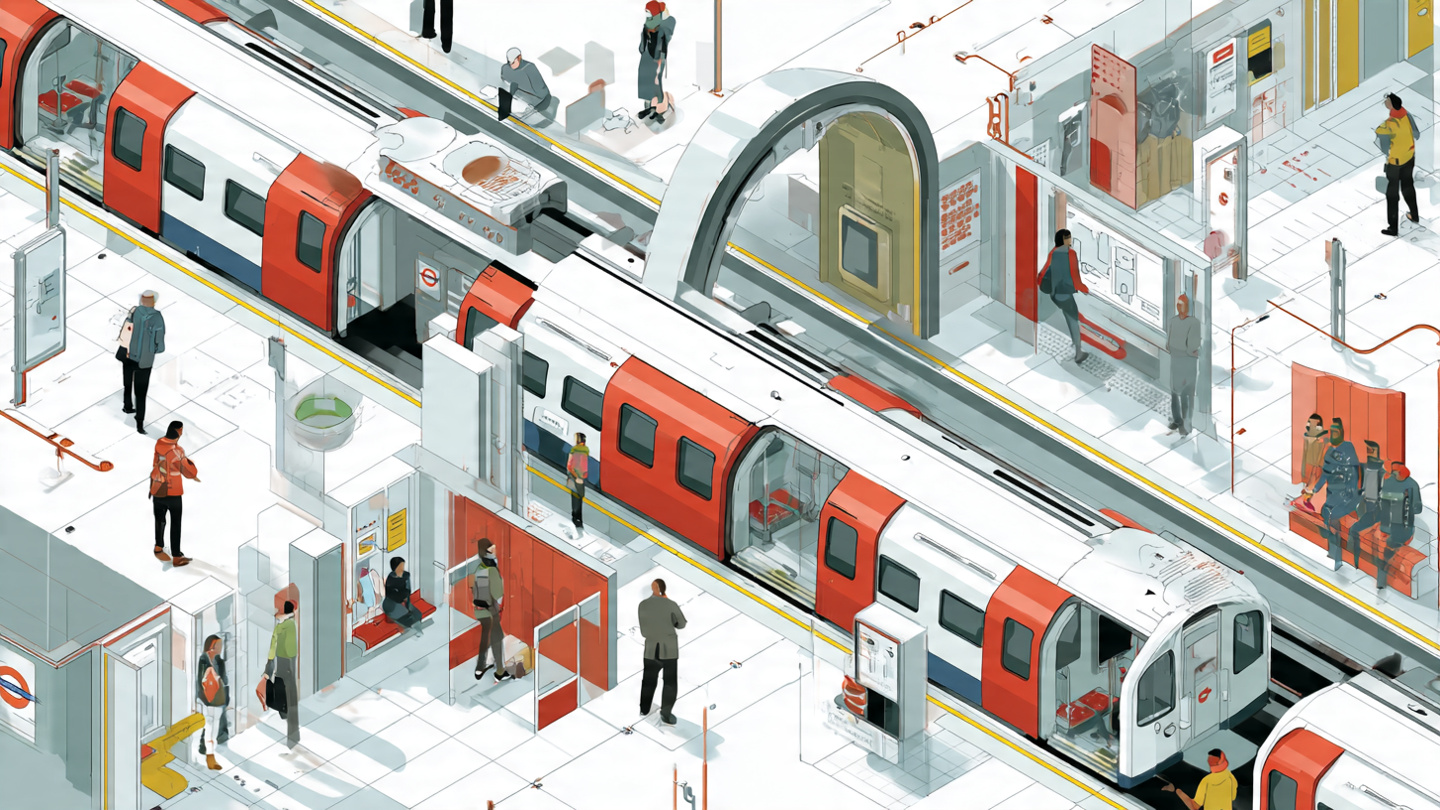
When people think about how to use the London Underground, they often imagine a complicated maze beneath the city. In reality, the Underground works more like a network of clearly defined paths. Each path has a name, a color, and a direction. Once you understand that simple structure, the system becomes far easier to navigate.
The Underground does not require you to know every station or line. It only asks you to understand where you are starting, where you want to go, and which line connects those two points. Everything else exists to support that decision. This mindset shift removes much of the pressure that first-time visitors feel.
What a Tube Line Actually Represents
Each line on the Underground represents a specific route that trains follow back and forth throughout the day. These routes do not change. A train on a specific line will always stop at the same stations in the same order. That consistency allows passengers to rely on signs and maps instead of memory.
Lines use colors and names to stay recognizable. The color helps your eye track the route on a map, while the name helps you confirm directions on signs and platforms. When learning how to use the London Underground, focusing on the line name and final destination matters more than memorizing station lists.
Why Direction Matters More Than Station Names
One of the most important concepts to understand is direction. Underground trains do not operate as loops. They travel in two opposite directions along the same line. Each direction gets defined by its final station. Signs and announcements always show that end station.
Instead of thinking, “Is this the right train?” it helps to think, “Is this train going toward the station I need?” That single question solves most beginner confusion. When you follow direction instead of individual station names, navigation becomes simpler and more reliable.
How Stations Fit Into the Network
Stations act as connection points within the system. Some stations serve only one line. Others connect multiple lines. Larger stations may look complex at first, but they follow clear internal logic. Signs guide you from entrances to platforms using line colors and directions.
When switching lines, you do not leave the system. You follow signs marked with the new line color and direction. This process allows smooth transfers without exiting through ticket barriers. For visitors learning how to use the London Underground, understanding that transfers happen inside stations reduces stress.
Zones Explained Without Overthinking
Zones exist to help calculate fares, not to guide movement. Many visitors worry about zones more than necessary. While zones affect pricing, they rarely affect how you travel day to day. You do not need to choose trains based on zones. You choose trains based on destination and direction.
Most central attractions sit within the inner zones. For first-time visitors, journeys often stay within a small area. As long as you enter and exit stations correctly, the system handles fare calculations automatically. This design allows you to focus on travel rather than pricing details.
Why the Map Does Not Match Real Geography
The Underground map does not reflect real distances or directions above ground. Designers intentionally distort geography to make connections clearer. Stations that appear close on the map may sit far apart in reality, while distant-looking stations may stand next to each other.
This design choice helps riders understand how lines connect without clutter. When learning how to use the London Underground, treat the map as a connection guide rather than a navigation tool. Walking maps and street-level apps handle geography better.
How Trains Arrive and Depart
Trains run frequently throughout the day. Digital boards on platforms show how many minutes remain until the next train arrives. You do not need to follow a strict schedule. If you miss one train, another usually arrives shortly after.
Doors open automatically. Passengers exit first, then boarding begins. Clear announcements indicate upcoming stations. Visual displays inside trains show the route and current position. These features help passengers confirm their journey without constant checking.
What Happens When You Enter a Station
Every journey begins at the station entrance. You tap your payment method at the gate, which opens automatically. After passing through, signs guide you toward the correct line and direction. Floor markings, wall signs, and overhead boards all work together to point you the right way.
If uncertainty arises, pausing to read signs helps more than rushing. The system rewards calm observation. This approach builds confidence quickly for anyone learning how to use the London Underground.
Why the System Feels Easier After the First Ride
The first ride introduces all the core elements at once. Gates, platforms, trains, signs, and exits appear quickly. After that initial exposure, repetition takes over. Each ride reinforces the same patterns. Confidence grows through familiarity rather than study.
Most visitors notice a shift after one or two journeys. What once felt complex begins to feel structured. That change marks the point where the Underground becomes a tool rather than an obstacle.
Building a Simple Mental Model
At its core, the Underground works through a few repeatable ideas. Lines follow fixed routes. Directions depend on final stations. Stations connect lines internally. Signs repeat information constantly. Trains arrive often. Mistakes remain easy to correct.
Keeping this mental model in mind helps remove fear. You do not need to understand everything at once. You only need to understand enough to start. With each ride, clarity replaces confusion, and learning how to use the London Underground becomes second nature.
Understanding Tube Lines, Directions, and Maps Without Memorizing Anything
Why Memorization Is Not Required
Many first-time visitors believe they need to memorize lines, stations, or routes before using the Underground. That belief creates unnecessary pressure. The system does not reward memorization. It rewards attention. Signs, maps, and announcements exist to guide you in real time, not to test your memory. Once you accept that, learning how to use the London Underground becomes far less stressful.
You never need to remember an entire route. You only need to know the next step. That might mean identifying the correct line, choosing the right direction, or confirming the next station. The system supports you at each stage.
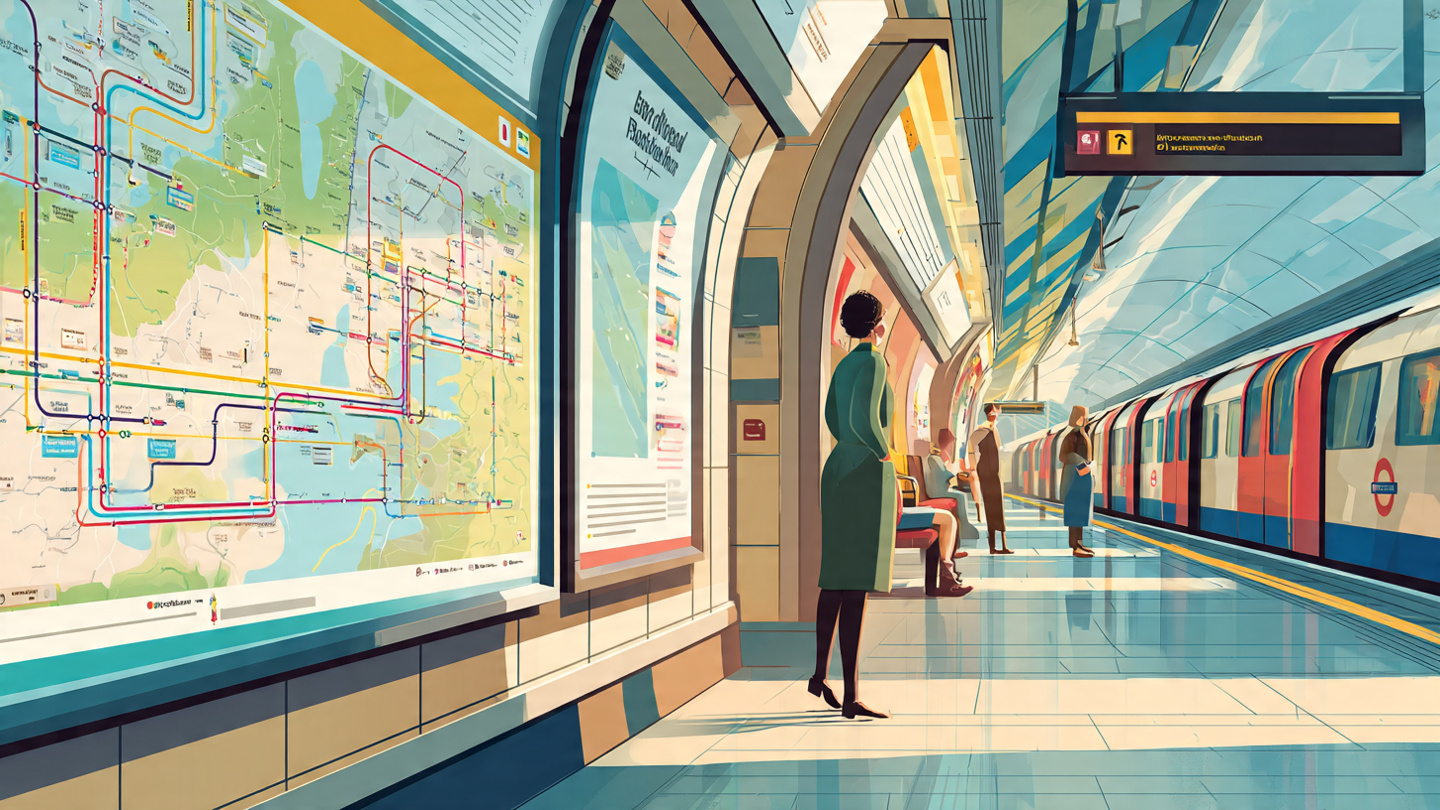
Each Underground line has a unique color. These colors appear everywhere. On maps, on signs, on platform walls, and on digital displays. The color helps your eyes track the correct route without reading every word. When you follow a color, you follow the line.
For beginners, this visual system matters more than names. You might forget a line name, but you will remember a color. When signs repeat that color consistently, navigation becomes intuitive rather than analytical.
Line Names and Why They Still Matter
While colors help visually, line names matter for confirmation. Signs often combine color and name so passengers can double-check their choices. This pairing reduces doubt. When learning how to use the London Underground, glance at both. If the color and name match what you expect, you are on the right path.
Line names also help when asking for help. Staff and fellow passengers usually refer to lines by name rather than color. Knowing the name gives you confidence when speaking to others.
Direction Is Defined by the Final Station
Direction causes more confusion than any other concept. Underground trains do not travel in circles. They move back and forth along a line. Each direction gets labeled by its final station. Platform signs always display this information clearly.
Instead of asking whether a train is correct, ask whether it travels toward the station you need. If the answer is yes, you board. If not, you wait for the opposite direction. This single habit solves most beginner mistakes.
Why Station Lists Are Less Important
Some visitors try to read long lists of stations on platforms or maps. While those lists exist, you rarely need them. They serve as confirmation rather than instruction. If you know your destination and direction, the list becomes optional.
Inside trains, visual displays show each upcoming station. You can track progress easily without studying lists in advance. This design helps visitors relax and focus on the experience instead of details.
Why the Tube Map Ignores Real Distance
The Underground map sacrifices geographic accuracy to improve clarity. Designers stretch, compress, and straighten lines to show connections cleanly. Stations appear evenly spaced even when they are not.
This approach helps riders understand how lines intersect. It does not help with walking distances. When learning how to use the London Underground, treat the map as a connection guide, not a walking guide. Street-level apps handle surface navigation better.
Using the Map for One Journey at a Time
The most effective way to use the Tube map is to focus on a single journey. Identify your starting station. Locate your destination. Trace the simplest connection between them. Ignore everything else.
Trying to understand the entire network at once creates overload. Using the map with a narrow purpose builds confidence. Each successful journey reinforces the same process.
How Interchange Stations Fit Into the Picture
Interchange stations connect multiple lines. On the map, these stations appear larger or marked differently. Inside the station, signs guide you between lines using colors and directions.
You do not need to plan every transfer in advance. When you arrive at an interchange, follow the signs for the next line. The system assumes you will make transfers and supports that movement naturally.
What Happens When You Miss a Stop
Missing a stop feels alarming the first time it happens. In reality, it rarely causes problems. Trains continue forward, and stations appear frequently. You exit at the next stop and reverse direction.
This safety net allows experimentation. Fear decreases once you realize mistakes remain reversible. That realization plays a major role in mastering how to use the London Underground.
Letting the System Do the Work
The Underground works best when you trust it. Signs tell you where to go. Displays confirm your position. Announcements repeat key information. When you follow these cues instead of second-guessing yourself, navigation becomes smoother.
You do not need to memorize. You need to observe, confirm, and move forward step by step. With that approach, lines, directions, and maps begin to feel supportive rather than confusing.
What Happens Inside a Tube Station From Entrance to Exit
Approaching a Station for the First Time
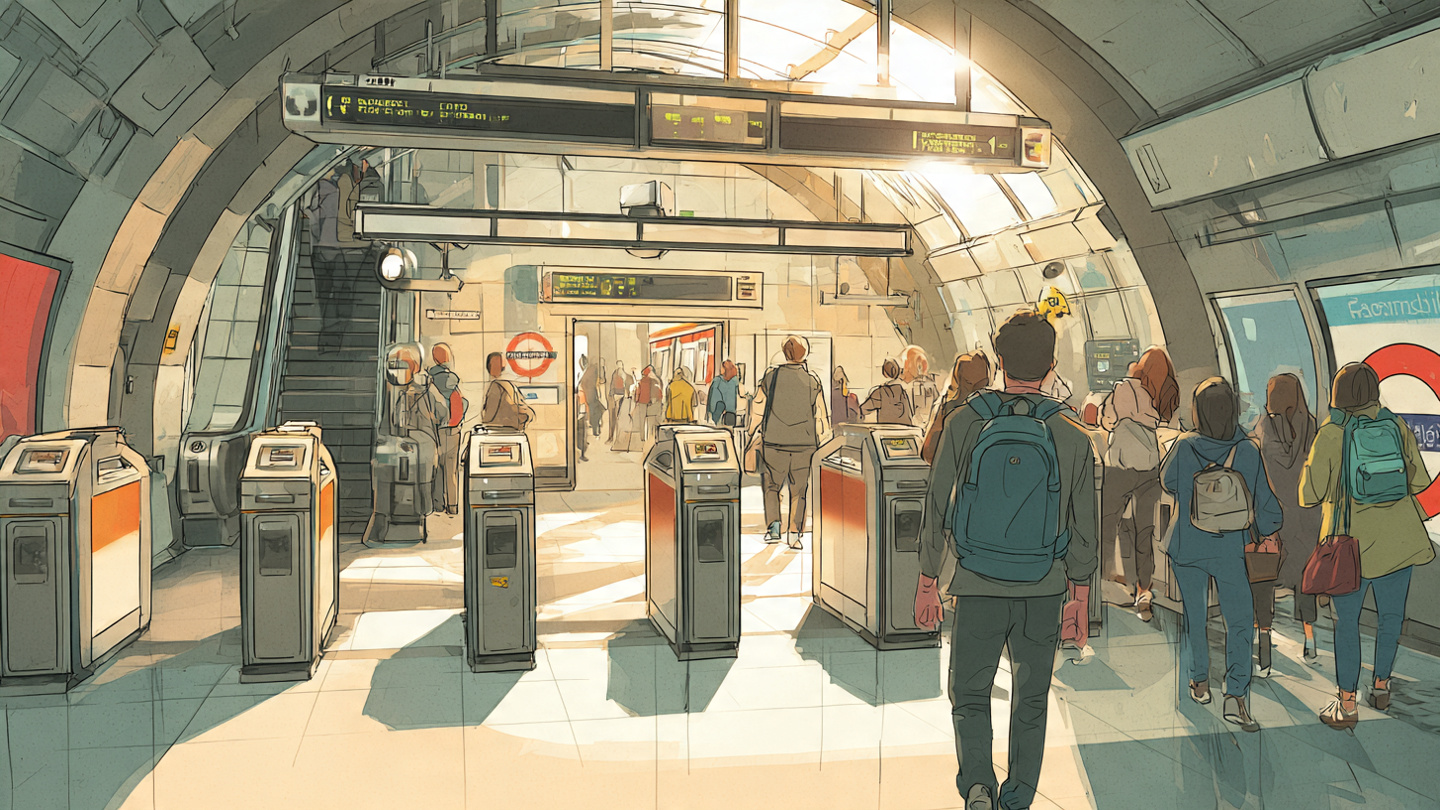
At first, the moment you approach a Tube station often feels overwhelming. However, that feeling fades quickly once you understand what to expect. You will usually spot the familiar Underground roundel sign before anything else. This symbol confirms you are in the right place and signals the start of a clear, guided process. Instead of rushing inside, take a brief pause and remind yourself that stations are designed to move people smoothly, not confuse them.
Entering Through the Ticket Gates
Once inside, the first practical step involves the ticket barriers. Here, you tap your chosen payment method on the reader, wait for the green light, and walk through. In most cases, the gate opens instantly. If it does not, try another gate calmly. Alternatively, nearby staff can help within seconds. Because these situations happen daily, no one treats them as unusual.
Travelers often ask which payment method works best once they understand how stations operate, and this comparison of oyster vs contactless in London breaks down the differences clearly.
Reading Signs With Purpose
After passing the gates, signs begin to matter. At this point, many visitors stop moving because they try to read everything at once. Instead, focus on one thing at a time. First, identify your line by color and name. Then, look for the direction shown by the final station. As you move forward, signs repeat this information. Therefore, even if you miss one sign, another appears shortly after to confirm your choice.
Moving Through Corridors and Level Changes
Next, corridors, stairs, and escalators guide you deeper into the station. While these spaces may feel busy, they follow a clear logic. Simply follow the directional signs and keep a steady pace. If you reach a split in the path, slow down briefly and check the sign again. On escalators, stand on the right and allow walkers to pass on the left. Over time, this behavior becomes automatic.
Arriving at the Platform
Eventually, you reach the platform. At this stage, pause and confirm direction one last time. Platform signs clearly display the line and the final destination of trains. Meanwhile, digital boards show how many minutes remain until the next train arrives. Because trains run frequently, there is no pressure to board the first one you see.
Understanding Platform Flow
Although platforms can feel crowded, movement remains organized. First, exiting passengers leave the train. Then, boarding begins naturally. If one area feels too full, move slightly along the platform to find space. Importantly, missing a train rarely causes problems. Another arrives shortly, which reduces stress and encourages patience.
Inside the Train Experience
Once inside the train, settle into a seat or find a place to stand. Handrails and poles appear throughout the carriage. At the same time, digital displays show the route and upcoming stations. Announcements repeat this information clearly. As a result, you can follow progress visually or simply listen without constant checking.
Preparing to Exit
As your station approaches, move toward the doors calmly. Other passengers do the same, which creates a natural flow. When the doors open, step out and follow signs marked “Way Out.” These signs lead you through corridors and up toward the surface.
Leaving the Station Smoothly
Finally, you reach the exit barriers. Tap your payment method again, allow the gate to open, and walk through. At this moment, many visitors notice a sense of relief. The journey ends smoothly, and the uncertainty felt at the entrance disappears. Consequently, confidence increases for the next trip.
Why Stations Feel Easier Each Time
After a few journeys, patterns become familiar. Gates lead to signs, signs lead to platforms, platforms lead to trains, and trains lead to exits. Because this sequence repeats at every station, predictability replaces confusion. Over time, stations stop feeling overwhelming and start feeling intuitive. This repetition plays a key role in learning how to use the London Underground with confidence.
To understand how a real London Underground station works in practice, it helps to look at an actual example. Large stations follow the same logic described above, even when they serve multiple lines and platforms. Exploring a busy station layout makes it easier to visualize entrances, ticket gates, corridors, and platforms working together.
Tickets, Payments, and Fares Explained in a Simple Way
Why Ticketing Feels Harder Than It Really Is
For many visitors, ticketing creates more stress than navigation. At first glance, payment options, fare rules, and machines can feel confusing. As a result, people worry about choosing the wrong option or paying more than necessary. However, once you understand the basic logic, ticketing becomes one of the easiest parts of learning how to use the London Underground.
Rather than requiring detailed knowledge, the system focuses on consistency. If you follow a few simple habits, everything else works automatically in the background.
If you’re landing at Heathrow and want the simplest first transport decision, this guide shows the easiest route options before you tap in for your first ride.
The Two Payment Methods That Work Best for Visitors
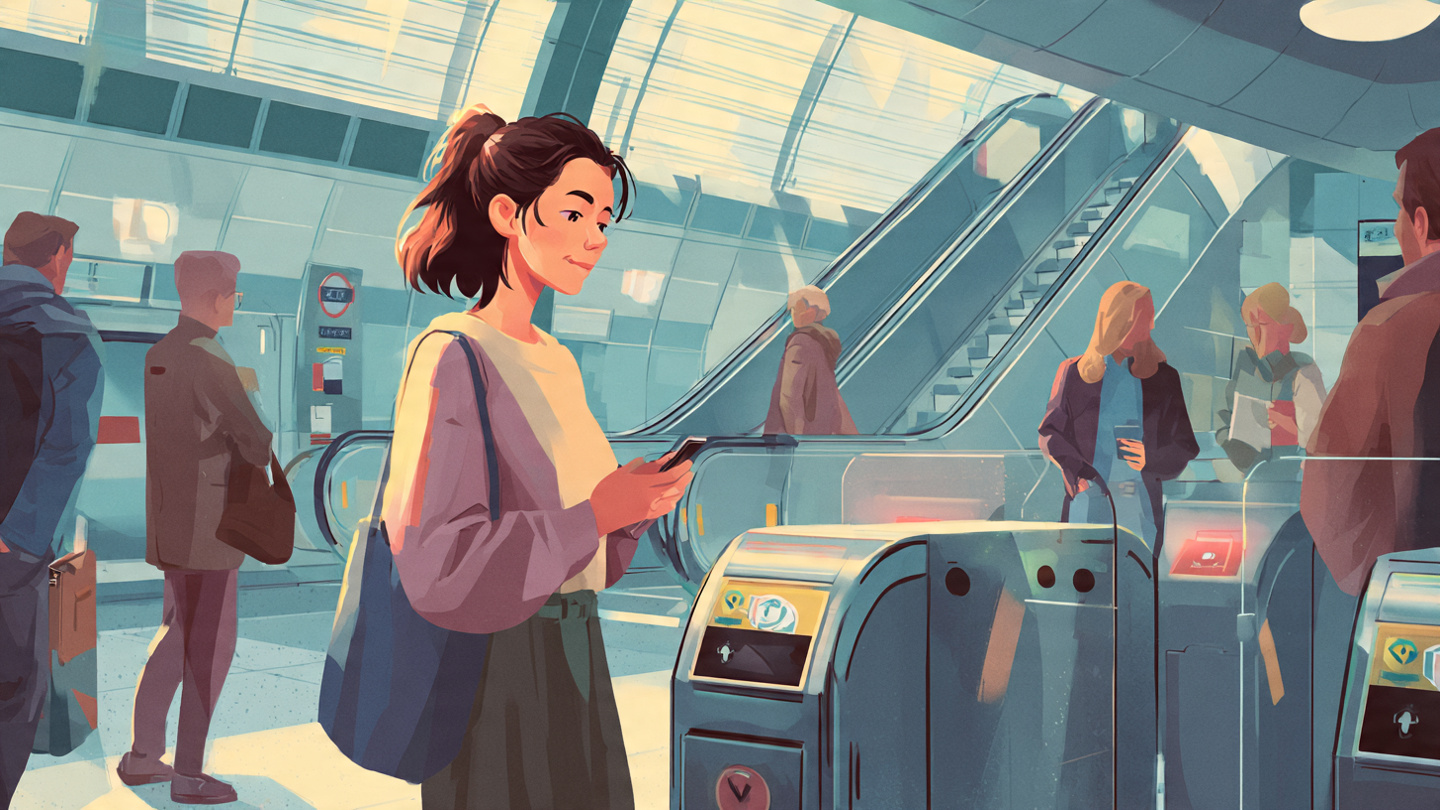
In practice, most first-time visitors rely on one of two payment methods. You can use a contactless bank card or an Oyster card. Both options function in almost the same way. You tap in at the start of your journey and tap out at the end. From there, the system calculates the fare for you.
Because both methods work similarly, you do not need to overanalyze the choice. Instead, choose one method before your first journey and continue using it consistently throughout your stay.
Why Consistency Matters More Than Choice
Although both payment options work well, problems usually arise when travelers switch between them. For example, entering a station with one card and exiting with another confuses the system. Consequently, it may treat the journey as incomplete and apply a higher charge.
To avoid this, commit to one payment method and stick with it. This single decision removes most ticketing issues and makes learning how to use the London Underground far less stressful.
How Fares Are Calculated Behind the Scenes
You never need to calculate fares manually. Instead, the Underground uses zones and distance to determine pricing automatically. As long as you tap in and tap out correctly, the system applies the appropriate charge without further input.
Additionally, daily spending limits protect you from overspending. Once you reach a certain amount in a single day, additional journeys cost nothing. Therefore, even frequent travel remains controlled without constant monitoring.
Why Paper Tickets Usually Create More Problems
Although paper tickets still exist, they rarely benefit visitors. They cost more, take longer to purchase, and remove the protection of daily fare limits. Furthermore, using ticket machines can feel stressful during busy periods.
By contrast, tap-based payment keeps movement smooth. You avoid queues, reduce decision-making, and move through stations more confidently.
What to Do If You Forget to Tap Out
Occasionally, travelers forget to tap out at the end of a journey. When this happens, the system may charge a maximum fare. While that situation feels worrying at first, it remains fixable through customer support.
That said, forgetting to tap out becomes less common over time. Exit routes naturally funnel passengers toward gates, and clear signage reinforces the habit. As experience grows, these small errors fade away.
Why Fare Rules Should Not Guide Your Route
Many visitors try to plan routes based on zones or prices. However, this approach often complicates travel unnecessarily. Instead, you should plan journeys based on destination and convenience. The system handles fares automatically in the background.
This separation allows you to focus on moving around the city rather than worrying about calculations. As a result, learning how to use the London Underground feels more intuitive and less technical.
When Checking Charges Makes Sense
If uncertainty remains, checking your travel history can provide reassurance. Both Oyster and contactless systems allow you to review past journeys and charges. Therefore, transparency remains available whenever you need it.
However, most visitors quickly realize that the system works reliably without constant checking. Confidence builds through consistent use rather than oversight.
Simplicity as the Key to Confidence
Ultimately, ticketing works best when you keep it simple. Choose one payment method. Tap in when you enter. Tap out when you exit. Let the system manage the rest.
Once ticketing stops being a concern, attention naturally shifts toward exploring the city. At that point, understanding how to use the London Underground becomes a routine part of travel rather than a source of stress.
Peak Hours, Travel Timing, and When the Underground Is Not Ideal
Why Timing Changes the Underground Experience
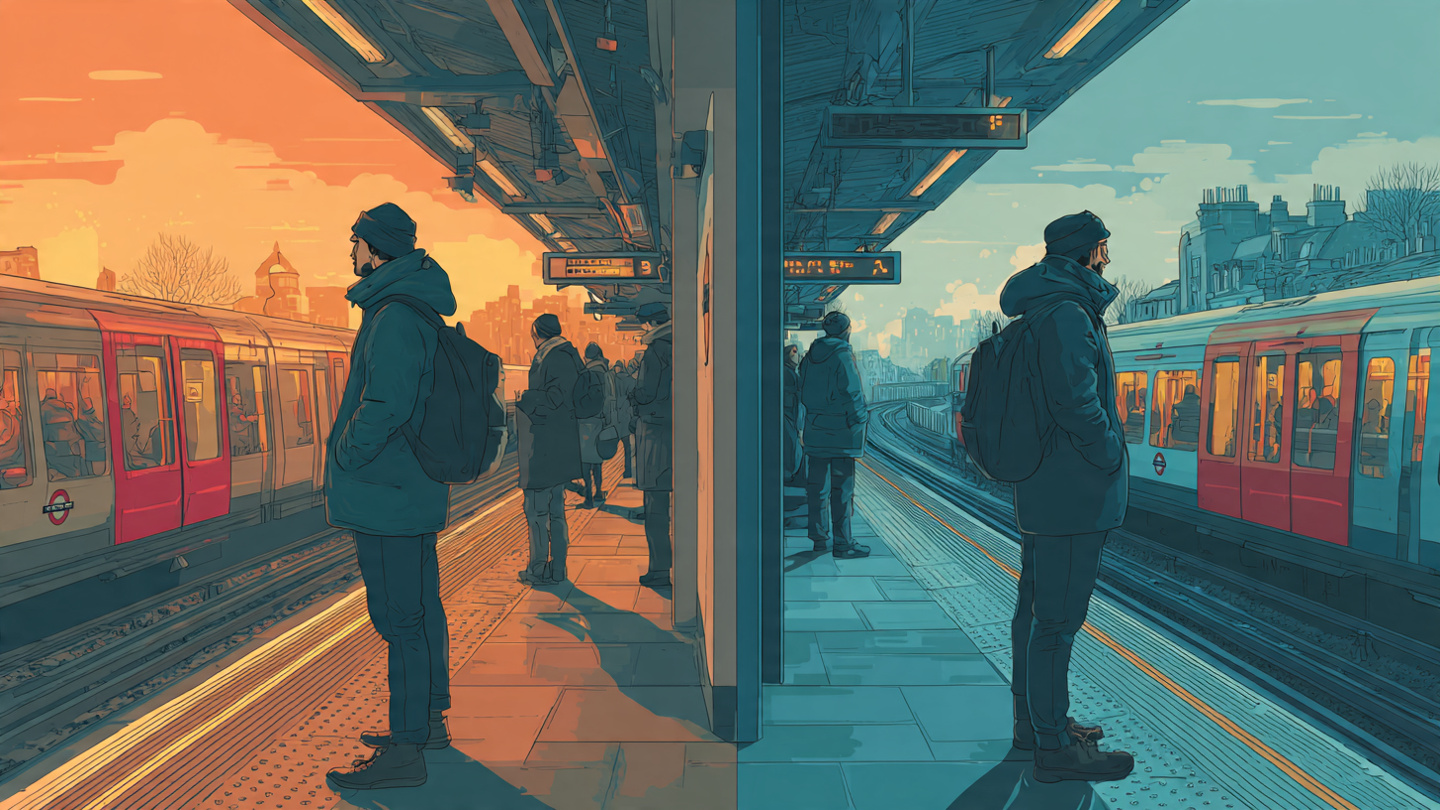
Although the London Underground runs all day, the experience changes noticeably depending on when you travel. For first-time visitors, understanding timing matters almost as much as understanding routes. While the system always works, comfort levels shift based on crowd size, pace, and station activity. Therefore, learning how to use the London Underground also means learning when to use it.
Many visitors assume the Tube always feels crowded. In reality, congestion concentrates into specific windows. Once you recognize those patterns, you can plan journeys that feel calmer and more enjoyable.
Understanding Peak Hours Without Overthinking
Peak hours refer to the busiest commuting periods of the day. Typically, these occur in the morning and late afternoon on weekdays. During these times, stations near business districts and major interchanges become especially busy. Trains arrive full, platforms feel tighter, and movement speeds up.
However, this does not mean you should avoid the Underground entirely. Instead, it means you should adjust expectations. If you travel during peak hours, allow extra time and accept closer proximity to others. Knowing this in advance removes surprise and stress.
Why Peak Hours Affect Tourists Differently
For commuters, peak hours feel routine. For visitors, they feel intense. Tourists often carry bags, stop to read signs, and move more slowly. As a result, peak periods amplify discomfort for those unfamiliar with the system.
Therefore, when possible, plan sightseeing travel outside these windows. Doing so creates a more relaxed introduction to learning how to use the London Underground and helps build confidence faster.
The Best Times for First-Time Visitors to Travel
Mid-morning, early afternoon, and late evening usually offer the most comfortable conditions. During these periods, stations feel calmer, trains have more space, and signage becomes easier to read without pressure.
These quieter windows work well for sightseeing routes. Museums, parks, and neighborhoods remain accessible without the intensity of commuter crowds. As a result, the Underground feels supportive rather than overwhelming.
Weekend Travel Feels Different
On weekends, the Underground follows a different rhythm. Commuter traffic drops, but tourist traffic increases. Popular areas may still feel busy, yet the pace feels slower and more forgiving.
However, some maintenance work often happens on weekends. Certain lines or sections may close temporarily. While this sounds concerning, clear signage and announcements explain alternatives. Replacement services or nearby lines usually cover the gap. With a flexible mindset, weekend travel remains manageable.
Late Night Travel and What to Expect
Late at night, the Underground feels quieter and slower. Trains run less frequently, but stations feel calmer. For visitors, this environment can feel more comfortable, especially after a long day.
That said, it helps to check the last train times for your route. Planning ahead prevents unnecessary waiting or last-minute confusion. Once again, awareness rather than memorization makes the difference.
When the Underground May Not Be the Best Choice
Although the Underground works well for most journeys, it is not always the best option. Short distances between nearby neighborhoods often work better on foot. Walking allows you to experience street life and avoid unnecessary station navigation.
Similarly, buses sometimes provide a more scenic and relaxed alternative. For routes where stations require long walks or deep platforms, surface transport may feel easier.
How Luggage Changes Travel Decisions
Traveling with luggage affects comfort. Stairs, escalators, and narrow corridors can feel challenging with heavy bags. During these situations, timing matters even more. Avoiding peak hours becomes especially helpful.
If luggage feels burdensome, consider alternatives such as buses or taxis for short transfers. Choosing the easiest option rather than the fastest one often improves the overall experience.
Balancing Speed With Comfort
The Underground excels at moving people quickly across the city. However, speed should not always dominate decisions. Comfort, simplicity, and enjoyment matter just as much, especially for visitors.
Sometimes, a slightly slower route feels better because it reduces transfers or walking distances. Understanding this balance forms an important part of mastering how to use the London Underground effectively.
Planning With Flexibility in Mind
Rather than building rigid schedules, allow room for adjustment. If a station feels too busy, wait for the next train. If a route feels confusing, pause and reassess. The system supports flexible decision-making.
This flexibility reduces pressure and builds confidence. Over time, timing choices feel intuitive rather than calculated.
Using Timing to Build Confidence Gradually
For first-time visitors, starting with quieter travel times builds confidence faster. Once comfort increases, busier periods feel less intimidating. This gradual exposure helps the Underground feel familiar rather than overwhelming.
By understanding how timing shapes the experience, you gain control without complexity. That control transforms learning how to use the London Underground into a smooth and predictable part of your trip.
Common Mistakes First-Time Visitors Make on the London Underground
Trying to Learn Everything Before the First Ride
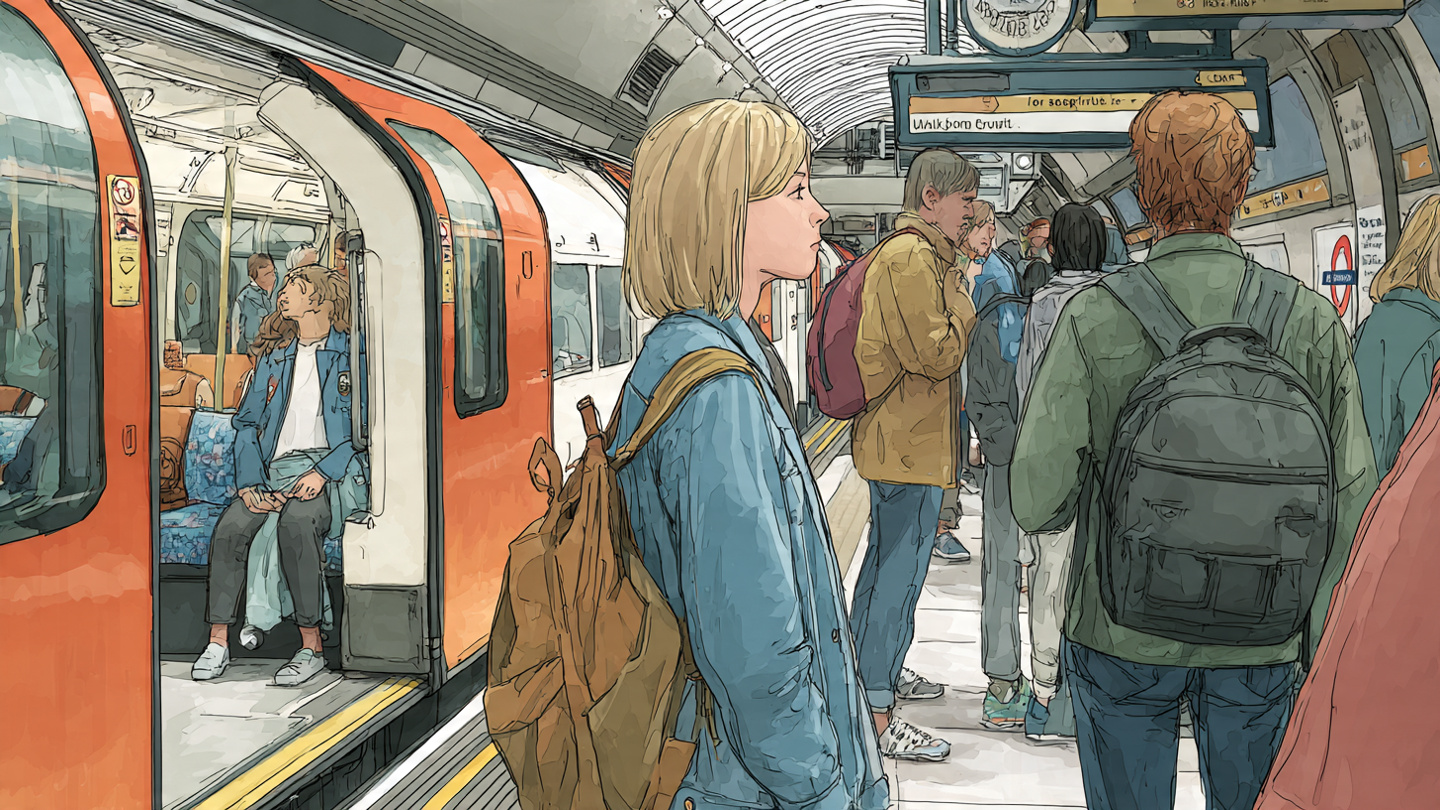
One of the most common mistakes visitors make involves overpreparation. Many people try to understand every line, zone, and station before they ever step onto a train. As a result, they feel overwhelmed before the journey even begins. In reality, learning how to use the London Underground works best through experience rather than study.
Instead of mastering the system in advance, focus on one journey at a time. Each ride teaches you more than hours of map reading. Once you accept that learning happens gradually, pressure decreases immediately.
Standing Still in High-Traffic Areas
Another frequent mistake involves stopping suddenly in busy spaces. Entrances, corridors, and stairways often carry heavy foot traffic. When visitors pause in these areas to check signs, congestion builds quickly.
A better approach involves stepping slightly to the side before stopping. That small adjustment keeps movement flowing and gives you space to read signs calmly. Over time, this habit becomes automatic and improves comfort for everyone around you.
Blocking Escalator Flow
Escalators follow a simple but important rule. People stand on the right and walk on the left. Visitors often block the left side without realizing it. Although no one expects perfection, blocking movement can attract attention and create discomfort.
Fortunately, this mistake corrects itself quickly. Once you observe local behavior, you naturally follow the same pattern. Awareness, rather than instruction, solves the issue.
Boarding Before Passengers Exit
In crowded moments, some visitors rush to board trains before passengers exit. This instinct comes from fear of missing the train. However, doing so slows boarding and creates tension.
Instead, step back and allow passengers to leave first. Boarding then happens smoothly. Trains arrive frequently, so patience always pays off. Understanding this flow makes learning how to use the London Underground feel cooperative rather than stressful.
Overreacting to Small Mistakes
Missing a stop or boarding the wrong train often triggers panic in first-time users. In reality, these situations rarely matter. The system allows easy correction through the next station or a simple direction change.
Many of these Underground issues connect to wider planning habits, which are covered clearly in this guide to London travel mistakes to avoid.
Rather than reacting emotionally, treat mistakes as part of the process. Calm responses keep journeys efficient and help confidence grow faster.
Focusing Too Much on Zones
Zones confuse many visitors because they appear complex at first glance. As a result, travelers sometimes avoid routes unnecessarily or worry about pricing constantly. However, zones primarily exist for fare calculation, not navigation.
By focusing on destination and direction instead, you simplify every decision. The system handles pricing automatically, which removes the need for zone-based planning.
Switching Payment Methods Mid-Journey
Another common mistake involves mixing payment methods. Entering with one card and exiting with another creates confusion and may result in higher charges. This error often happens when travelers carry multiple cards and tap the wrong one by accident.
To prevent this, use one consistent payment method for all journeys. Developing this habit early removes a major source of ticketing issues.
Rushing During Busy Periods
During peak times, visitors often rush more than necessary. This rush leads to poor decisions, missed signs, and increased stress. While trains feel busy, they continue arriving frequently.
Slowing down mentally, even when the environment feels fast, improves accuracy. Taking a moment to confirm direction saves time in the long run.
Ignoring Station Announcements
Some travelers rely only on apps and ignore station announcements. While apps help, announcements often provide real-time updates about platform changes or service adjustments.
Listening to these announcements adds an extra layer of awareness. Combined with visual signs, they create a complete picture of what is happening around you.
Expecting Silence and Personal Space
The Underground operates as a shared space. Noise, movement, and proximity increase during busy periods. Visitors who expect quiet rides sometimes feel uncomfortable.
Understanding this reality helps adjust expectations. Once you accept the environment as part of city life, discomfort decreases and journeys feel more manageable.
Learning Through Observation
Most mistakes disappear once visitors begin observing others. Watching how people move, stand, board, and exit teaches faster than any guide. The Underground functions as a living system, and behavior communicates rules clearly.
By learning through observation, mistakes become brief lessons rather than lasting frustrations.
Turning Mistakes Into Confidence Builders
Every small error teaches something useful. Missing a stop shows how easy correction feels. Blocking an escalator once teaches awareness. Each experience builds confidence.
When you view mistakes as part of learning how to use the London Underground, fear fades. In its place, familiarity grows, and the system begins to feel predictable rather than intimidating.
This is a nice old train station. And it has a Harry Potter experience inside. Finding your train is easy. It is however super cold inside. It’s seemed colder than outside.
Read more reviews at Tripadvisor.
Apps, Tools, and Signs That Make Using the Underground Easier
Why Tools Should Support, Not Replace Awareness
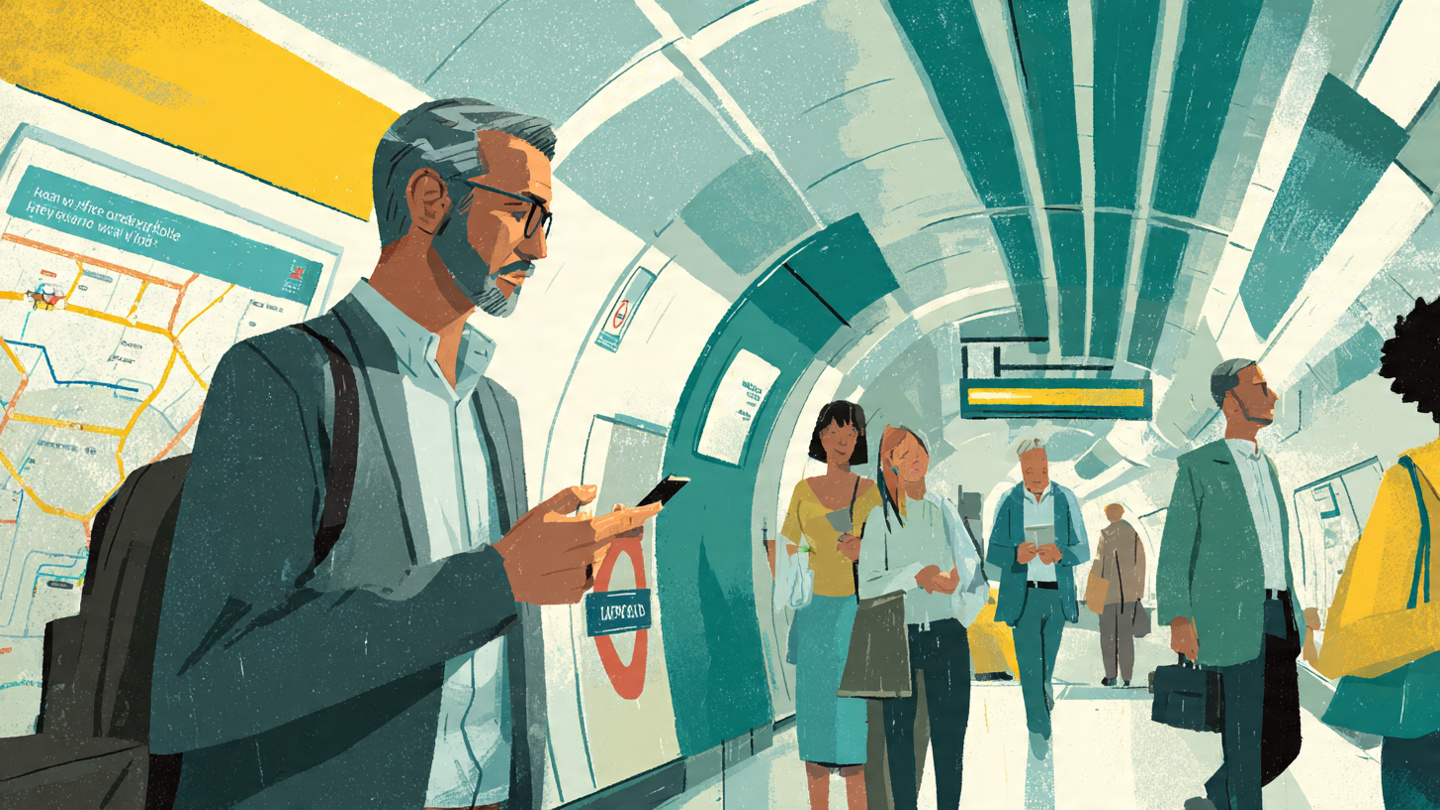
When learning how to use the London Underground, many visitors rely heavily on apps. While digital tools help, they work best when they support awareness rather than replace it. The Underground already communicates clearly through signs, boards, and announcements. Apps simply add another layer of confidence.
Therefore, the goal is not to stare at your phone constantly. Instead, use tools to confirm decisions while staying aware of your surroundings.
Navigation apps help most before you enter the station. They allow you to check routes, estimate travel time, and see how many changes a journey requires. This planning step reduces hesitation at the entrance.
However, once underground, signal strength may vary. Because of this, it helps to review your route briefly before descending. That preparation ensures you know which line and direction to follow even without constant app access.
Using Apps Without Overdependence
Although apps update routes quickly, overdependence can cause confusion. For example, if an app refreshes mid-journey, it may suggest a different route that contradicts station signage.
In these moments, trust station signs first. The Underground prioritizes real-time conditions. Apps work best as confirmation tools rather than primary guides.
Why Station Signs Matter More Than You Expect
Station signs provide the most reliable guidance underground. They show line colors, names, and directions clearly. Because signs repeat often, they allow course correction without stress.
When you focus on signs, you stay aligned with the system’s logic. This alignment reduces hesitation and improves confidence, especially for first-time visitors learning how to use the London Underground.
Digital Boards and What They Tell You
Digital boards appear on platforms and inside trains. They display arrival times, destinations, and service updates. These boards remove the need to guess.
When boards show delays or changes, they also indicate alternatives. This transparency helps passengers adjust calmly rather than react emotionally.
Audio Announcements as Reinforcement
Audio announcements reinforce visual information. They confirm platform changes, upcoming stations, and service updates. While some visitors tune them out, listening adds valuable context.
Together, announcements and displays create a complete information loop. Missing one does not leave you lost because the other fills the gap.
How Offline Preparation Helps Underground
Because mobile signal can weaken underground, offline preparation matters. Saving routes or screenshots before entering a station provides backup reassurance.
This preparation does not require technical effort. A quick glance before descending often proves enough. Once again, simplicity supports confidence.
Reading the Environment Around You
Beyond tools, observing people around you provides guidance. Watch how others move through gates, follow signs, and board trains. This shared behavior reflects system norms more clearly than written instructions.
Observation complements tools. When both align, decisions feel obvious rather than uncertain.
When Tools Create Unnecessary Noise
Sometimes, too many tools create distraction. Multiple notifications, alerts, or reroutes can overwhelm rather than help. In these moments, simplifying your approach works better.
Close extra apps. Focus on line color and direction. Trust signage. This reset often restores clarity instantly.
Building Confidence Through Combined Signals
Confidence grows when multiple signals confirm the same choice. A sign matches your app. An announcement matches the board. When information aligns, doubt fades.
This layered communication forms the foundation of how to use the London Underground effectively. The system rarely asks you to rely on a single source.
Knowing When to Ask for Help
Despite all tools, questions sometimes remain. In those moments, asking for help works well. Staff and fellow passengers answer questions daily. Clear line names and destinations make communication easy.
Asking for help does not signal failure. Instead, it reflects smart use of available resources.
Tools as Training Wheels
Think of apps and tools as training wheels. They support early journeys. Over time, reliance decreases naturally. Signs and patterns take over, and navigation becomes instinctive.
By balancing tools with awareness, learning how to use the London Underground becomes smoother, calmer, and far more intuitive.
When to Use the Underground and When to Choose Another Option

Understanding That the Underground Is One Tool, Not the Only One
Once visitors learn how to use the London Underground, it becomes tempting to rely on it for every journey. While the system works extremely well, it is not always the best choice. London offers multiple transport options, and choosing between them improves comfort, efficiency, and enjoyment.
The Underground excels at moving people quickly across longer distances. However, for short or scenic routes, alternatives often feel better.
If you want a simple overview of when to walk, take a bus, use the Tube, or choose a taxi based on distance and energy, this guide on the best way to travel around London breaks it down in a clear way.
When the Underground Makes the Most Sense
The Underground works best when you need to cross large parts of the city efficiently. Journeys that would take a long time on foot or require multiple surface streets often become simple underground trips.
It also performs well when weather conditions discourage walking. Rain, cold, or extreme heat make underground travel more comfortable. In these situations, the Tube protects energy and time.
Additionally, the Underground helps when schedules matter. If you need to reach a destination at a specific time, trains provide predictability and speed that surface options cannot always guarantee.
Why Short Distances Often Feel Better on Foot
Many London neighborhoods sit closer together than the map suggests. Underground stations may appear near each other, yet require stairs, corridors, and waiting time that walking avoids.
For distances under twenty minutes, walking often feels faster and more enjoyable. You experience street life, notice shops and cafes, and avoid station entry and exit processes. For visitors, walking also helps build a sense of orientation that underground travel cannot provide.
Choosing Buses for a Different Experience
Buses offer a slower but more scenic way to move around the city. They allow you to stay above ground and observe neighborhoods as you travel. For visitors who enjoy sightseeing between destinations, buses provide value beyond transport.
Buses also work well for routes where Underground stations sit far apart or require long walks within stations. In these cases, surface travel reduces effort even if it adds a few minutes.
When Luggage Changes the Equation
Traveling with luggage affects comfort significantly. Carrying heavy bags through stations, stairs, and corridors can feel exhausting. During these moments, the Underground may not feel ideal.
Surface options reduce physical strain. Short taxi rides, buses, or direct transfers often feel easier when bags become part of the journey. Choosing comfort over speed improves the overall travel experience.
Considering Accessibility and Energy Levels
Energy matters, especially after long sightseeing days. Deep stations, long corridors, and standing rides can feel tiring late in the day.
If energy feels low, selecting a route with fewer transfers or choosing surface travel may improve comfort. Understanding how you feel matters just as much as understanding how to use the London Underground.
Balancing Transfers Against Simplicity
Some underground routes require multiple transfers. While each transfer works smoothly, they add complexity. In certain cases, a slightly longer route with fewer changes feels easier.
Evaluating routes based on simplicity rather than speed reduces mental load. This balance helps visitors maintain confidence throughout their stay.
Using the Underground as a Backbone
Rather than treating the Underground as the only option, think of it as the backbone of movement. Use it to cover major distances, then switch to walking or buses for shorter segments.
This hybrid approach maximizes efficiency while preserving enjoyment. It also prevents fatigue from repeated station navigation.
Adjusting Choices Based on Time of Day
Time of day influences comfort. During busy periods, surface options may feel calmer. During quiet periods, the Underground feels effortless.
Adapting choices based on timing shows travel maturity. Flexibility reduces stress and improves confidence.
Learning Through Comparison
As visitors try different transport options, preferences develop naturally. Comparing walking, buses, and underground travel helps refine decisions.
This learning process forms part of understanding how to use the London Underground wisely rather than automatically.
Making Travel Serve the Experience
Ultimately, transport exists to support the experience, not dominate it. The best choice is the one that keeps movement smooth and stress low.
By recognizing when the Underground helps most and when alternatives work better, you gain control. That control transforms transport from a concern into a seamless part of exploring London.
Final Thoughts on Using the London Underground With Confidence
Confidence Grows Through Familiarity
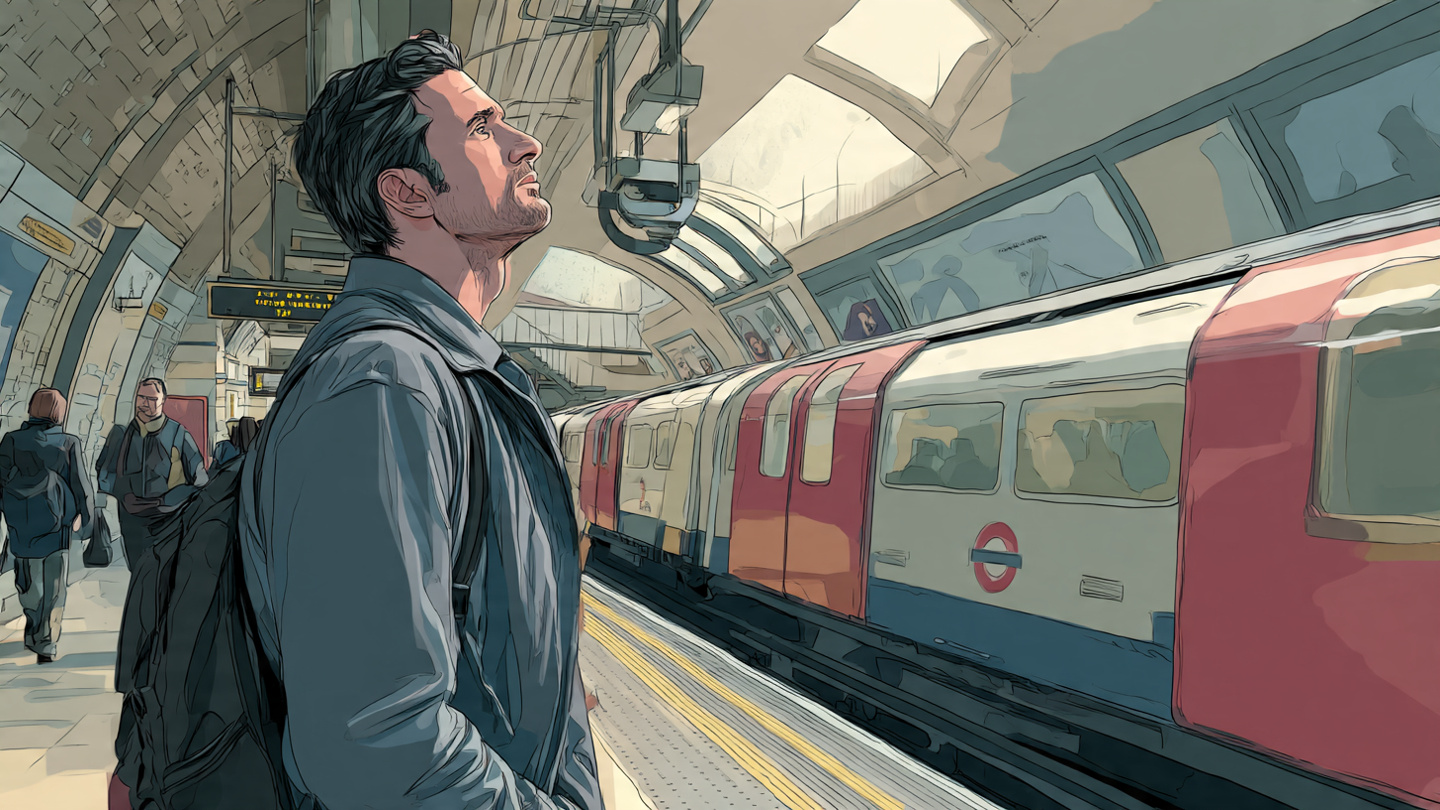
Confidence on the Underground develops through repeated exposure rather than perfect preparation. Most first-time visitors start with hesitation, yet that feeling fades quickly once a few journeys go smoothly. Instead of demanding mastery, the system encourages steady movement and learning along the way.
Small errors do not disrupt progress. The network absorbs them easily, which allows travelers to build assurance without pressure.
Early Journeys Shape Everything
The first few rides matter because they introduce patterns. During these moments, signs begin to feel predictable. Direction logic starts to make sense. Stations reveal their structure through repetition.
As these patterns settle in, uncertainty loosens its grip. What once felt unfamiliar gradually becomes routine, and that shift creates lasting comfort.
Trust Simplifies Every Decision
Doubt often causes more confusion than a wrong turn. When travelers constantly second-guess platform choices or train directions, stress increases. Trusting signage, digital boards, and announcements removes unnecessary friction.
Clear communication forms the backbone of the Underground. Following it consistently leads to smoother movement and calmer decisions.
Experience Replaces Overthinking
Overthinking creates hesitation. Experience dissolves it. With each journey, observation replaces analysis, and instincts take over naturally.
Eventually, transport fades into the background. Attention shifts away from how to move and toward where to explore next.
Confidence Builds Incrementally
Comfort does not appear all at once. One successful ride leads to another. Missed stops lose their emotional weight. Busy platforms feel manageable instead of intimidating.
This gradual progression mirrors the system itself. Repetition, not expertise, produces confidence.
Comfort Levels Naturally Fluctuate
Some days feel easier than others. Crowds, fatigue, and timing influence how journeys feel. Accepting these variations prevents frustration and keeps expectations realistic.
Even regular users experience moments of uncertainty. What matters is recognizing that hesitation does not signal failure.
Viewing the Underground as Support
Rather than something to overcome, the Underground works best when viewed as support. Its purpose centers on efficient, clear movement across the city.
Aligning with that purpose allows the system to guide rather than challenge you.
Confidence Extends Beyond Transport
Comfort underground often spills into other parts of travel. Exploration expands. Anxiety about returning disappears. Flexibility increases.
Transport confidence unlocks broader travel confidence.
Recognizing When Comfort Arrives
Comfort announces itself quietly. You stop pausing at entrances. Signs register without effort. Boarding happens without doubt.
That ease signals success.
Carrying the Skill Forward
The skills developed here apply beyond London. Navigating a complex city builds trust in your ability to adapt elsewhere.
Understanding how to use the London Underground becomes part of a larger travel skill set rather than a single achievement.
Ending With Reassurance
Uncertainty at the beginning was normal. Calm at the end marks progress. Expertise was never required. Awareness, patience, and willingness mattered more.
Once the first ride begins, the rest follows naturally.
Frequently Asked Questions
Getting Started
No. Most first-time visitors find it manageable after one or two journeys. Clear signs, frequent trains, and repeated information make navigation easier than it first appears.
No. You only need to understand your current journey. The system guides you step by step through signs and announcements.
Tickets and Payments
No. Most visitors use a contactless bank card or an Oyster card and tap in and out at stations.
Yes, and you should. Using one consistent payment method prevents fare issues and makes travel smoother.
During the Journey
You can exit at the next station and change direction. Mistakes are easy to fix and rarely cost much time.
No. Crowds depend on time and location. Outside peak hours, many journeys feel calm and comfortable.
Planning Tips
Not always. Walking or buses often work better for short distances or scenic routes, while the Underground works best for longer trips.
No. Station signs, maps, and announcements provide everything you need, even without a signal.