
At first glance, the phrase royal parks of London may seem like a simple descriptive label. However, the word “royal” carries formal and historical significance. These parks were originally owned or controlled directly by the British monarchy. Therefore, their designation reflects legal origin rather than aesthetic appeal.
Unlike standard municipal parks, these landscapes began as private royal domains. Over time, their function changed. Nevertheless, the original title remained. As a result, the term continues to distinguish them from other green spaces across the capital.
Although this guide focuses specifically on the history and governance behind the royal designation, travelers who want a wider perspective on how these landscapes compare to other public green areas across the capital can explore our complete overview of Parks in London for broader context and planning insight.
From Private Hunting Grounds to Public Landscapes
Initially, many of these parks served as hunting grounds. Monarchs used them for sport, political display, and royal gatherings. For example, Hyde Park entered royal ownership during the reign of Henry VIII. At that stage, public access did not exist.
Gradually, social and political developments opened these spaces to wider society. As public access expanded, their role shifted from exclusive estates to civic landscapes. Consequently, the royal parks of London transformed into shared environments while preserving their historical foundation.
Why Not Every Famous Park Is Royal
Although London offers many well-known parks, not all qualify as royal. Hampstead Heath and Victoria Park, for instance, attract large numbers of visitors. Yet they do not share the same official designation. The title applies only to a specific group formally recognized under national governance.
This distinction matters for travelers. When someone searches for a list of royal parks in London, they expect a defined collection rather than a broad selection of popular parks. Therefore, understanding this difference improves clarity and aligns expectations.
Governance and National Management
Today, the royal parks operate under The Royal Parks charity. Unlike borough-managed parks, these landscapes fall under centralized oversight. As a result, conservation standards, funding structures, and event permissions follow national guidelines.
Furthermore, this governance model enables the parks to host major public events and ceremonial occasions. Their status connects directly to national heritage. Therefore, management involves not only landscaping but also preservation of monuments, wildlife habitats, and historic structures.
To compare these royal landscapes with more immersive nature-led routes across the city, explore the full guide to London nature walks.
Cultural and Symbolic Importance
In addition to legal background, these parks hold symbolic meaning. They represent continuity between monarchy and modern civic life. Statues, memorials, ceremonial routes, and historic vistas reinforce this connection.
Consequently, walking through these landscapes often feels different from strolling through a neighborhood park. The experience blends open nature with centuries of history. Because of this layered identity, the royal parks of London serve both recreational and cultural roles.
Accessibility in the Modern Era
Despite their origins, these parks are fully open to the public. In fact, accessibility defines their modern character. Runners follow tree-lined paths at sunrise. Families gather for weekend outings. Visitors pause between major attractions to rest.
Therefore, what once symbolized exclusivity now represents shared urban space. This transformation reflects broader social change. Moreover, it demonstrates how historic estates can adapt without losing identity.
Geographic Spread Across London
Another defining feature lies in their distribution. Some parks sit in the heart of central London, near Buckingham Palace and Westminster. Others extend toward outer boroughs, offering expansive landscapes that feel almost rural.
Because of this variety, visitors can choose between formal gardens, panoramic hills, woodland trails, and wide open meadows. Although each park has a distinct atmosphere, they remain united by shared origin and governance.
Environmental and Conservation Responsibility
Conservation plays a crucial role in maintaining these spaces. Ancient trees, protected wildlife, and listed monuments require careful management. Therefore, environmental planning remains ongoing throughout the year.
Teams monitor biodiversity and seasonal change to preserve ecological balance. As a result, these parks function not only as recreational environments but also as protected heritage landscapes.
Why This Definition Matters for Visitors
Understanding what makes a park royal strengthens travel planning. First-time visitors gain clarity about historical importance. Meanwhile, returning travelers develop deeper appreciation for the layered background behind each landscape.
Ultimately, the royal parks of London combine monarchy, conservation, accessibility, and national identity within a unified framework. For that reason, defining the term clearly provides the foundation for exploring each park in detail.
Complete List of the Royal Parks of London
The Eight Official Royal Parks
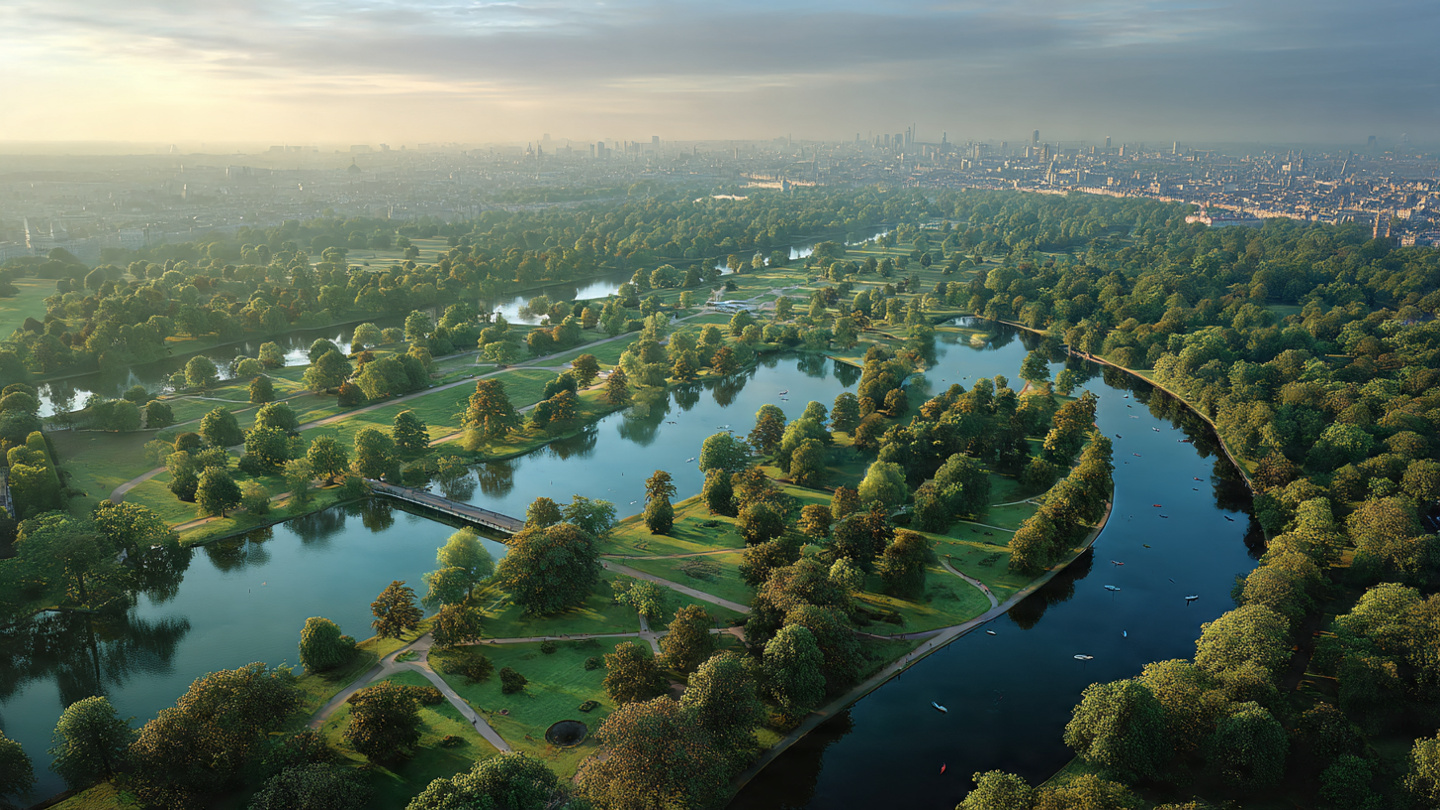
When discussing the royal parks of London, clarity is essential. There are eight official parks recognized under national governance. Each carries historical importance, distinctive landscape design, and a defined geographic presence within Greater London.
The eight parks are:
-
Hyde Park
-
Kensington Gardens
-
St James’s Park
-
The Green Park
-
Regent’s Park (including Primrose Hill)
-
Greenwich Park
-
Richmond Park
-
Bushy Park
Although some sit next to each other and feel interconnected, each park retains individual identity and boundaries. Therefore, understanding them as a defined collection helps both travelers and researchers navigate them correctly.
Hyde Park: The Civic Heart of Royal Green Space
Hyde Park stands as one of the most recognized public landscapes in Britain. Located in central London, it combines open meadows, water features, ceremonial routes, and memorials. Historically, it transitioned from royal hunting ground to public space during the seventeenth century.
Today, Hyde Park functions as both a leisure area and a civic gathering location. Because of its size and central position, it often serves as the first introduction visitors have to the royal parks of London.
Because several of these landscapes sit in the ceremonial and civic heart of the capital, visitors who want a focused breakdown of location advantages, accessibility, and atmosphere can explore our detailed guide to Best Parks in Central London for comparison and route planning.
Kensington Gardens: Formal Elegance Beside Hyde Park
Although physically connected to Hyde Park, Kensington Gardens maintains a distinct character. It features more formal landscaping, ornamental gardens, and architectural elements such as Kensington Palace.
Consequently, visitors often experience a shift in atmosphere when moving between the two spaces. While Hyde Park feels expansive and open, Kensington Gardens emphasizes structured design and royal residential history.
St James’s Park: Royal Proximity and Scenic Design
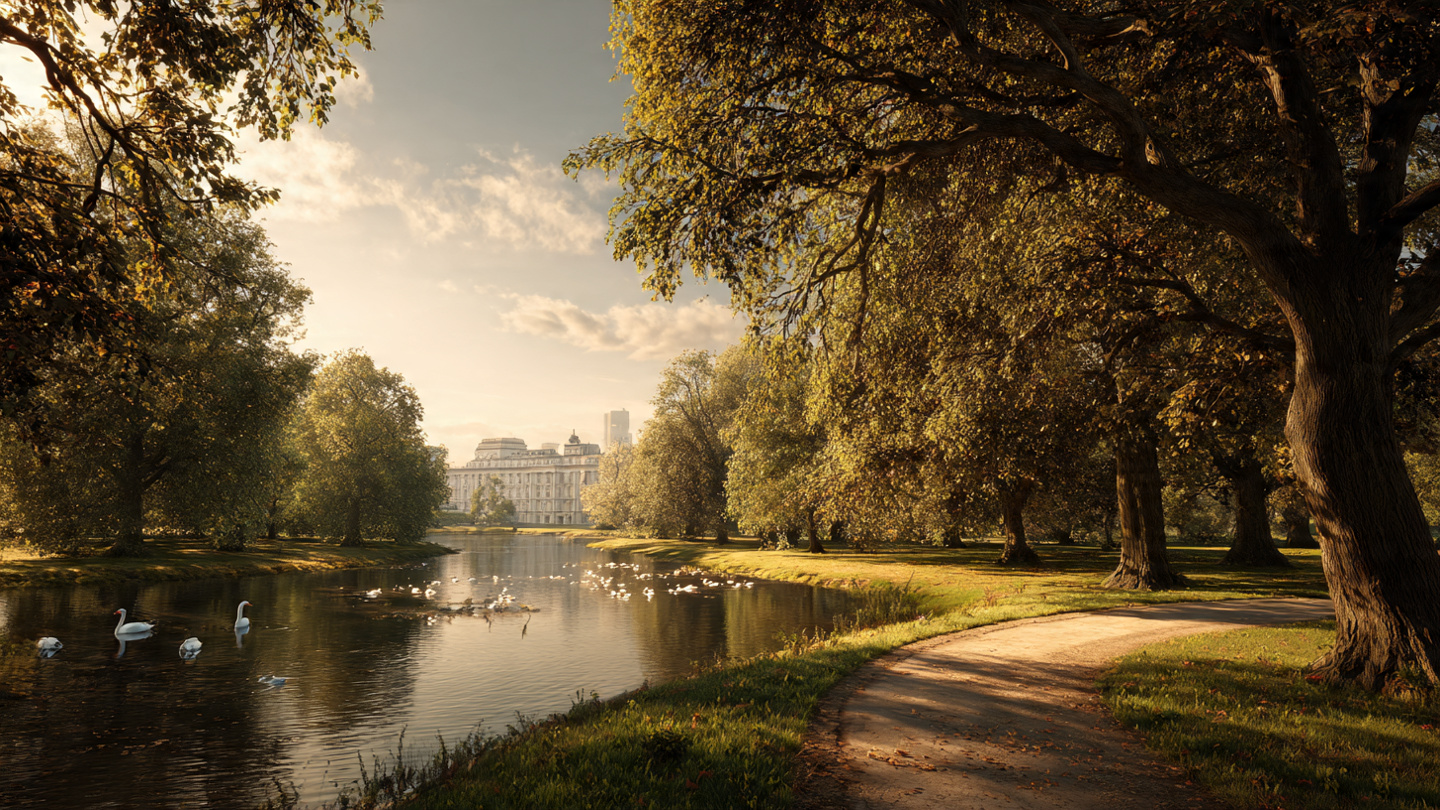
St James’s Park sits near Buckingham Palace and Westminster. Therefore, it carries strong ceremonial associations. The park’s lake, tree-lined pathways, and curated flower displays create a balanced visual environment.
Moreover, its location along royal routes enhances its symbolic value. As a result, many visitors encounter it while exploring nearby landmarks, making it one of the most photographed royal parks.
The Green Park: Simplicity Beside Ceremony
The Green Park lies adjacent to St James’s Park and Buckingham Palace. However, unlike its neighboring parks, it contains fewer formal gardens and floral displays. Instead, it offers wide lawns and mature trees.
Because of this simplicity, the space feels calm and understated. While it shares royal proximity, its design favors openness rather than ornamentation.
Regent’s Park and Primrose Hill: Formal Gardens and Elevated Views
Regent’s Park combines structured gardens, open sports fields, and cultural venues. In addition, Primrose Hill, which forms part of the royal park system, provides one of the most celebrated panoramic views of the London skyline.
Therefore, this area attracts both leisure visitors and photography enthusiasts. While Regent’s Park emphasizes formal horticulture, Primrose Hill introduces elevation and sweeping perspective.
For travelers prioritizing skyline perspective and golden-hour photography, our curated guide to Best Sunset Viewpoints in London highlights elevated locations and riverside angles that complement the panoramic views found within the royal park system.
Greenwich Park: Maritime Heritage and Global Time
Greenwich Park stands apart geographically from the central cluster. Located in southeast London, it overlooks the River Thames and connects directly with maritime history.
Furthermore, the Royal Observatory sits within its boundaries. As a result, visitors experience both natural beauty and global scientific significance. This combination distinguishes Greenwich Park within the royal parks of London collection.
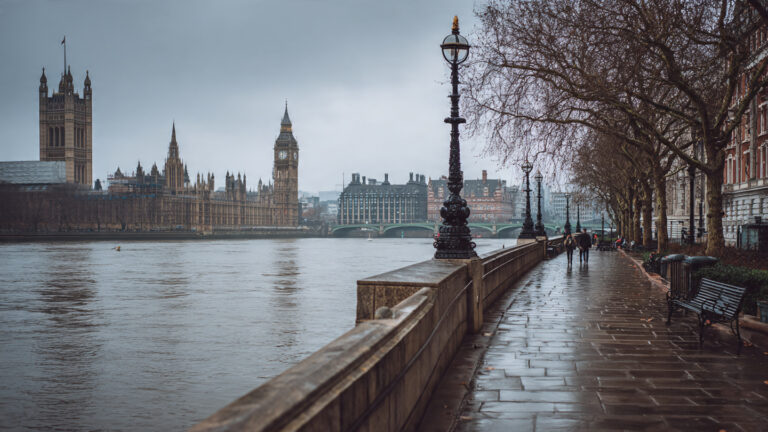
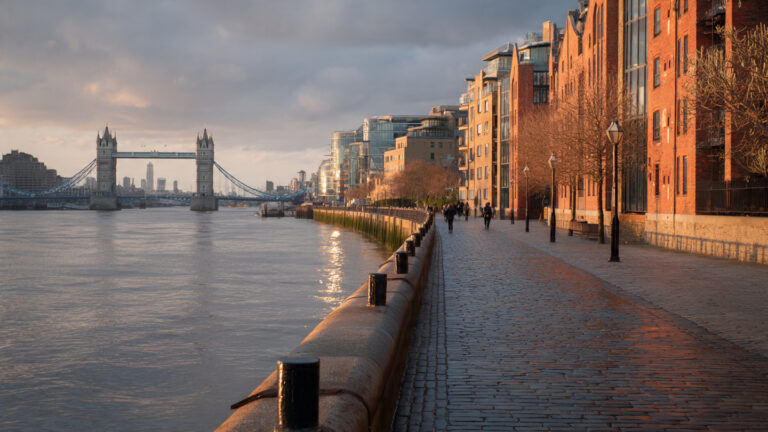
Since several royal parks connect visually or geographically with the River Thames, those seeking longer waterfront routes can continue their exploration with our guide to Scenic walks along the River Thames London for structured riverside itineraries.
Richmond Park: Vast Landscapes and Wildlife
Richmond Park offers the largest open space among the royal parks. Unlike central parks, it feels expansive and semi-rural. Deer roam freely across its meadows, reinforcing its origins as a hunting ground.
Because of its scale, visitors often cycle or take extended walks through its terrain. Consequently, Richmond Park provides a different rhythm compared to more centrally located parks.
Bushy Park: Waterways and Historic Character
Bushy Park lies near Hampton Court Palace and shares a strong historical connection to royal estates. Long water features, tree-lined avenues, and open grasslands define its landscape.
Although it attracts fewer international tourists than Hyde Park or St James’s Park, it remains an integral part of the royal park system. Therefore, it contributes to the diversity of environments within the collection.
How the Parks Are Distributed Across London
Geographically, the royal parks of London are not concentrated in one district. Instead, they form a network stretching across central and outer boroughs. Some lie near major ceremonial landmarks. Others extend toward quieter residential areas.
This distribution allows visitors to experience different atmospheres without leaving the city. Moreover, it ensures that the royal park system serves both local communities and international travelers.
Why This Defined List Matters
Understanding the complete list prevents confusion with other well-known green spaces. While London contains many historic parks, only these eight share the formal designation.
Therefore, when planning exploration, travelers can focus on this defined group. Each park offers a distinct experience. Yet together, they form a unified system that reflects centuries of British history and landscape design.
While royal parks offer grand scale and historic structure, London also has quieter corridors where nature feels less managed and more immersive. If you want a route that leans toward woodland edges, canals, and overlooked green paths rather than formal lawns, explore Hidden Walking Trails in London.
Hyde Park and Kensington Gardens
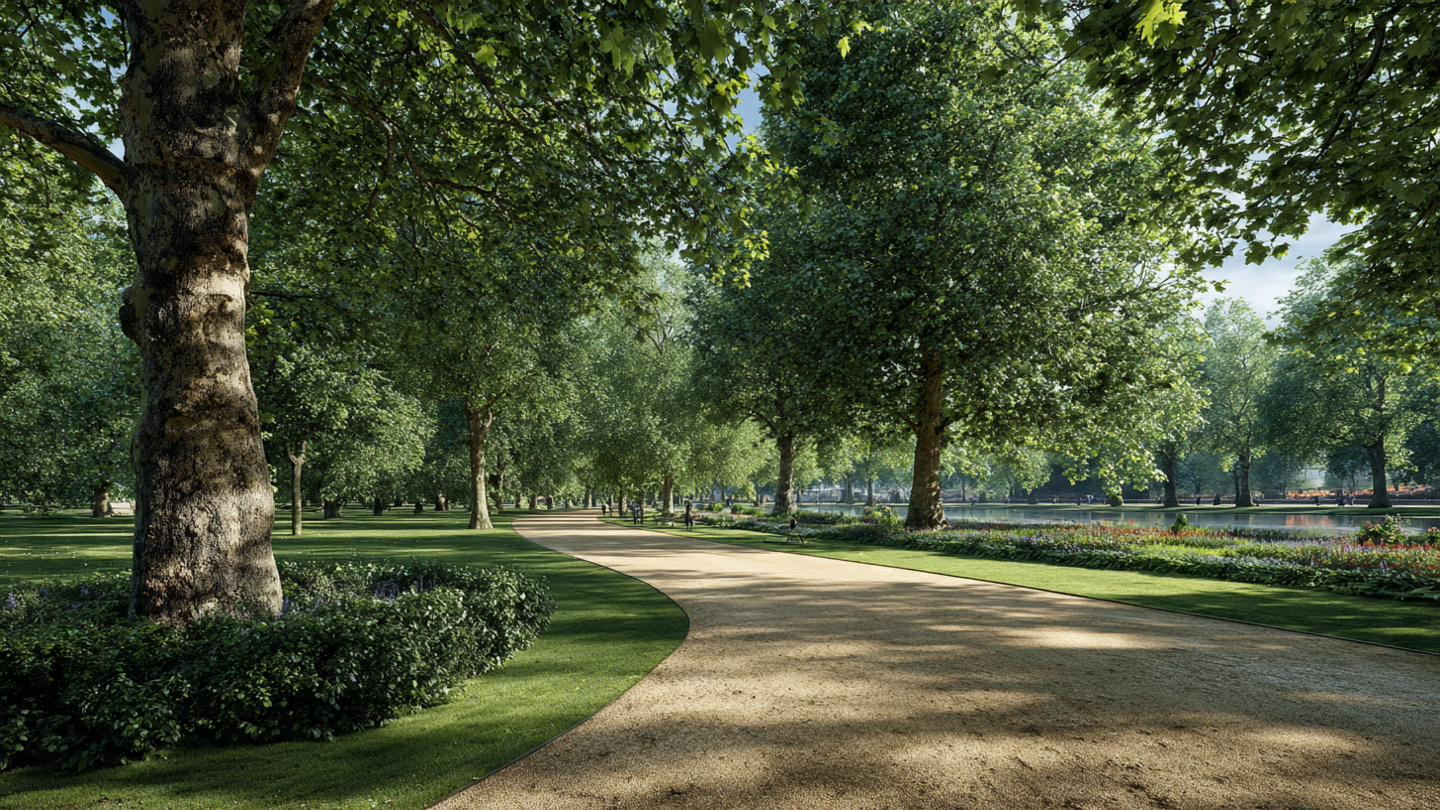
At first glance, Hyde Park and Kensington Gardens appear to form a single continuous green space. In practice, however, they operate as two distinct environments with different historical purposes and visual character. Although no physical barrier separates them today, their identities evolved separately over centuries.
Hyde Park reflects openness and civic energy. By contrast, Kensington Gardens feels more structured and refined. Therefore, understanding the subtle differences between them helps visitors experience both fully rather than treating them as interchangeable areas.
Hyde Park: From Royal Hunting Ground to Public Forum
Hyde Park entered royal ownership in the sixteenth century when Henry VIII acquired it for hunting. Initially, it served as private land reserved for the monarchy and their guests. Over time, however, access widened, and the park gradually transformed into a public space.
Eventually, Hyde Park became known not only for leisure but also for public expression. Speaker’s Corner emerged as a symbolic site for open debate and civic discussion. As a result, the park developed a dual identity: part recreational landscape, part social platform. This layered character continues to define its atmosphere today.
The Scale and Layout of Hyde Park
One of the defining features of Hyde Park is its scale. Wide lawns stretch across open terrain, while tree-lined avenues create structured walking routes. The Serpentine Lake cuts through the park, providing both visual focus and recreational activity.
Because of this layout, visitors can choose different types of experiences within the same space. Some prefer calm lakeside walks. Others gather for outdoor concerts or large-scale events. Consequently, Hyde Park often feels dynamic rather than purely tranquil.
Landmarks Within Hyde Park
Hyde Park contains several notable landmarks that enhance its cultural value. The Diana, Princess of Wales Memorial Fountain attracts visitors seeking reflection. Nearby, the Serpentine Galleries add a contemporary artistic dimension to the landscape.
Very good for nature walks alone, with friends or with family. Nice environment and has nice places to sit.
Read more reviews at Tripadvisor.
In addition, various memorials and statues connect the park to broader national history. Therefore, walking through Hyde Park often feels like moving through an open-air historical gallery as well as a green retreat.
Seasonal Changes in Hyde Park
Seasonal shifts significantly affect the experience of Hyde Park. In spring, trees regain foliage and walking paths feel fresh and active. During summer, large events and open-air gatherings increase foot traffic.
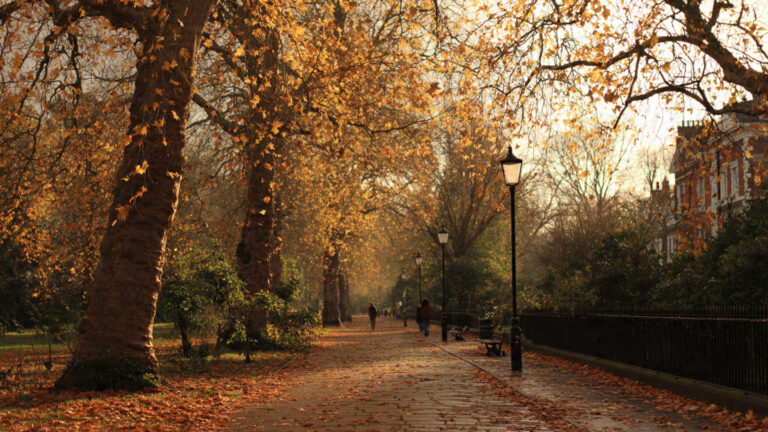
Autumn introduces warmer tones across the lawns and wooded areas. Meanwhile, winter often creates a quieter atmosphere, particularly outside major seasonal attractions. Because of these variations, repeat visits reveal new perspectives throughout the year.
Kensington Gardens: A More Formal Environment
Although connected to Hyde Park, Kensington Gardens presents a more formal aesthetic. Historically, it formed part of the private gardens associated with Kensington Palace. Consequently, its layout reflects structured landscaping rather than open meadow.
Ornamental flower beds, decorative fountains, and symmetrical pathways define the space. Therefore, visitors often notice a shift in tone when crossing from Hyde Park into Kensington Gardens.
Kensington Palace and Royal Residence
Kensington Palace sits within the boundaries of Kensington Gardens, reinforcing its royal heritage. Unlike Hyde Park, which developed a civic reputation, Kensington Gardens retains stronger residential and ceremonial associations.
Because of this connection, the area often attracts visitors interested in royal history. However, even without entering the palace, the surrounding gardens convey a sense of continuity between monarchy and landscape.
The Italian Gardens and Structured Design
One of the most visually distinctive areas within Kensington Gardens is the Italian Gardens. Decorative basins, statues, and symmetrical arrangements create a classical atmosphere.
As a result, this section feels intentionally composed rather than organically open. Visitors who appreciate formal garden design often spend more time here than in the broader Hyde Park lawns.
The Atmosphere Compared
Although Hyde Park and Kensington Gardens share physical space, their atmospheres differ noticeably. Hyde Park tends to feel expansive, active, and occasionally event-driven. In contrast, Kensington Gardens offers quieter, more controlled surroundings.
Therefore, travelers can experience two distinct interpretations of royal landscape design without changing location. This contrast strengthens their combined role within the royal parks of London.
Practical Visiting Strategy
For first-time visitors, beginning in Hyde Park allows appreciation of its scale and civic identity. Afterwards, gradually moving toward Kensington Gardens reveals a transition into more formal design.
Because the two areas connect seamlessly, exploring both in a single visit feels natural. Nevertheless, allocating time intentionally to each ensures a more balanced experience.
Why Hyde Park and Kensington Gardens Matter
Together, Hyde Park and Kensington Gardens form one of the most recognized segments of the royal parks of London. They demonstrate how a shared historical origin can produce different landscape outcomes.
On one side, openness and public life dominate. On the other, structure and royal residence shape the environment. Consequently, these parks illustrate the broader diversity found across the royal park system.
St James’s Park and Green Park
A Royal Corridor at the Heart of London
St James’s Park and Green Park sit at the ceremonial core of London. Positioned between Buckingham Palace, Westminster, and The Mall, they form part of a visual and political corridor that has shaped national events for centuries. Therefore, their location alone gives them a prominence different from many other green spaces in the city.
Unlike parks that feel removed from government buildings, these two landscapes operate alongside royal ceremony and state occasions. As a result, visitors often encounter them while moving between major landmarks rather than visiting them in isolation.
St James’s Park: Designed for Scenic Elegance
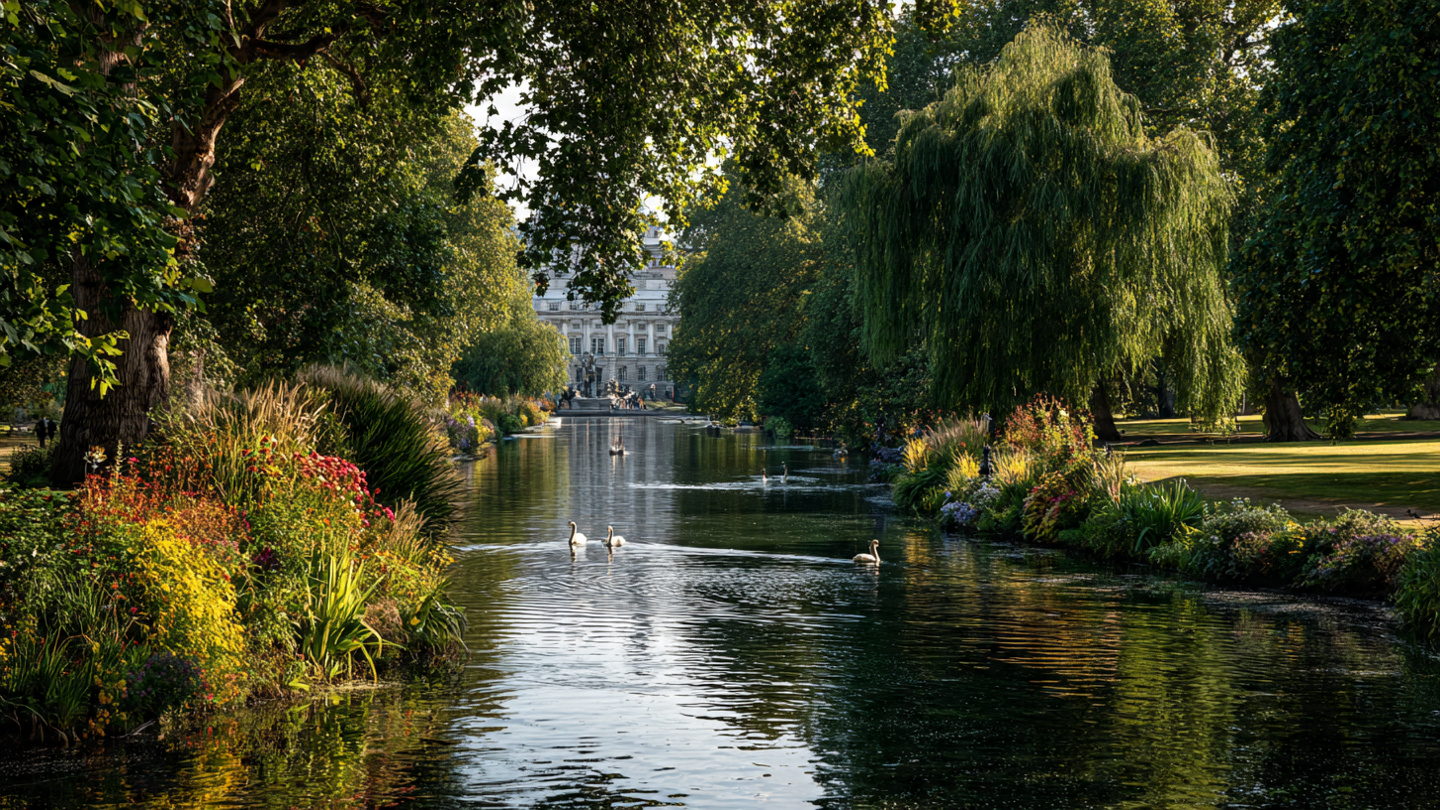
St James’s Park is widely regarded as one of the most picturesque of the royal parks of London. Its central lake curves gently through the landscape, creating reflective water views framed by trees and flower beds. Consequently, the design feels intentional and composed rather than purely natural.
Moreover, bridges crossing the lake offer balanced sightlines toward Buckingham Palace at one end and the London skyline at the other. Because of these perspectives, photographers and casual walkers alike are drawn to the park throughout the year.
Royal Ceremonial Context
The park’s proximity to Buckingham Palace gives it ceremonial significance. During national celebrations and royal events, processions often pass nearby. Therefore, St James’s Park becomes part of a broader symbolic setting rather than simply a recreational area.
In addition, the surrounding architecture reinforces this atmosphere. Government buildings, royal residences, and historic institutions frame the park’s boundaries. As a result, the environment blends political heritage with landscaped tranquility.
Wildlife and Water Features
Despite its central position, St James’s Park supports diverse wildlife. Waterfowl gather around the lake, and pelicans have become a long-standing feature of the park. Consequently, visitors experience both structured garden design and living ecological activity.
The lake itself acts as the park’s visual anchor. Not only does it reflect surrounding landmarks, but it also softens the urban backdrop. Therefore, even though the park sits in a busy district, the water creates a sense of openness.
Seasonal Appeal of St James’s Park
Throughout the year, seasonal changes alter the park’s character. In spring, flower beds become vibrant focal points. During summer, the lawns invite longer stays and relaxed walks.
Autumn introduces warmer tones along the pathways, while winter often highlights the stark beauty of bare branches against ceremonial buildings. Because of this variation, repeat visits reveal subtle differences in atmosphere.
Green Park: Simplicity Beside Royal Grandeur
Adjacent to St James’s Park, Green Park presents a contrasting aesthetic. Unlike its neighbor, it contains fewer decorative flower beds and formal gardens. Instead, wide lawns and mature trees dominate the landscape.
Consequently, Green Park feels understated and open. While it shares royal proximity, its simplicity creates a calmer tone. Therefore, visitors seeking quieter surroundings often gravitate toward this space.
Historical Character of Green Park
Green Park’s history links closely with nearby royal estates. However, its design evolved with less emphasis on ornamental features. As a result, it retains a more natural appearance compared to the curated layout of St James’s Park.
Although it may seem less dramatic visually, this restraint gives the park a distinct identity within the royal parks of London collection. It provides breathing space between ceremonial landmarks without competing for attention.
Walking Routes Between the Two Parks
Because St James’s Park and Green Park connect seamlessly, visitors can explore both during a single walk. Starting near Westminster and moving toward Buckingham Palace naturally guides travelers through St James’s Park first.
From there, crossing into Green Park introduces a shift in atmosphere. Consequently, this transition highlights the contrast between structured beauty and open simplicity. Planning a route that includes both enhances understanding of their differences.
Experiencing Ceremony and Calm Together
One of the defining strengths of these parks lies in their balance. On one side, St James’s Park offers visual refinement and ceremonial association. On the other, Green Park provides understated calm within the same geographic zone.
Therefore, together they demonstrate how the royal parks of London accommodate both national symbolism and everyday recreation. Visitors can witness grand architectural backdrops while enjoying peaceful green surroundings.
Why These Parks Matter Within the Royal Collection
St James’s Park and Green Park reinforce the idea that royal designation involves more than size or popularity. Their significance stems from proximity to monarchy, ceremonial pathways, and historical continuity.
At the same time, they remain fully accessible public landscapes. Consequently, they embody the broader evolution of royal land into shared civic space. This dual character makes them essential components of the royal park system.
Regent’s Park and Primrose Hill
A Shift Toward Formal Design and Open Culture
Regent’s Park introduces a different rhythm within the royal parks of London. While St James’s Park emphasizes ceremonial proximity and Hyde Park reflects civic energy, Regent’s Park blends formal garden design with cultural and recreational space. Therefore, it feels both structured and lively at the same time.
Its layout was influenced by early nineteenth-century planning, which aimed to combine residential elegance with landscaped openness. As a result, the park reflects intentional architectural vision rather than gradual evolution alone.
Structured Gardens and Landscaped Symmetry
One of the defining features of Regent’s Park is its structured horticulture. Ornamental gardens, geometric pathways, and decorative planting areas create a sense of order. Consequently, visitors often notice greater symmetry here compared to Hyde Park’s broader open lawns.
The Queen Mary’s Gardens area stands out for its floral arrangements and seasonal color. During peak blooming months, carefully arranged flower beds become visual focal points. Therefore, Regent’s Park appeals strongly to visitors who appreciate garden design as much as open green space.
Open Lawns and Recreational Activity
Although the park features formal elements, it also contains large open fields used for sports and relaxation. Because of this dual design, it accommodates multiple types of visitors at once.
Families picnic on the grass, local teams use sports pitches, and individuals walk or cycle along designated paths. As a result, Regent’s Park balances aesthetic refinement with active recreation.
Cultural Institutions Within the Park
Regent’s Park also hosts cultural venues, including the Open Air Theatre. This addition reinforces its role as more than a simple park. During warmer months, performances take place beneath the sky, blending landscape and entertainment.
Furthermore, the presence of London Zoo at the park’s northern edge adds another dimension. Therefore, Regent’s Park connects natural landscape with educational and artistic experiences.
Primrose Hill: Elevation and Perspective
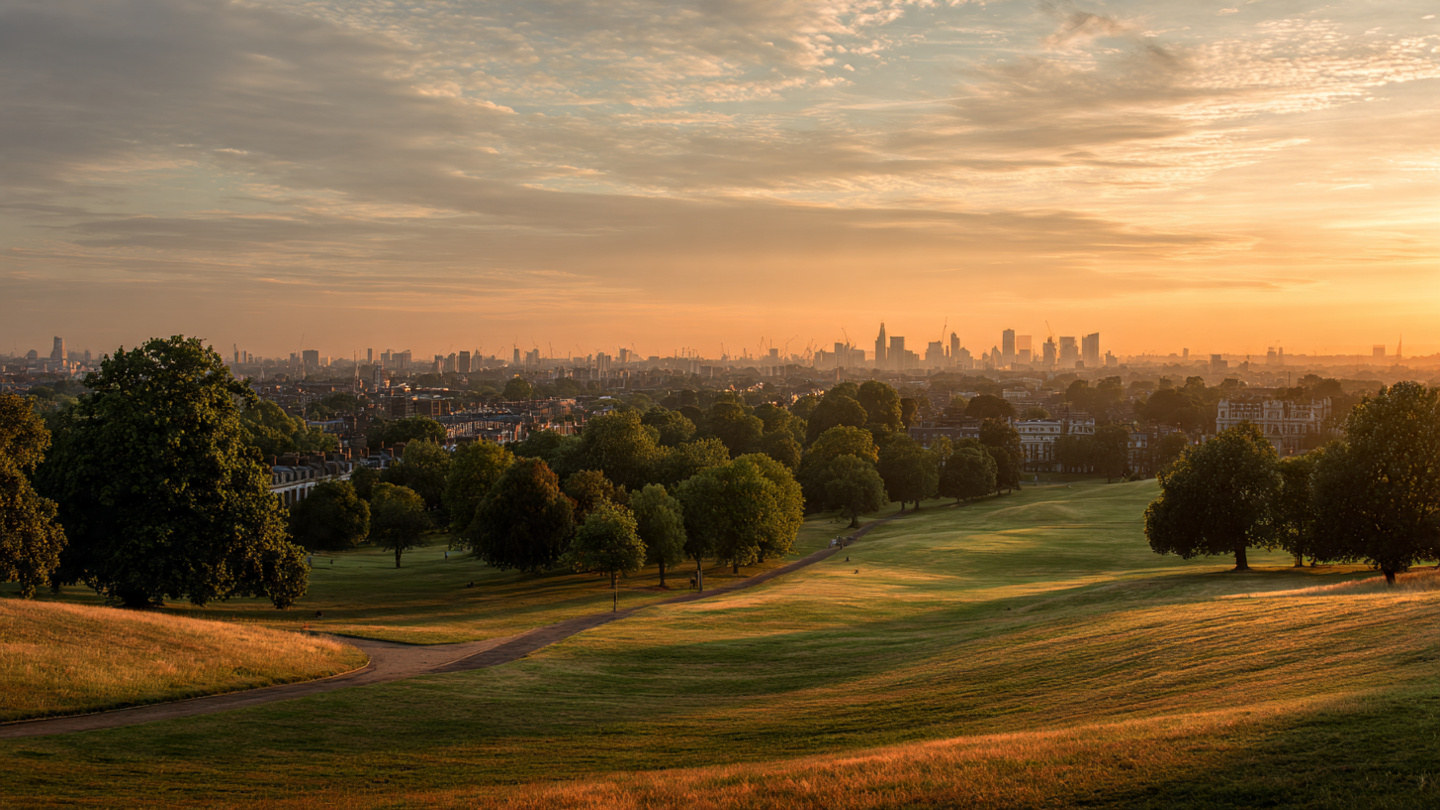
Adjacent to Regent’s Park lies Primrose Hill, which forms part of the royal park system. Unlike the structured gardens below, Primrose Hill offers a more natural, open slope leading to elevated views.
Because of its height, visitors gain one of the most recognizable skyline panoramas in London. The view stretches across central landmarks and modern towers alike. Consequently, Primrose Hill attracts photographers, couples, and sunset watchers throughout the year.
Contrast Between Garden and Hill
The contrast between Regent’s Park and Primrose Hill highlights diversity within a single area. While the lower park emphasizes symmetry and cultivated design, the hill feels informal and expansive.
Therefore, visitors experience two distinct moods within walking distance. This variation strengthens their collective contribution to the royal parks of London.
Seasonal Experience Across Both Spaces
Seasonal change affects Regent’s Park and Primrose Hill in different ways. In spring and early summer, garden areas reach peak visual impact. Meanwhile, the hill remains popular for longer daylight and evening views.
Autumn introduces softer tones across the lawns and tree lines. During winter, clearer skies sometimes enhance skyline visibility from Primrose Hill. Consequently, both areas offer year-round interest, though the atmosphere shifts noticeably.
Accessibility and Visitor Flow
Because Regent’s Park sits north of central tourist corridors, it often feels less crowded than Hyde Park. However, its popularity increases on weekends and during events. Primrose Hill, especially at sunset, can attract concentrated groups seeking panoramic views.
Therefore, visiting during early morning or weekday hours provides a calmer experience. Planning timing carefully enhances enjoyment of both areas.
Why Regent’s Park and Primrose Hill Matter
Within the broader system of royal parks of London, Regent’s Park and Primrose Hill demonstrate architectural intention combined with natural elevation. They show how royal land evolved not only for hunting or ceremony but also for planned urban expansion.
Moreover, their mix of culture, sport, and scenic perspective reflects modern adaptation. As a result, they stand as examples of how historic designation can coexist with contemporary public life.
Greenwich Park
A Royal Landscape with Maritime Identity
Greenwich Park occupies a distinct position within the royal parks of London. Unlike the central cluster near Buckingham Palace and Westminster, this park sits in southeast London overlooking the River Thames. Therefore, its atmosphere differs noticeably from parks surrounded by dense urban activity.
Its elevated terrain and maritime associations create a setting that feels both historic and expansive. As a result, visitors often experience a stronger sense of perspective here, both geographically and historically.
Origins and Royal Ownership
Greenwich Park dates back to the fifteenth century when it became associated with royal residences in the area. Over time, it formed part of a larger royal estate connected to the Tudor monarchy. Consequently, its development reflected both practical use and symbolic presence.
Unlike parks designed primarily for open lawns, Greenwich incorporated structured avenues and terraced landscapes. Therefore, it carries a more formal layout compared to some other royal parks.
The Royal Observatory and Global Significance
One of the defining features of Greenwich Park is the Royal Observatory located at the top of the hill. This institution established Greenwich Mean Time, which became a global time reference standard. Because of this connection, the park links local landscape with international scientific history.
Visitors standing at the observatory experience more than a scenic view. They encounter a site that shaped global navigation and timekeeping. Consequently, Greenwich Park adds intellectual and maritime depth to the royal park collection.
Elevated Views Across London
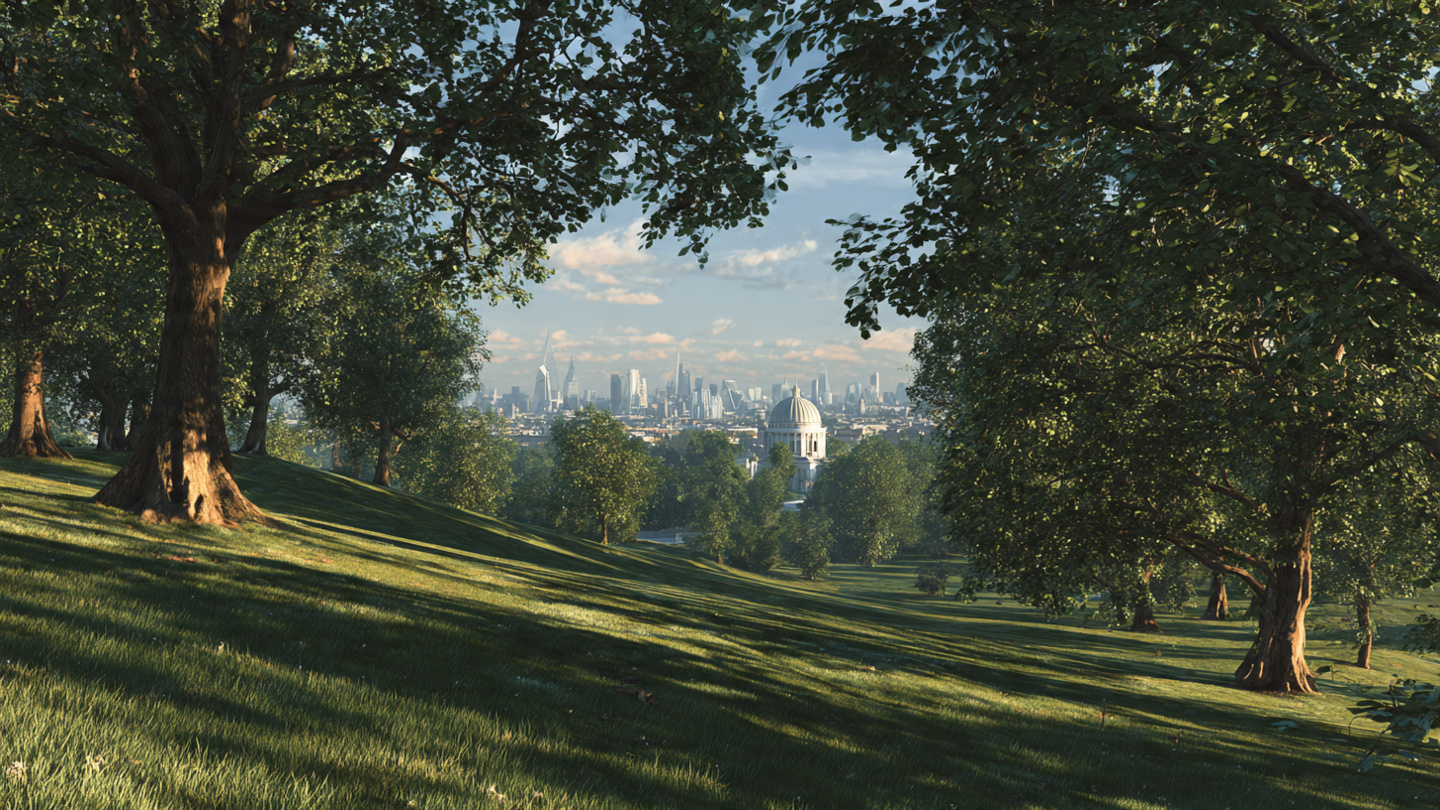
The hilltop location provides one of the most expansive viewpoints within the royal parks of London. From the summit, visitors can see the River Thames curve through the city, with modern towers rising beyond historic buildings.
Great park to visit while in London. It has been a dream for me being here and appreciated the chance for the visit. My experience walking in the park was nice with beautiful views of the city in sight. Highly recommendes
Read more reviews at Tripadvisor.
This elevation distinguishes Greenwich from flatter parks such as Hyde Park or Green Park. Therefore, it appeals strongly to those seeking panoramic perspective rather than enclosed garden design.
Formal Avenues and Open Slopes
While the hill dominates attention, the park also contains structured pathways and long tree-lined avenues. These formal elements guide visitors gradually upward toward the observatory.
At the same time, open grassy slopes invite informal seating and relaxed gatherings. Consequently, Greenwich Park combines architectural intention with casual recreation.
Maritime and Cultural Surroundings
Greenwich Park does not stand alone. It forms part of a broader historic setting that includes maritime institutions and preserved architecture. Therefore, visiting the park often becomes part of a larger exploration of the surrounding district.
This context reinforces its importance within the royal parks of London. The park connects monarchy, science, navigation, and urban development within a single geographic space.
Seasonal Experience in Greenwich Park
Seasonal shifts change the character of the park significantly. In spring, tree-lined avenues regain fresh foliage, creating framed pathways toward the hilltop. During summer, open slopes become popular resting spots with extended daylight.
Autumn introduces warm tones across elevated landscapes, while winter often sharpens skyline visibility due to clearer air. Because of its height, the park feels more exposed to weather conditions, which adds variation throughout the year.
Accessibility and Atmosphere
Although slightly removed from central tourist routes, Greenwich Park remains accessible by public transport. Its location often results in a calmer atmosphere compared to Hyde Park or St James’s Park.
Therefore, visitors who prefer wider space and fewer crowds may find it especially appealing. The sense of openness enhances the feeling of distance from central congestion.
Why Greenwich Park Strengthens the Royal Collection
Within the broader framework of royal parks of London, Greenwich Park demonstrates diversity in geography and purpose. While some parks emphasize ceremony or horticulture, Greenwich highlights maritime history and global scientific influence.
At the same time, it remains fully integrated into public life. Families picnic on the slopes, joggers follow winding paths, and visitors pause at scenic viewpoints. Consequently, the park represents both historic legacy and everyday use.
Richmond Park and Bushy Park

Expansive Landscapes Beyond Central London
Richmond Park and Bushy Park introduce a noticeably different scale within the royal parks of London. Unlike centrally located parks framed by government buildings and dense streets, these two landscapes feel vast and semi-rural. Therefore, visitors often experience a stronger sense of escape from urban intensity.
Although both remain within Greater London, their atmosphere resembles countryside terrain rather than metropolitan green space. As a result, they broaden the diversity found across the royal park system.
Richmond Park: Scale and Natural Openness
Richmond Park is the largest of the royal parks. Its wide meadows, wooded areas, and gently rolling terrain create an expansive environment rarely associated with capital cities. Consequently, walking through Richmond Park often feels more immersive than strolling through smaller urban parks.
The park’s origins trace back to the seventeenth century when it was enclosed as a deer park. Even today, herds of deer roam freely across the landscape. Because of this continuity, Richmond Park preserves visible traces of its historic purpose.
Wildlife and Ecological Character
Wildlife defines much of Richmond Park’s identity. Deer populations move across open fields, particularly during quieter hours of the day. In addition, ancient trees and protected habitats support diverse birdlife and plant species.
Therefore, conservation plays a central role in maintaining the park’s ecological balance. Visitors are encouraged to respect wildlife boundaries, reinforcing the idea that Richmond Park functions not only as recreational land but also as protected natural habitat.
Cycling, Walking, and Outdoor Activity
Because of its size, Richmond Park accommodates long-distance cycling and extended walking routes. Unlike smaller parks designed primarily for short visits, this landscape invites deeper exploration.
Cyclists follow designated roads that loop through the park, while walkers use trails cutting across meadows and wooded areas. As a result, Richmond Park appeals strongly to those seeking outdoor activity within city limits.
Bushy Park: Historic Avenues and Water Features
Bushy Park, located near Hampton Court Palace, offers a different yet complementary atmosphere. While it shares open space with Richmond Park, its layout includes long tree-lined avenues and formal water features.
One of its most recognizable characteristics is the grand avenue leading toward Hampton Court. This structured approach contrasts with Richmond’s more rugged openness. Therefore, Bushy Park balances natural landscape with historical symmetry.
Royal Estate Connection
Bushy Park’s proximity to Hampton Court Palace reinforces its royal heritage. Historically, it formed part of the estate associated with Tudor and Stuart monarchs. Consequently, its design reflects ceremonial influence alongside natural terrain.
Although it attracts fewer international tourists compared to Hyde Park, Bushy Park remains integral to the royal parks of London network. Its quieter environment often appeals to local visitors and those seeking less crowded surroundings.
Seasonal Variation Across Both Parks
Seasonal change dramatically alters the experience of Richmond and Bushy Parks. In spring, new foliage and active wildlife create vibrant scenery. During summer, wide meadows invite extended stays and outdoor recreation.
Autumn transforms tree-lined avenues with warm tones, especially in Bushy Park. Meanwhile, winter highlights the stark beauty of open landscapes and ancient trees. Because these parks contain large natural areas, weather patterns shape their atmosphere more noticeably than in central parks.
Comparing Richmond and Bushy Park
Although often mentioned together, Richmond and Bushy Park offer distinct experiences. Richmond emphasizes wildlife and open terrain. Bushy Park introduces more structured pathways and architectural framing.
Therefore, visitors choosing between them should consider preference for scale versus symmetry. However, exploring both reveals how varied the royal parks of London can be beyond central districts.
Why These Outer Parks Matter
Richmond Park and Bushy Park demonstrate that royal designation extends beyond ceremonial proximity. While central parks connect closely to political landmarks, these outer parks preserve the older concept of royal hunting grounds and estate land.
At the same time, they remain fully public and accessible. Consequently, they illustrate the transformation of royal land into shared environmental space while retaining visible historical character.
For a quieter, bigger-space experience, this Outer Royal Parks day trip map helps you plan Greenwich, Richmond, and Bushy with realistic travel time.
The History and Governance of the Royal Parks
Origins in Monarchical Control
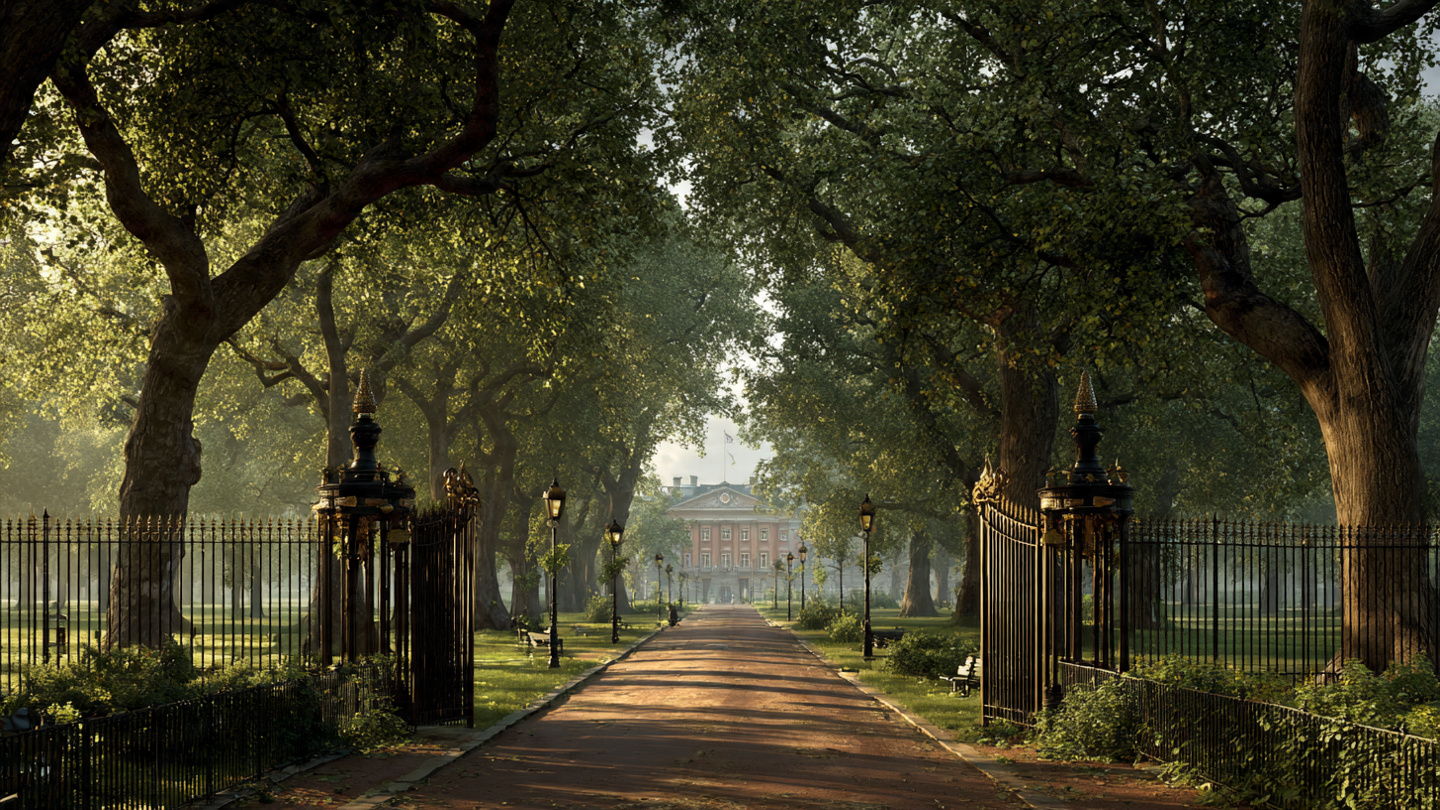
The story of the royal parks of London begins with direct royal ownership. In earlier centuries, monarchs controlled vast tracts of land surrounding the capital. These lands served practical and symbolic purposes, including hunting, leisure, and demonstrations of authority. Therefore, early park boundaries reflected power structures as much as landscape planning.
Over time, royal priorities shifted. While some estates remained private, others gradually opened to limited public use. This transition marked the beginning of their evolution from exclusive territory to shared civic space.
Public access did not occur overnight. Instead, it expanded in stages influenced by political reform and social pressure. As London’s population grew, demand for open space increased. Consequently, restrictions eased in certain parks, allowing broader public enjoyment.
By the eighteenth and nineteenth centuries, many royal lands functioned more openly. However, their royal designation remained intact. Therefore, the parks retained historical identity even as their purpose changed.
The Role of Government Oversight
Eventually, formal governance structures developed to manage these landscapes. Responsibility shifted from direct royal administration to organized oversight under public authority. This change ensured maintenance, conservation, and accessibility while preserving heritage value.
Today, The Royal Parks charity oversees the eight official parks. Unlike borough-run green spaces, these parks operate under centralized management. As a result, policies regarding events, conservation, and infrastructure follow national guidelines rather than local council rules.
Balancing Heritage and Modern Use
One of the key challenges in managing the royal parks of London involves balancing preservation with contemporary demand. Millions of visitors pass through these spaces each year. Therefore, management must protect historic monuments, mature trees, and wildlife habitats while accommodating recreation.
For example, large public events require careful planning to avoid long-term environmental damage. Similarly, conservation teams monitor biodiversity and maintain listed structures. Consequently, governance extends beyond routine landscaping into heritage stewardship.
Funding and Maintenance Responsibilities
Maintaining expansive landscapes in central and outer London requires consistent funding. Revenue sources include government support, charitable contributions, and income generated through permitted events. Therefore, financial sustainability plays a critical role in long-term planning.
In addition, maintenance teams manage pathways, water features, and planting areas. Because the parks vary significantly in size and terrain, maintenance strategies differ across locations. This complexity reinforces the need for coordinated oversight.
Conservation and Environmental Policy
Environmental responsibility remains central to governance. Many areas within the royal parks include protected species and ancient trees. Consequently, ecological policy guides decisions about development and event placement.
In parks such as Richmond, wildlife protection measures restrict certain activities near deer habitats. Meanwhile, in central parks, planting schemes aim to preserve biodiversity despite heavy foot traffic. Therefore, conservation planning adapts to the unique characteristics of each park.
Events, Ceremonies, and Public Gatherings
Another important governance element involves regulating large gatherings. Because of their historical and symbolic value, some parks host national celebrations and cultural events. However, these occasions require permits and structured oversight.
Balancing openness with order ensures that the parks remain accessible while protecting long-term integrity. As a result, event management becomes part of maintaining both heritage and safety.
Legal Framework and Protected Status
The royal parks of London operate within a defined legal framework. Specific regulations govern behavior, commercial activity, and development within park boundaries. These rules help preserve public safety and historical significance.
For example, restrictions may apply to certain commercial filming activities or construction proposals. Therefore, the parks maintain a protected status that prevents uncontrolled alteration.
The Continuing Evolution of Governance
Although rooted in monarchy, the governance system continues to evolve. Modern expectations around environmental sustainability and public engagement influence decision-making. Consequently, management approaches adapt to contemporary challenges while respecting historical foundations.
This dynamic balance reflects the broader transformation of royal land into shared civic resource. Governance no longer centers on exclusive privilege. Instead, it emphasizes preservation, accessibility, and public benefit.
Why Governance Matters to Visitors
Understanding how these parks are managed adds depth to the visitor experience. Travelers may notice carefully maintained pathways, restored monuments, and structured event areas without realizing the coordination required behind the scenes.
Recognizing this framework highlights why the royal parks of London remain well-preserved despite heavy usage. Their quality is not accidental. Rather, it results from organized oversight rooted in centuries of historical transition.
Best Ways to Explore the Royal Parks
Planning Based on Location and Time
Exploring the royal parks of London becomes more rewarding when visitors plan according to geography and available time. Because the parks spread across central and outer boroughs, attempting to see all of them in a single day often leads to rushed movement rather than meaningful experience.
Instead, grouping nearby parks creates a smoother itinerary. For example, Hyde Park, Kensington Gardens, St James’s Park, and Green Park can form one connected walking route. Meanwhile, Greenwich Park or Richmond Park often require dedicated time due to their location and scale. Therefore, planning by area helps preserve energy and focus.
Walking as the Most Immersive Method
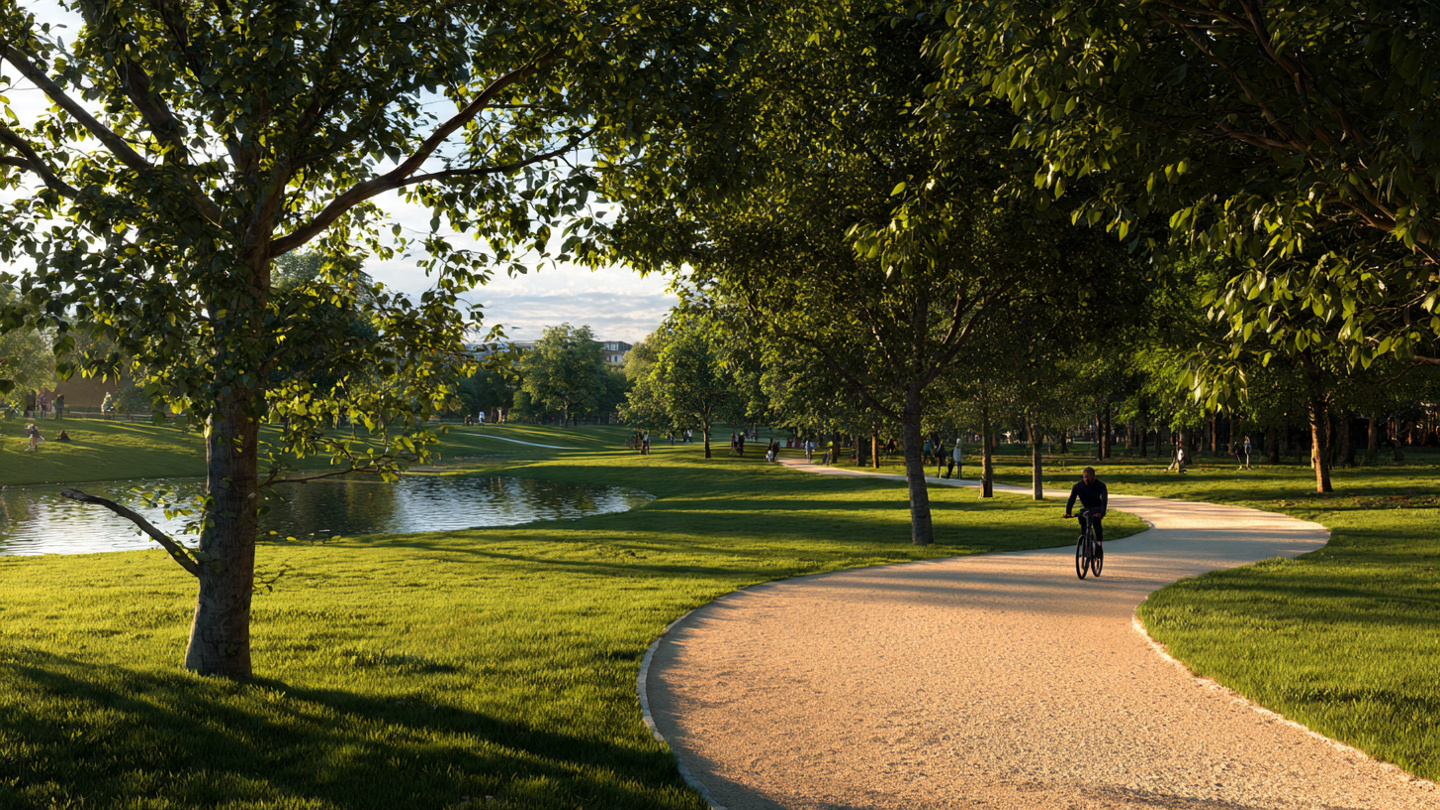
Although cycling is allowed in certain parks, walking remains the most immersive way to experience these landscapes. Slow movement reveals subtle transitions between formal gardens and open lawns. In addition, walking allows closer observation of statues, memorials, and tree-lined avenues.
Because the parks evolved over centuries, details often hide within pathways and side areas. Consequently, visitors who walk rather than rush tend to notice architectural framing, water reflections, and gradual shifts in design.
Combining Parks with Nearby Landmarks
Another effective strategy involves pairing park visits with surrounding attractions. For example, St James’s Park naturally connects with Buckingham Palace and Westminster. Similarly, Greenwich Park aligns with maritime landmarks in the same district.
By combining green space with cultural exploration, visitors avoid feeling as though they are choosing between sightseeing and relaxation. Instead, the royal parks of London become part of a larger narrative rather than standalone destinations.
Choosing the Right Time of Day
Timing significantly shapes atmosphere. Early mornings often provide quieter paths and softer light. During midday, parks near tourist corridors become busier. However, outer parks such as Richmond or Bushy may still feel open and spacious.
Evening hours introduce a different tone. In some parks, fading light enhances skyline views, particularly from elevated points such as Primrose Hill or Greenwich Park. Therefore, adjusting arrival time influences both crowd levels and visual experience.
Seasonal Considerations
Each season transforms the parks in noticeable ways. Spring emphasizes renewal, especially in formal garden areas. Summer invites longer stays and outdoor events. Autumn introduces warm foliage tones, while winter highlights architectural silhouettes and open horizons.
Because the royal parks of London contain both cultivated gardens and natural woodland, seasonal variation becomes highly visible. Therefore, returning visitors often discover new perspectives depending on time of year.
Respecting Wildlife and Protected Areas
While these parks remain open to the public, they also protect wildlife habitats. Richmond Park, in particular, requires visitors to maintain distance from deer. In addition, certain planting areas may restrict access to preserve biodiversity.
Understanding and respecting these boundaries enhances both safety and conservation. Consequently, responsible behavior contributes to maintaining the parks’ long-term quality.
Using the Parks for Different Travel Goals
The parks serve varied purposes depending on visitor intention. Some travelers seek quiet reflection. Others prioritize photography, exercise, or scenic walking. Therefore, identifying personal goals beforehand improves planning.
For instance, those seeking panoramic views may prioritize Greenwich Park or Primrose Hill. Meanwhile, travelers interested in ceremonial context may focus on St James’s Park. Because the parks differ in layout and character, aligning choice with purpose creates a more satisfying visit.
Avoiding Peak Congestion
Certain areas experience predictable crowd patterns. Hyde Park near major entrances, St James’s Park close to palace routes, and Primrose Hill at sunset often attract concentrated groups. However, moving slightly away from central access points usually reveals quieter paths.
If your priority is choosing the quietest entry points, off-peak windows, and calm sections within big landscapes, the guide to peaceful walking routes in London will help you plan royal park walks that feel less crowded and more relaxed.
Therefore, flexibility in route selection reduces congestion without sacrificing experience. Exploring side pathways or less prominent entrances often provides a calmer environment.
Allocating Time for Deeper Exploration
Visitors sometimes underestimate the size of these landscapes. Richmond Park and Regent’s Park, for example, require more than a brief stop to appreciate fully. Therefore, allocating sufficient time prevents rushed impressions.
Rather than trying to cover every corner, focusing on key sections within each park creates a balanced visit. This approach preserves energy while still capturing distinctive features.
Why Exploration Strategy Matters
The royal parks of London offer more than open lawns. They combine history, ecology, ceremony, and recreation within defined boundaries. Consequently, approaching them intentionally enhances understanding.
By planning thoughtfully, adjusting timing, and respecting conservation principles, visitors transform simple walks into layered experiences. As a result, the parks reveal depth that casual movement might overlook.
Royal Parks by Season
Spring: Renewal and Floral Display
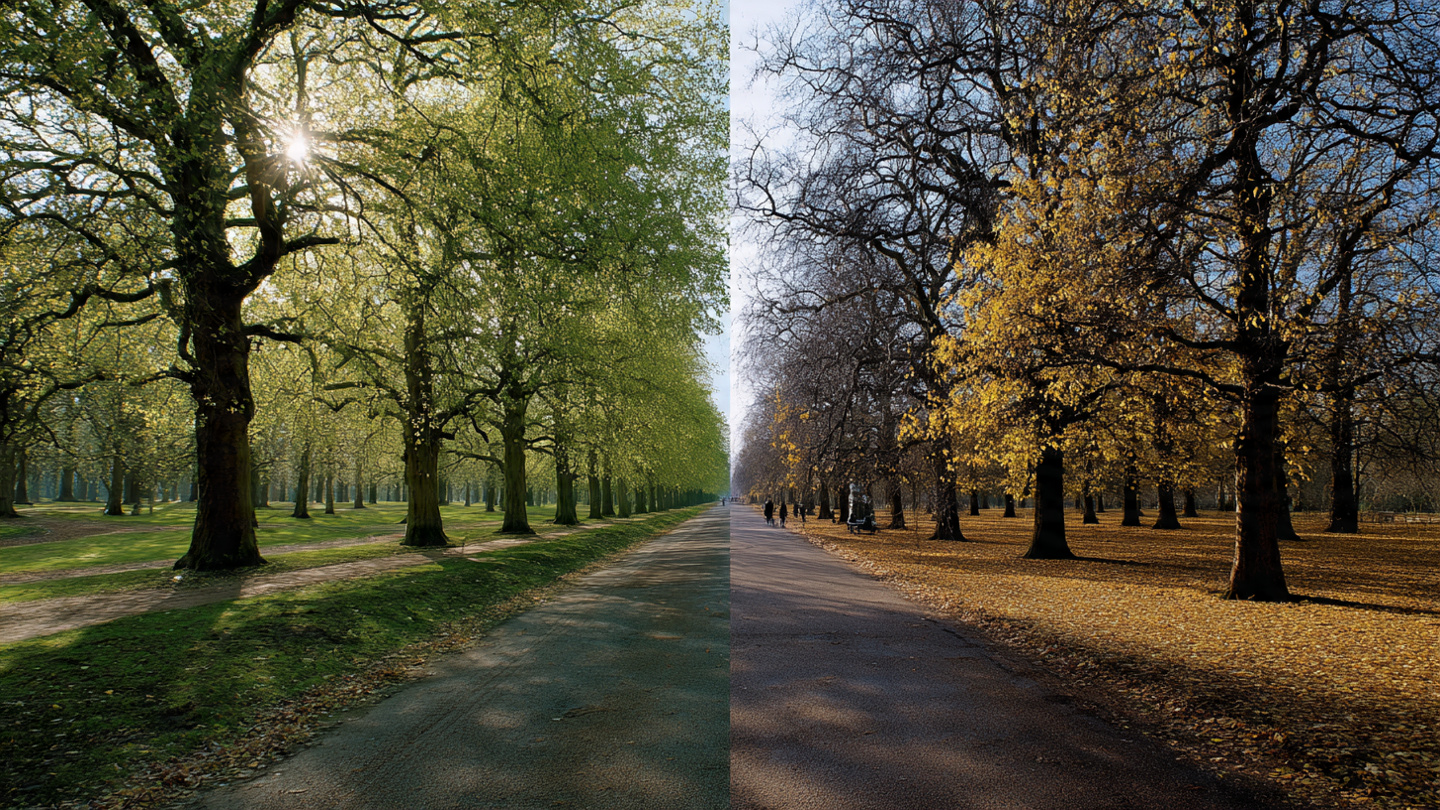
Spring introduces visible transformation across the royal parks of London. As temperatures rise, tree-lined avenues regain foliage and garden beds begin to bloom. In parks with formal planting schemes, such as Regent’s Park and Kensington Gardens, structured floral displays become especially noticeable.
Moreover, softer daylight and moderate crowds create balanced visiting conditions. Because many trees are in early leaf, skyline views remain partially open while greenery gradually increases. Consequently, spring often feels like a transitional season between architectural clarity and summer density.
Summer: Extended Light and Public Activity
Summer changes the rhythm of the parks significantly. Longer daylight hours encourage extended visits, outdoor gatherings, and cultural events. Hyde Park and Regent’s Park, in particular, host seasonal activities that attract larger crowds.
However, outer parks such as Richmond and Bushy still retain expansive breathing space due to their size. Therefore, while central parks become busier, the broader royal park system continues to offer varied atmospheres depending on location.
In addition, evening light enhances elevated viewpoints. Primrose Hill and Greenwich Park often draw visitors seeking panoramic scenes under extended daylight. As a result, summer emphasizes both social activity and scenic appreciation.
Autumn: Warm Tones and Calmer Pathways
Autumn brings noticeable color shifts across tree canopies. Richmond Park and Bushy Park, with their woodland areas, display especially rich tones during this period. Meanwhile, central parks such as St James’s Park offer reflective lake views framed by golden foliage.
Because tourist volume often decreases slightly after peak summer, pathways feel more open. Consequently, autumn provides a balanced environment for those seeking visual beauty without intense congestion.
The cooler air also makes longer walks more comfortable. Therefore, exploring multiple parks within a day becomes easier during this season.
Winter: Architectural Clarity and Open Horizons
Winter introduces a different kind of beauty. With many trees losing leaves, architectural landmarks and skyline views become more pronounced. In parks such as Greenwich and Primrose Hill, clearer air sometimes sharpens panoramic visibility.
Although temperatures may discourage extended stays, quieter conditions allow for reflective walking experiences. Moreover, fewer events mean less structured disruption across open lawns.
In some central parks, winter light reflecting off water surfaces adds visual contrast. Consequently, even without floral displays, the royal parks of London maintain aesthetic appeal throughout colder months.
Seasonal Events and Changing Atmosphere
Beyond natural shifts, seasonal programming influences atmosphere. Summer events in Hyde Park and Regent’s Park introduce energy and temporary infrastructure. Meanwhile, winter installations or festive gatherings alter central areas temporarily.
However, management ensures that long-term landscape integrity remains protected. Therefore, seasonal change enhances experience without permanently reshaping park identity.
Choosing the Best Season for Your Visit
Selecting the ideal season depends on visitor priorities. Those who prefer vibrant gardens may favor late spring or early summer. Travelers seeking calmer pathways often appreciate autumn or winter.
Because the royal parks of London vary in terrain and layout, each season highlights different strengths. For example, Richmond Park’s wildlife stands out year-round, while Regent’s Park’s floral sections peak during warmer months.
The Value of Returning in Different Seasons
One of the most compelling aspects of the royal park system is its seasonal adaptability. A park visited in summer may feel entirely different in winter. Consequently, repeat visits deepen appreciation for landscape diversity.
Rather than offering a single fixed experience, these parks evolve continuously with weather, light, and activity. Therefore, seasonality forms part of their enduring appeal.
Frequently Asked Questions
General Questions
There are eight official royal parks of London: Hyde Park, Kensington Gardens, St James’s Park, Green Park, Regent’s Park, Greenwich Park, Richmond Park, and Bushy Park.
Yes, all royal parks are free to enter. However, certain attractions inside them, such as museums or special events, may charge admission.
The land historically belonged to the monarchy, but today the parks are managed by The Royal Parks charity under national governance.
A park is designated as royal because it was originally owned or used by the British monarchy and remains part of the officially recognized Royal Parks system.
Visiting and Planning
Hyde Park and St James’s Park are often ideal for first-time visitors because they are centrally located and close to major landmarks.
Richmond Park is best known for wildlife, especially its free-roaming deer and large natural landscapes.
Yes. Several parks, including Hyde Park, Kensington Gardens, Green Park, and St James’s Park, are located close together and can be explored in a single walking route.
Spring and autumn are often considered ideal because of mild weather and seasonal color changes, although each season offers a different atmosphere.
Practical Information
Dogs are generally allowed but must follow specific park rules. Some areas may require dogs to be kept on a lead.
Cycling is permitted in certain parks and on designated paths. However, restrictions vary by location.
Most royal parks have paved pathways and accessible routes, particularly in central locations such as Hyde Park and Regent’s Park.
Yes, opening and closing times vary by season and park. Most close at dusk or early evening depending on the time of year.