
Hidden walking trails in London reveal a side of the city that most visitors never experience. Instead of following busy streets between landmarks, these quieter routes invite you to slow down and notice details. From the very first steps, the atmosphere shifts. The focus moves away from major attractions and toward subtle surroundings.
Unlike well-known sightseeing routes, these paths do not direct you toward iconic buildings. Rather, they guide you through woodland edges, forgotten railway corridors, quiet canals, and overlooked green spaces. As a result, the experience feels less structured and more personal.
While exploring lesser-known corridors and woodland paths reveals a quieter side of the capital, these routes ultimately form part of a much wider outdoor network. Many of the hidden walking trails in London connect directly or indirectly to larger historic landscapes, royal grounds, and structured parklands that shape the city’s identity. To understand how these quieter routes fit within London’s broader green framework, it helps to step back and view them within the full context of Parks in London.
Popular Tourist Routes Follow a Predictable Pattern
Most central walking routes share similar characteristics. Wide pavements, visible signage, and steady crowds create a constant rhythm. Because thousands of people follow these same streets each day, the environment becomes familiar even before you arrive.
Although those routes offer impressive views, they rarely provide solitude. In contrast, hidden walking trails in London reduce visual noise and foot traffic. Consequently, you become more aware of your surroundings instead of navigating through crowds.
For a broader look at fully immersive woodland, wetland, and riverside routes that prioritize ecological atmosphere over sightseeing, explore the complete guide to London nature walks.
Discovery Changes the Emotional Experience
When you discover a quieter trail, the emotional tone shifts immediately. Rather than moving quickly between attractions, you begin walking without pressure. There is no queue ahead and no landmark demanding your attention.
This freedom changes how you engage with the city. For example, the sound of leaves or distant water becomes noticeable. Meanwhile, subtle architectural details in nearby neighborhoods start to stand out. Because the environment feels less curated, the walk feels earned rather than presented.
The Atmosphere Feels Less Managed and More Natural
Tourist areas often feel carefully maintained. Surfaces are polished, lighting is consistent, and clear signposts remove uncertainty. While this structure helps visitors navigate easily, it also creates a controlled atmosphere.
Hidden walking trails in London operate differently. Paths may narrow without warning. Vegetation can grow closer to the walkway. Signage is sometimes minimal. Therefore, you pay closer attention to direction and movement. This heightened awareness makes the experience feel immersive rather than guided.
Although many hidden walking trails in London feel organic and lightly structured, they often sit close to historically protected landscapes shaped by royal ownership and formal design. Understanding the contrast between curated royal grounds and quieter woodland corridors adds depth to the walking experience, especially when viewed alongside the broader history of Royal Parks of London.
Sound and Space Shift Dramatically
City noise rarely disappears entirely. However, the soundscape changes noticeably on lesser-known routes. Trees soften traffic echoes. Waterways reduce harsh reflections. Open green corridors create breathing room between buildings.
Because of this shift, even trails located near busy districts can feel surprisingly calm. The contrast between surrounding density and interior quiet strengthens the sense of escape. As a result, many travelers are surprised to find peaceful walking routes so close to central London.
Local Life Replaces Tourist Movement
Another difference lies in who uses these trails. Major walking routes primarily serve visitors moving between attractions. Hidden routes, on the other hand, are often used by residents. Dog walkers, runners, and nearby families pass through regularly.
This local presence creates a steadier pace. Instead of hurried sightseeing, the rhythm feels integrated into daily life. Consequently, you experience London as a living city rather than a staged destination.
Slower Walking Encourages Deeper Observation
Without a famous landmark waiting at the end of the path, movement naturally slows. You stop because the light shifts through branches or because a quiet bridge catches your attention.
Moreover, seasonal changes become more visible. In spring, fresh growth lines the path. During autumn, fallen leaves transform the ground entirely. Because hidden walking trails in London are less commercialized, nature plays a central role in shaping the experience.
Many assume that quiet trails require long journeys outside the city center. In reality, several lesser-known paths begin only minutes from busy streets. A narrow entrance between buildings can open into woodland. Likewise, a small turning near a railway line can reveal an extended green corridor.
Therefore, accessibility is often easier than expected. The key difference is awareness, not distance.
Intention Transforms the Way You Walk
Ultimately, the strongest difference comes from intention. Tourist routes guide you automatically. Hidden routes require choice. When you decide to explore a quieter path, you shift from passive sightseeing to active discovery.
Hidden walking trails in London encourage that shift. They invite attention, patience, and curiosity. Instead of performing travel for photographs, you begin experiencing the city through texture, sound, and space.

Not every quiet path qualifies as one of the hidden walking trails in London. Some routes are lightly used because they sit far from transport links. Others appear empty only at certain times of day. Therefore, defining what truly makes a trail hidden requires more than counting how many people are present.
A genuinely hidden trail blends low visibility with low promotion. In other words, it exists without constant online exposure, heavy signage, or landmark branding. While locals may use it regularly, it rarely dominates travel guides or social media feeds.
Limited Signage Creates Subtle Entry Points
Many well-known walking routes in London are clearly marked. Signs direct visitors from transport stations to scenic viewpoints. Maps are displayed at entrances. As a result, movement feels guided and predictable.
By contrast, hidden walking trails in London often begin quietly. The entrance may sit between residential buildings or behind a modest park gate. Occasionally, the path is visible only after turning off a main road. Because signage is minimal, visitors must look intentionally rather than following obvious directions.
This subtle beginning immediately separates hidden trails from mainstream walking routes.
Low Commercial Presence Preserves Atmosphere
Popular tourist walks usually attract cafes, souvenir stands, and organized tour groups. While these amenities provide convenience, they also change the atmosphere. The environment becomes transactional rather than reflective.
Hidden trails operate differently. You rarely find commercial clusters along their length. Instead, greenery dominates the space. Benches, if present, feel functional rather than decorative. Consequently, the focus remains on movement and surroundings rather than spending or photographing.
This reduced commercial influence strengthens the sense of authenticity that defines hidden walking trails in London.
Local Use Outweighs Tourist Traffic
Another important factor is user pattern. If the majority of walkers are residents walking dogs, jogging, or commuting on foot, the route maintains a local identity. Even if the trail appears online occasionally, it does not shift into tourist circulation quickly.
Meanwhile, routes filled with guided groups, large cameras, and directional flow toward famous landmarks gradually lose their hidden status. Therefore, user behavior often reveals whether a path remains quietly integrated into daily life.
Connection to Overlooked Green Corridors
London contains a surprising network of green corridors that run behind residential streets, along canals, or beside railway lines. These corridors often connect multiple neighborhoods without drawing attention to themselves.
Some trails stay quiet because they are less known, but others feel calm simply because the rhythm is slower and the space is more open. If you want routes chosen specifically for reduced stimulation and relaxed pacing, read peaceful walking routes in London for the most calming options.
Because they function as transitional spaces rather than destinations, many visitors never notice them. However, these green corridors frequently form the backbone of hidden walking trails in London. They provide continuity, shade, and separation from traffic while remaining largely unadvertised.
As a result, the sense of escape feels stronger than the physical distance from central areas would suggest.
Many of these hidden routes exist because London integrates greenery directly into residential districts, canal edges, and railway corridors. These corridors are part of a larger system of urban nature woven throughout the capital, which becomes clearer when exploring the full scope of Green Spaces in London.
A Balance Between Nature and Urban Texture
Some trails are hidden because they lean heavily toward natural environments. Others remain lesser known because they blend industrial remnants with greenery. For example, a disused railway line may support wild plants while still showing traces of its original structure.
This combination creates a layered experience. You encounter both history and ecology without heavy interpretation boards explaining every detail. Consequently, exploration feels organic rather than curated.
Hidden walking trails in London often thrive in these transitional zones where urban and natural elements overlap quietly.
Accessibility Without Spotlight
Interestingly, many hidden routes are not difficult to reach. Several begin within reasonable distance of Underground or Overground stations. However, because they are not framed as major attractions, they remain outside standard itineraries.
This accessibility without promotion is what keeps them hidden. The route exists, transport supports it, yet marketing does not elevate it into mainstream visibility. Therefore, only those intentionally searching for quieter paths tend to discover it.
Seasonal Impact on Visibility
Season also plays a role in whether a trail feels hidden. During peak summer months, even lesser-known routes may see increased foot traffic. However, in early mornings, late afternoons, or cooler seasons, they often return to calm.
Because these trails rely on natural surroundings, seasonal change enhances their character. In spring, new growth can make an entrance more noticeable. In winter, bare branches may reveal structures otherwise concealed by foliage.
Understanding seasonal rhythm helps identify when hidden walking trails in London feel most secluded.
Distance From Major Landmark Sightlines
Another subtle factor involves visual connection to iconic landmarks. Many popular walking routes intentionally frame skyline views. Trails that lack these framed perspectives often remain underrepresented in travel content.
Hidden paths may offer beautiful surroundings without showcasing recognizable monuments. Since they do not produce instantly identifiable photographs, they circulate less widely online. As a result, their visibility stays limited even when their quality remains high.
The Role of Intention in Discovery
Ultimately, what defines a hidden walking trail is not secrecy but intention. If a route requires deliberate research or curiosity to find, it naturally filters out casual traffic.
Travelers who actively seek quieter spaces are more likely to encounter these paths. Conversely, those following default recommendations rarely stray from well-known loops. This self-selection process helps preserve the quiet character of hidden walking trails in London.
When you step onto a lesser-known route, the city reveals itself differently. Residential back gardens appear behind fences. Small bridges cross narrow streams. Unexpected wildlife emerges within city boundaries.
These details rarely dominate promotional material, yet they shape everyday London life. Hidden walking trails in London provide access to that layer without distraction. Instead of monumental architecture, you encounter texture, rhythm, and continuity.
The Parkland Walk: London’s Woodland Railway Path
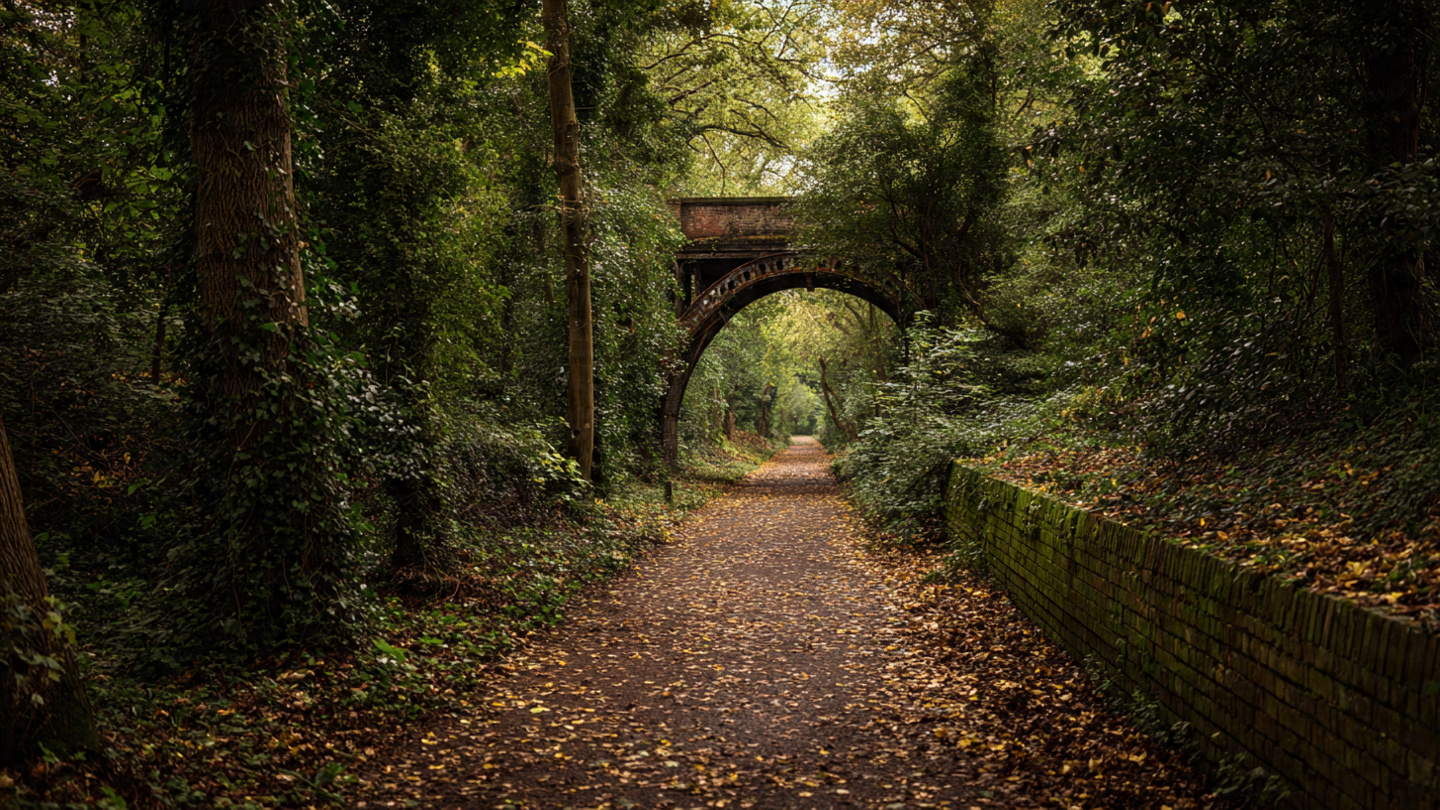
A Disused Railway Turned Green Corridor
The Parkland Walk is one of the most distinctive examples of hidden walking trails in London. Originally built as part of a railway line, this elevated corridor now stretches between Finsbury Park and Alexandra Palace. Although it lies close to residential neighborhoods and transport links, it feels unexpectedly removed from surrounding streets.
Once trains stopped running, vegetation slowly reclaimed the track bed. Over time, trees, shrubs, and wild plants transformed the route into a woodland path. Today, walkers move along what was once a transport artery, yet the atmosphere feels almost rural in sections.
To plan the easiest entry point, I use the Parkland Walk entrances on Google Maps before I set off.
Entering Through an Unassuming Gateway
Unlike major parks with grand entrances, the Parkland Walk begins quietly. Access points are often tucked behind streets or near smaller parks. Because signage remains modest, many people pass nearby without realizing the trail exists.
This subtle entry immediately reinforces its character. Instead of stepping into a landscaped space designed for crowds, you descend into a green corridor shaped largely by natural growth. The transition happens quickly. Within minutes, traffic noise fades into the background.
The Elevated Perspective Changes the Experience
One reason this route stands out among hidden walking trails in London is its elevation. Since it follows an old railway embankment, sections of the path rise above nearby houses and gardens. As a result, walkers gain glimpses of residential backyards, tree canopies, and distant skyline fragments.
This layered perspective feels different from street-level walking. You are not fully inside the urban grid, yet you are not entirely separate from it. Instead, you move along a boundary between built and natural space.
Woodland Atmosphere Within the City
Despite its urban location, large portions of the Parkland Walk feel heavily wooded. Mature trees arch overhead, creating shade in warmer months. In autumn, fallen leaves cover the ground in deep layers of color. During spring, fresh growth softens the edges of old brick structures that once supported the railway.
Because the path runs through a long, narrow corridor, greenery encloses you on both sides. This enclosure intensifies the sense of escape. Even when residential streets sit only meters away, the visual barrier of foliage creates separation.
Subtle Remnants of Railway History
Traces of the route’s past remain visible along the walk. Old bridges cross overhead. Brick retaining walls line certain sections. Occasionally, you notice metal fragments or structural details that hint at the corridor’s original purpose.
These remnants add depth without overwhelming the experience. Unlike heavily interpreted heritage sites, the Parkland Walk does not present history through constant signage. Instead, history reveals itself quietly through observation.
This balance between past and present enhances its appeal among hidden walking trails in London.
Wildlife Thrives Along the Path
Because the corridor remains largely undisturbed by heavy commercial development, wildlife has adapted well. Birds nest in dense shrubs. Small mammals move through undergrowth. During warmer months, insects cluster around patches of wildflowers.
Although the trail is not a remote forest, it supports more biodiversity than many central parks. This ecological presence reinforces the sense that you are walking through a living system rather than a decorative landscape.
Varying Light and Texture Throughout the Year
Seasonal change transforms the character of the route dramatically. In summer, thick foliage filters sunlight into soft patterns. The shade provides relief from heat, making the path comfortable even during warmer afternoons.
In contrast, winter opens sightlines. With leaves gone, the structural lines of bridges and retaining walls become more prominent. The corridor feels wider, and distant rooftops appear more clearly. Consequently, repeat visits reveal different visual layers each season.
Gradual Shifts in Atmosphere Along the Route
The Parkland Walk does not maintain a single tone throughout its length. Certain sections feel denser and more enclosed. Others open slightly, allowing light to penetrate more directly.
As you move along the path, subtle variations appear. A narrow stretch might give way to a broader clearing. A quiet segment may transition into an area where distant train lines are audible again. These shifts prevent the walk from feeling monotonous.
Therefore, even though the route follows a linear railway alignment, the experience feels dynamic.
Accessibility Without Heavy Promotion
Reaching the Parkland Walk requires minimal effort. Finsbury Park and Highgate stations provide convenient access points. However, because the trail does not sit directly on major tourist itineraries, visitor numbers remain moderate.
This accessibility without aggressive promotion explains why it continues to feel quieter than many central walking routes. It demonstrates how hidden walking trails in London can remain peaceful despite being relatively easy to reach.
Ultimately, what keeps the Parkland Walk within the category of hidden walking trails in London is not secrecy but perception. Many visitors focus on nearby attractions such as Alexandra Palace viewpoints or central parks. As a result, this linear woodland corridor receives less attention.
Moreover, its railway origin means it does not resemble a traditional park. Without formal lawns or ornamental gardens, it lacks the visual cues that signal “major attraction.” Instead, it presents itself as a functional path shaped by time and nature.
For travelers seeking a quieter experience that still reflects London’s layered history, the Parkland Walk offers a compelling starting point. It demonstrates how infrastructure can evolve into green space while retaining subtle traces of its past.
it is aoways nice to walk down here – the whole way from finsbury park to highgate – a hidden gem and a quick way to walk between the two!
Read more reviews at Tripadvisor.
The Green Chain Walk: Southeast London’s Secret Woodland Network
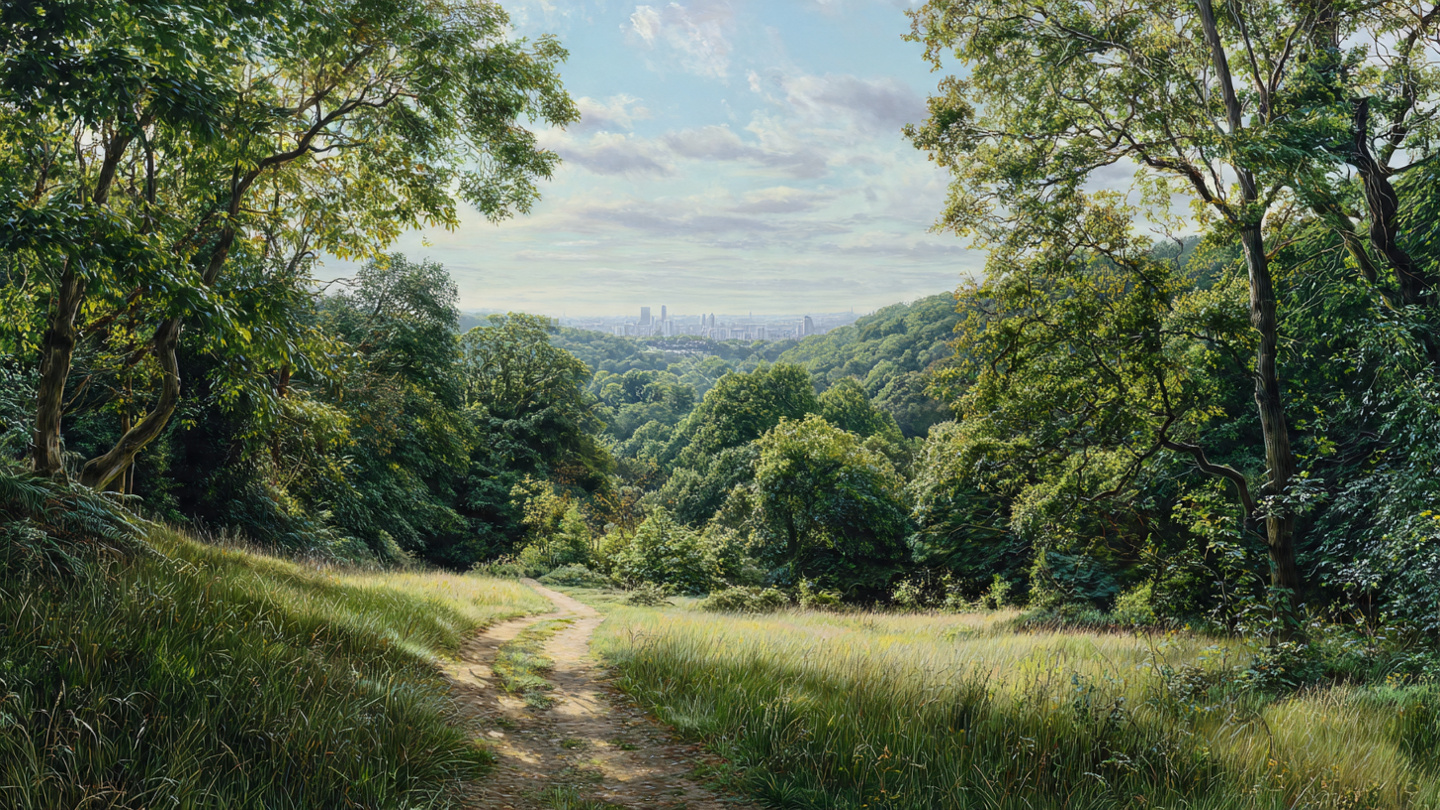
A Connected System Few Visitors Notice
The Green Chain Walk stands out among hidden walking trails in London because it does not operate as a single, obvious route. Instead, it links multiple parks, woodlands, and open spaces across southeast London. Although the full network extends for many miles, individual sections can be explored independently.
Because it runs primarily through residential districts rather than tourist hubs, many visitors never encounter it. As a result, the trail remains quietly integrated into local life rather than framed as a major attraction.
A Different Kind of Urban Geography
Unlike centrally located parks surrounded by landmarks, the Green Chain Walk moves through neighborhoods where daily routines unfold normally. Houses, schools, and small local shops sit near trail entrances. Consequently, the experience feels embedded within community space rather than separate from it.
This geographic positioning shapes the atmosphere. Instead of entering a clearly defined “destination,” you step into a network of green corridors woven between ordinary streets. The contrast between suburban calm and woodland depth creates a unique rhythm.
Woodland Sections That Feel Unexpectedly Remote
Several segments of the Green Chain Walk pass through dense woodland areas such as Oxleas Wood and Eltham Park. In these stretches, trees close in overhead and footpaths narrow slightly. Because the trail dips and rises gently with natural terrain, it feels less engineered than central park paths.
Although central London remains within reachable distance, the surroundings can feel surprisingly remote. The absence of skyline views reinforces that impression. Rather than seeing iconic buildings, you notice layered foliage, uneven ground, and filtered light.
This sense of temporary removal defines many hidden walking trails in London, yet the Green Chain amplifies it through scale and continuity.
Variation Prevents Repetition
One strength of the Green Chain Walk lies in its variety. As you move between sections, the environment shifts. Open meadows give way to woodland paths. Formal parkland transitions into semi-wild areas. Occasionally, elevated ground reveals distant views across southeast London.
Because the route is modular, walkers can choose shorter segments or combine several sections for a longer journey. Therefore, it accommodates both casual explorers and those seeking extended walking time without repeating scenery.
Minimal Commercial Interruption
Commercial activity along the Green Chain remains limited. While cafes and shops exist near certain entry points, the majority of the route remains free from retail clusters. This absence preserves continuity.
Instead of encountering repeated visual interruptions, you move through consistent greenery. Even when residential streets briefly appear, the trail soon returns to parkland or woodland. Consequently, the walking experience maintains its quiet tone.
Gentle Elevation Adds Dimension
Southeast London contains more variation in elevation than many visitors expect. Along the Green Chain Walk, gentle inclines and declines introduce physical engagement. Unlike completely flat riverside routes, this undulation creates subtle shifts in perspective.
At higher points, tree lines open slightly to reveal wider horizons. In lower sections, enclosed woodland absorbs sound and light. These changes add texture without making the walk physically demanding for most people.
Why It Remains Outside Mainstream Travel Guides
Despite its scale and quality, the Green Chain Walk rarely dominates travel recommendations. One reason is its decentralized structure. Because there is no single iconic starting point, it does not fit easily into simplified itineraries.
Additionally, many sections lie outside Zone 1. Travelers focusing exclusively on central landmarks may never consider exploring further south. However, this geographic distance helps preserve its character as one of the quieter hidden walking trails in London.
Accessibility Through Choice
Although the network spans multiple boroughs, access remains manageable. Overground and bus connections bring walkers close to various segments. Nevertheless, reaching certain sections may require slightly more planning than simply stepping out of a Tube station beside a major park.
That small layer of effort acts as a filter. Those who intentionally seek quieter routes are rewarded with extended green corridors that feel detached from tourist flow.
Seasonal Strengths of the Green Chain
In spring and summer, dense foliage enhances enclosure. Birds and insects animate woodland sections, creating movement and sound. During autumn, fallen leaves soften the ground and shift the color palette toward warm tones.
Even in winter, the trail retains character. Without leaves, structural elements of trees and subtle changes in terrain become more visible. As a result, the experience transforms rather than diminishes with seasonal change.
A Network Designed for Exploration
Because the Green Chain Walk connects multiple spaces, it encourages exploration rather than linear completion. Walkers can pause, adjust direction, or combine routes depending on mood and energy.
This flexibility reinforces its place among hidden walking trails in London. It does not impose a strict beginning or end. Instead, it offers a framework for discovery that adapts to individual pace.
Why the Green Chain Defines Quiet Urban Walking
Ultimately, the Green Chain Walk demonstrates that quiet, expansive walking routes exist beyond central London. It proves that hidden walking trails in London are not limited to small corridors or isolated parks. Some form extended networks that remain largely unnoticed by short-term visitors.
For those willing to step slightly beyond conventional sightseeing areas, the Green Chain offers depth, continuity, and variation. It reveals how London’s green infrastructure extends far beyond its most photographed parks.
The Wandle Trail: A Quiet Riverside Escape Beyond the Thames
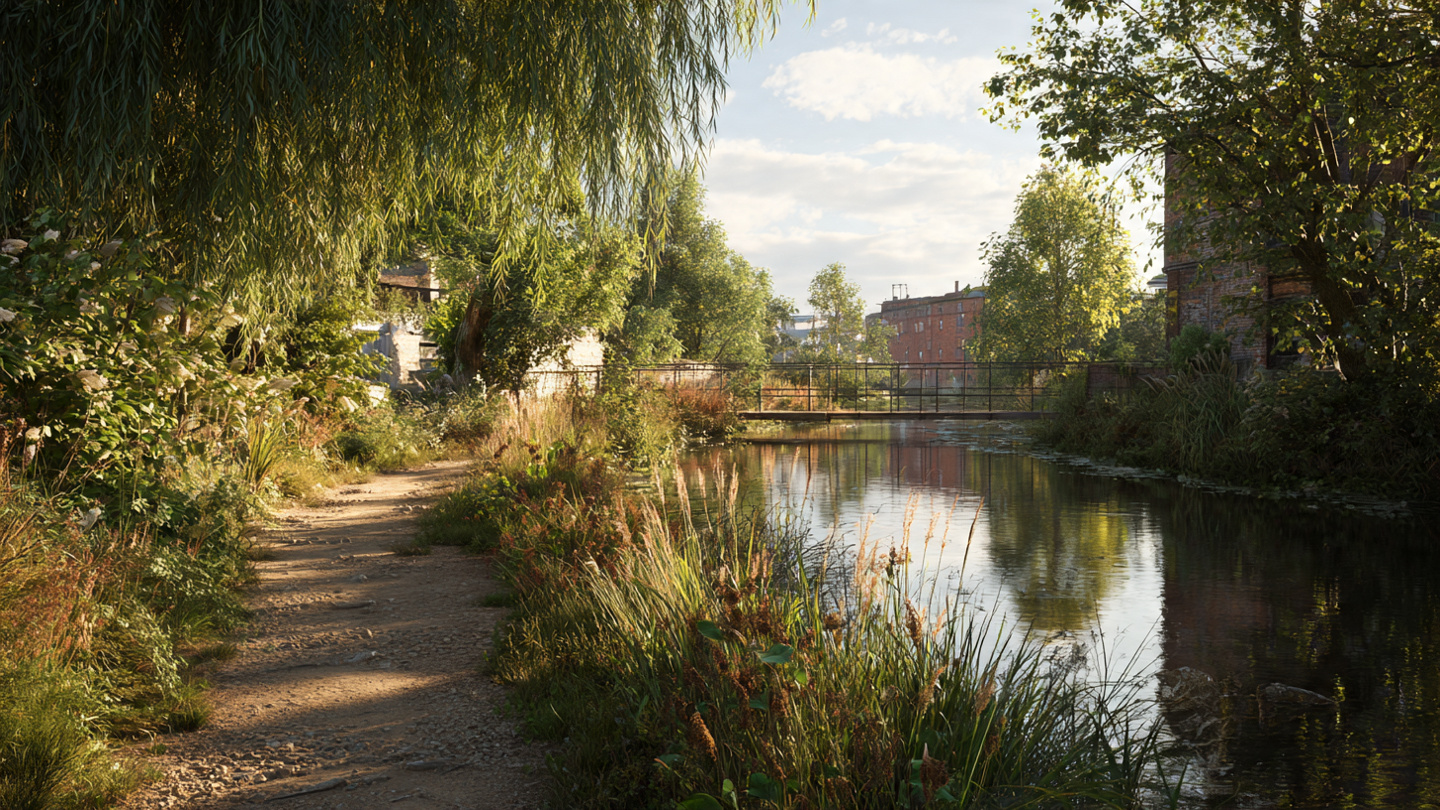
A Riverside Path That Avoids the Spotlight
When visitors think of riverside walking in London, the Thames usually dominates attention. However, the Wandle River flows quietly through south London, offering a calmer alternative. The Wandle Trail follows this smaller waterway through parks, residential districts, and restored green corridors.
While quieter canals and secondary rivers offer a more intimate atmosphere, London’s primary waterway provides a broader open perspective with iconic skyline alignment. If you prefer structured waterfront routes with long promenades and uninterrupted river views, consider exploring Scenic Walks Along the River Thames London for a different riverside experience.
Because it lacks iconic skyline views, it rarely appears in mainstream travel itineraries. Nevertheless, it stands firmly among the hidden walking trails in London due to its peaceful atmosphere and continuity.
Following a River That Feels Local
The Wandle River does not carry the same historical grandeur as the Thames. Instead, it feels intimate. The trail moves close to the water in several sections, allowing walkers to observe subtle currents and riverside vegetation.
Unlike major embankments lined with landmarks, this path weaves through community parks and open spaces. As a result, the environment feels lived-in rather than performative. Residents pass by on daily routines, reinforcing its local identity.
Green Corridors Replace Monumental Views
While Thames routes often frame bridges and famous buildings, the Wandle Trail frames greenery. Trees line significant portions of the riverbank. Grassy areas open beside the path. Small footbridges cross the water at regular intervals.
This natural emphasis changes the pace of the walk. Instead of stopping to capture skyline images, walkers pause to observe reflections, wildlife, or changing light patterns on the water. Consequently, the experience feels meditative rather than dramatic.
A Blend of Restoration and History
Historically, the Wandle River supported mills and small industries. Remnants of that past remain visible along certain stretches. Old mill structures and informational markers hint at the river’s working heritage.
However, restoration projects have gradually improved water quality and surrounding green space. The result is a balanced landscape where history coexists with ecological recovery. This layered identity adds subtle depth to the route without overwhelming it with heavy interpretation.
Varied Terrain Along the Route
The Wandle Trail does not maintain a uniform appearance. In some sections, it passes through structured parkland with paved paths. In others, it narrows into more natural stretches where vegetation grows closer to the walkway.
Because of these variations, the walk avoids monotony. Open lawns contrast with shaded riverbanks. Urban edges give way to quieter park interiors. Therefore, even moderate-length sections feel dynamic rather than repetitive.
Accessibility Without Heavy Crowds
Several stations provide reasonable access to different segments of the Wandle Trail. Yet despite this accessibility, the route rarely feels crowded. Unlike central riverside walks, it does not serve as a major connector between tourist landmarks.
This limited tourist flow preserves its calm character. Walkers can maintain steady pace without weaving through large groups. As a result, the Wandle Trail remains one of the more consistently peaceful hidden walking trails in London.
Wildlife Along the River
The presence of flowing water supports diverse wildlife. Ducks and swans appear in calmer sections. Smaller birds gather in riverside trees. During warmer months, insects hover above the surface.
Although the river runs through urban districts, these ecological signs remind walkers that natural systems persist within the city. This coexistence between built environment and wildlife defines many lesser-known routes across London.
Ideal for Extended, Uninterrupted Walking
Because the Wandle Trail stretches across multiple boroughs, it allows for longer, uninterrupted walking sessions. Unlike short park loops, this route supports sustained movement along a continuous corridor.
For travelers seeking quieter exercise or reflective time, this continuity proves valuable. You can begin in one district and gradually transition into another without dramatic shifts in atmosphere.
A Different Emotional Tone From the Thames
The Thames conveys scale and spectacle. The Wandle conveys intimacy and continuity. This difference matters when choosing a walking route. If you prefer open panoramas and iconic structures, the Thames satisfies that desire.
However, if you seek quieter reflection with fewer interruptions, the Wandle Trail offers a contrasting experience. Its modest profile keeps it firmly within the category of hidden walking trails in London.
Why the Wandle Trail Remains Underrated
Ultimately, the Wandle Trail’s relative obscurity stems from its lack of spectacle. It does not offer postcard views. It does not connect directly to major landmarks. Instead, it provides a steady, grounded walking experience.
That understated character is precisely what preserves its appeal. Those who intentionally search for calmer riverside routes discover a space shaped more by local rhythm than global tourism.

Abney Park Cemetery Feels Reclaimed Rather Than Preserved
Among hidden walking trails in London, Abney Park Cemetery offers one of the most layered experiences. Located in Stoke Newington, this Victorian burial ground has gradually evolved into a semi-wild green refuge. Residential streets sit close by, yet once inside, the atmosphere shifts immediately toward quiet enclosure.
Over time, natural growth softened the cemetery’s original structure. Ivy spreads across weathered stone. Moss settles into engraved lettering. Mature trees now rise above monuments that once formed formal avenues. Architecture and vegetation coexist without clear dominance, creating visual depth throughout the space.
A Slower Walking Rhythm Emerges Naturally
Movement inside Abney Park feels different from walking through landscaped gardens. Tree-lined paths create natural corridors, yet the layout no longer follows strict symmetry. Grass appears between paving stones, and narrower side paths drift away from wider avenues.
Maintenance remains intentionally light. That restraint preserves authenticity and texture. Visitors encounter uneven surfaces and organic growth rather than polished symmetry. The result feels exploratory instead of staged.
Gothic Structures Appear in Quiet Detail
Striking Gothic architecture remains scattered across the cemetery grounds. The historic chapel and ornate memorials reveal craftsmanship that becomes more noticeable without crowd distraction. In this setting, details emerge gradually rather than demanding attention.
Light shifts across stone surfaces throughout the day. Shadows gather beneath archways. Silence amplifies carved ornamentation. These subtle effects reinforce its place among hidden walking trails in London.
Seasonal Change Continuously Reshapes the Setting
Spring introduces fresh growth that softens the edges of monuments. During summer, dense foliage filters sunlight into moving patterns across the ground. Autumn transforms the cemetery into warm tones as leaves gather around pathways. Winter, in contrast, reveals structural lines that foliage conceals during warmer months.
Each season alters perspective without diminishing atmosphere. Repeated visits reveal new textures and visual contrasts.
Sydenham Hill Wood Preserves an Older Woodland Identity
Further south, Sydenham Hill Wood presents a more rugged environment. This remnant of the ancient Great North Wood retains uneven terrain and narrow footpaths shaped by natural patterns. Although houses surround its perimeter, the interior feels detached from urban rhythm.
Roots cross trails. Fallen branches remain where they settle. Dense undergrowth shapes visibility and movement. These features contribute to a woodland identity that feels continuous rather than ornamental.
Historical Fragments Blend Into the Landscape
Remains of nineteenth-century railway infrastructure lie quietly within the trees. Brick structures and former track beds appear unexpectedly between foliage. Their presence adds historical texture without dominating the scene.
Rather than relying on extensive interpretation boards, the woodland reveals its past through observation. Discovery happens gradually as you walk. This understated layering strengthens its classification among hidden walking trails in London.
Elevation Adds Subtle Dimension
The terrain rises and falls gently across the woodland. Small inclines shift perspective without creating physical strain. Higher sections offer brief glimpses beyond tree lines. Lower stretches feel more enclosed and intimate.
These gradual variations prevent monotony. Changes in height alter light, sound, and enclosure. Walking remains engaging even without dramatic viewpoints.
Wildlife Reinforces the Sense of Escape
Birdsong and rustling leaves replace urban noise inside the woodland core. Occasional wildlife movement reminds walkers that ecological systems continue within city limits. Proximity to central London becomes less noticeable once sensory focus shifts toward natural detail.
Such coexistence defines many hidden walking trails in London. Ancient woodland and Victorian memory exist alongside modern neighborhoods without requiring spectacle.
Two Complementary Forms of Quiet Exploration
Abney Park offers reflective atmosphere shaped by layered history. Sydenham Hill Wood emphasizes ecological continuity and subtle elevation. Although their tones differ, both encourage slower pacing and deeper observation.
Together, they demonstrate how hidden walking trails in London provide contrast within short geographic distance. Texture, atmosphere, and understated character define the experience more than scale or fame.
Regent’s Canal East and the Lea Valley: London’s Wild Urban Edge

Regent’s Canal Feels Different Once You Move East
Many travelers associate Regent’s Canal with the lively sections near Little Venice or Camden. However, the character changes noticeably once you move east of Angel. Foot traffic thins, and the atmosphere becomes less curated for sightseeing.
This eastern stretch quietly qualifies as one of the hidden walking trails in London because it maintains waterside continuity without heavy promotion. Instead of passing cafés and market stalls, walkers encounter residential backdrops, houseboats, and converted warehouses. The shift feels subtle yet significant.
Narrow Towpaths Create Intimacy
Along this part of the canal, the path runs close to the water. Brick walls and moored boats narrow the visual field. Reflections ripple against industrial surfaces, softening the urban texture.
Because the corridor remains contained, sound behaves differently here. Traffic fades quickly. Conversations echo lightly before disappearing. As a result, walking feels steady rather than hurried.
Everyday Movement Replaces Tourist Flow
Unlike central riverside promenades, this section supports everyday use. Cyclists commute. Residents walk dogs. Joggers pass through without stopping for photographs.
Such routine activity shapes a consistent rhythm. Large guided groups rarely interrupt movement. The absence of spectacle keeps the tone grounded, reinforcing its identity among hidden walking trails in London.
Gradual Transition Toward Open Space
Continuing east, the canal begins to loosen its enclosure. Buildings thin out. Vegetation increases along the edges. Eventually, the path merges into the wider landscape of the Lea Valley.
This transition feels natural rather than abrupt. One moment you walk between brick and water; soon after, open sky replaces industrial walls. The expanding horizon alters both light and mood.
The Lea Valley Introduces Wetland Character
Within the Lea Valley, water remains central but appears in broader forms. Reservoirs, reed beds, and open grasslands replace narrow canal channels. Wind moves visibly across tall grasses. Birdlife becomes easier to notice against open skies.
Despite its urban location, the valley carries a quieter energy. Visual distractions decrease, allowing attention to settle on natural patterns. This ecological emphasis secures its place among hidden walking trails in London.
Fantastic white water ride enjoyed by a family ranging from 11 – 77 years! Made even more fun by Paul who was calm, clear and completely dedicated to ensuring everyone had a great time. Thoroughly recommend and we can’t wait to visit again.
Read more reviews at Tripadvisor.
Industrial History Blends With Restoration
Rail bridges and remnants of former warehouses remain visible across the valley. However, green restoration projects have softened their dominance. Infrastructure and landscape coexist without competing for attention.
Walking through this layered environment reveals how London evolves over time. Past industry supports present ecology. The contrast adds depth while preserving calm.
Wide Horizons Encourage Sustained Walking
Open terrain distinguishes the Lea Valley from narrower canal sections. Longer sightlines stretch ahead without obstruction. The relative flatness of the area allows extended walking without steep inclines.
For those seeking uninterrupted movement, this spaciousness proves valuable. Distance unfolds gradually rather than feeling segmented by frequent landmarks.
Accessibility Without Overexposure
Transport links make both the canal and valley reachable. Nevertheless, many short-term visitors remain focused on central districts and rarely venture further east.
This geographic perception quietly protects the area’s atmosphere. Limited tourist concentration ensures that these routes continue functioning as authentic green corridors rather than staged attractions.
Seasonal Change Enhances the Experience
Seasonal variation reshapes the valley dramatically. Summer growth thickens reeds and softens reservoir edges. Autumn introduces warmer tones across open fields. Winter clarifies structural outlines of bridges and pathways.
Each season alters texture and visibility. Because nature dominates the landscape, these changes enhance rather than diminish the walking experience.
Two Landscapes Within One Journey
Combining the eastern Regent’s Canal with sections of the Lea Valley creates contrast within a single outing. One environment feels enclosed and industrial beside calm water. The other feels expansive and ecological under wide skies.
Together, they demonstrate how hidden walking trails in London can move from intimate corridors to broad open landscapes without leaving the city
Epping Forest and Oxleas Wood: Ancient Trails Few Visitors Reach
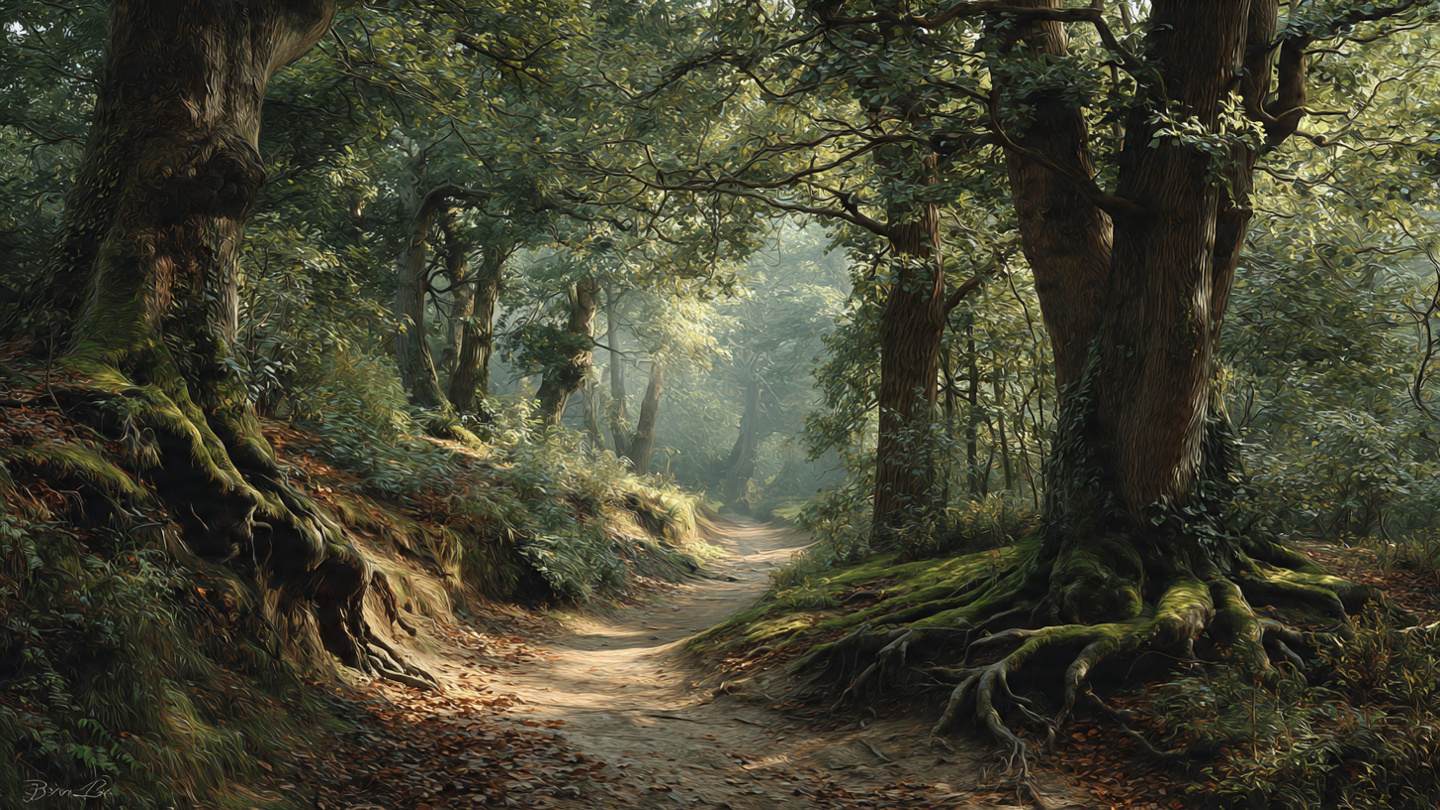
Epping Forest Reveals Its Quietest Character Away From Main Entrances
Although Epping Forest is widely recognized, only a fraction of visitors explore its deeper interior. Popular entry points near major roads tend to concentrate foot traffic. Once you move beyond those areas, however, the atmosphere becomes noticeably calmer.
Deeper sections of the forest qualify among hidden walking trails in London because they require intentional movement away from obvious access points. Distance from busy car parks reduces noise and visual distraction. Gradually, urban awareness fades into woodland immersion.
Ancient Trees Shape the Experience
Within the forest, mature oaks and hornbeams dominate the landscape. Twisted trunks and irregular branches create layered shadows across the ground. Paths wind naturally rather than following rigid design.
Light filters unevenly through the canopy, altering visibility throughout the day. Walking feels exploratory instead of linear. Organic structure replaces symmetry, reinforcing the forest’s ancient character.
Shifts Between Dense Woodland and Open Clearings
At intervals, dense canopy gives way to open glades. These grassy spaces introduce breathing room without disrupting the natural tone. Sunlight spreads more evenly across the ground, creating contrast with shaded trails.
Transitions between enclosure and openness prevent monotony. Movement becomes dynamic rather than repetitive. Each shift alters perspective without requiring dramatic elevation.
Oxleas Wood Offers a More Compact Woodland Escape
Closer to southeast London, Oxleas Wood provides a smaller yet equally immersive experience. Its location near Shooter’s Hill places it slightly above surrounding districts. Despite nearby residential streets, the woodland interior feels removed from urban rhythm.
Entry is straightforward, yet tree cover quickly reduces visibility of surrounding infrastructure. Curving paths guide walkers through dense foliage. Enclosure happens naturally within minutes.
Gentle Elevation Adds Dimension
Shooter’s Hill introduces gradual inclines that create subtle perspective changes. Higher ground occasionally reveals partial views across southeast London. These viewpoints remain understated rather than heavily framed.
Variation in height alters both light and sound. Lower sections feel intimate. Elevated stretches feel more expansive. Such contrast keeps the experience engaging without becoming physically demanding.
Natural Texture Requires Active Attention
Roots cross pathways. Fallen branches lie undisturbed. Surfaces feel less polished than central park routes. Attention to footing increases awareness of terrain.
Engagement with these textures strengthens immersion. Instead of passively strolling along smooth pavement, walkers interact with uneven ground. That tactile quality distinguishes these areas among hidden walking trails in London.
Wildlife Presence Reinforces Separation From the City
Birdsong echoes through layered canopy. Occasional movement in undergrowth hints at small mammals. Seasonal plant variation becomes more noticeable away from central parks.
Although transport links remain accessible, sensory focus shifts almost entirely toward natural elements. That balance between convenience and immersion defines both Epping Forest’s quieter sections and Oxleas Wood.
Strategic Entry Choice Preserves Quiet
Selecting smaller access points significantly affects experience. Well-known entrances attract larger groups, especially during sunny weekends. Residential-edge access often leads directly into calmer interior sections.
Intentional planning transforms atmosphere without requiring long travel. Choosing carefully helps preserve the sense of discovery central to hidden walking trails in London.

Solo Walkers Often Seek Enclosed Woodland Atmosphere
Travelers exploring alone frequently value calm and continuity. Woodland environments such as Sydenham Hill Wood or deeper areas of Epping Forest provide consistent enclosure. Tree cover reduces distraction and supports reflective pacing.
Without constant interruption, attention shifts inward. Movement feels steady rather than reactive. For those seeking quiet immersion, these spaces rank among the most suitable hidden walking trails in London.
Couples May Prefer Gentle Waterside Movement
Riverside settings often create a natural conversational rhythm. The Wandle Trail and eastern Regent’s Canal allow steady walking beside water without heavy tourist presence.
Reflections and narrow bridges introduce visual interest without overwhelming the experience. Because movement remains uninterrupted, these routes support relaxed interaction rather than hurried sightseeing.
Photographers Benefit From Layered Contrast
Industrial brick along Regent’s Canal contrasts strongly with surrounding greenery. Open wetlands in the Lea Valley introduce wide horizons and shifting light. Abney Park’s stone monuments framed by vegetation create dramatic tonal depth.
Seasonal variation enhances these contrasts. Subtle lighting changes throughout the day further diversify photographic opportunities. For those focused on atmosphere rather than skyline landmarks, such environments offer strong visual potential.
Long-Distance Walkers Should Choose Continuous Networks
Extended movement requires routes that avoid frequent breaks. The Green Chain Walk and larger stretches of the Lea Valley provide sustained walking without repeated interruptions.
Connected green corridors maintain rhythm across multiple neighborhoods. Variation in terrain and scenery prevents fatigue while supporting longer distances.
Nature-Focused Visitors May Look Beyond Central Districts
Central London parks offer accessibility, yet deeper ecological immersion often requires venturing outward. Epping Forest and Oxleas Wood provide woodland density rarely matched in Zone 1.
Transport connections make access manageable. Shifting focus slightly beyond typical sightseeing zones reduces exposure to heavy crowds. As a result, natural detail becomes the primary focus.
History Enthusiasts Appreciate Subtle Architectural Layers
Victorian memorials in Abney Park and railway remnants along the Parkland Walk present history without heavy interpretation. Instead of museum-style displays, physical fragments tell their own stories.
Observation becomes part of the experience. Walkers notice texture and form gradually rather than through guided narration. That understated approach aligns closely with the spirit of hidden walking trails in London.
Time Constraints Influence Trail Selection
Limited schedules require efficient access. Routes near Overground or Underground stations reduce travel time while still providing quiet surroundings. The Parkland Walk and eastern Regent’s Canal often suit shorter visits.
Proximity does not automatically mean crowd density. Choosing slightly less promoted entry points helps preserve atmosphere even during brief outings.
Timing Shapes the Experience
Even calmer routes see increased activity during sunny weekends. Early mornings and weekday afternoons usually offer greater solitude.
Light conditions also shift during these periods. Softer morning tones and late afternoon shadows deepen visual texture. Adjusting timing enhances both atmosphere and personal comfort.
Combining Environments Creates Greater Variety
Pairing enclosed woodland with open wetlands prevents visual repetition. Moving from canal corridor to wide valley landscape introduces gradual change in scale.
Blending two contrasting hidden walking trails in London within one outing broadens perspective. Such combinations reveal how varied the city’s quieter routes can be.
Intention Ultimately Determines Satisfaction
Route selection depends largely on mood and expectation. Reflective walks benefit from dense canopy. Expansive landscapes suit those seeking open sky. Waterside paths encourage steady pacing.
Clarifying purpose before setting out improves alignment between traveler and trail. Hidden walking trails in London offer range precisely because they remain outside mainstream attention. Intentional choice allows each route to deliver its strongest qualities.
Final Reflections on Exploring the Real London on Foot
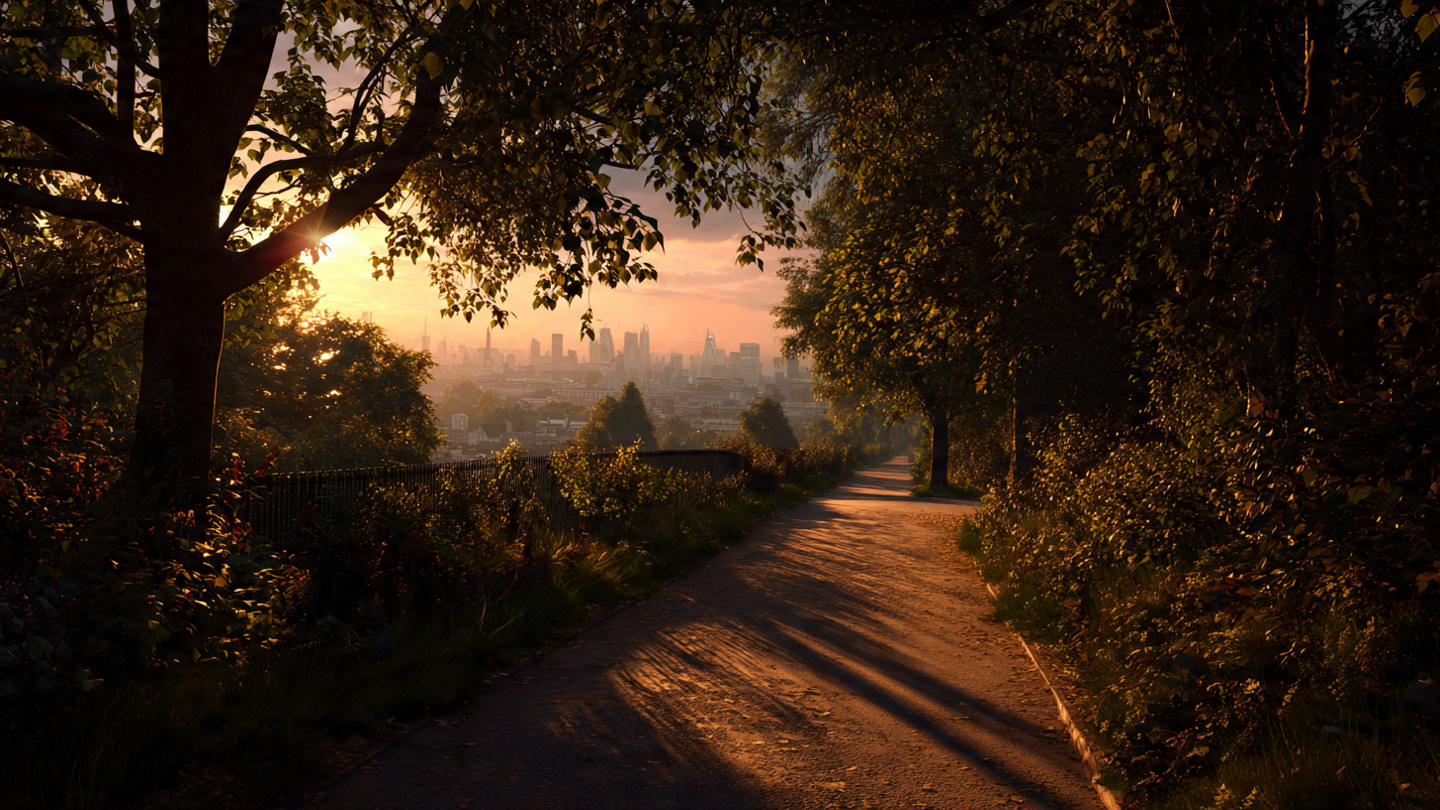
Exploring hidden walking trails in London changes how the city feels. Instead of moving between landmarks, you begin noticing transitions. Residential edges, railway remnants, shaded corridors, and quiet waterways replace monument-centered sightseeing.
These routes do not compete with iconic attractions. Rather, they complement them. After experiencing busy squares and skyline viewpoints, stepping onto a quieter path restores balance. The shift feels immediate yet subtle.
Slower Movement Creates Deeper Connection
Walking without destination pressure encourages observation. Texture becomes more noticeable. Light variation across leaves or brick surfaces draws attention naturally.
Unlike crowded promenades, hidden routes rarely demand constant navigation through groups. Because movement flows more freely, focus settles on environment rather than crowd management. That freedom strengthens connection to place.
The City Feels Larger When You Explore Its Quieter Edges
Many first-time visitors assume London is defined by central districts. However, moving along lesser-known corridors expands perception of scale. Wetlands, woodland ridges, suburban green chains, and canal towpaths extend far beyond tourist cores.
Each environment adds dimension. Urban density gives way to ecological systems. Industrial history blends with restoration. The result is a more complex understanding of the capital.
Balance Between Accessibility and Immersion
One reason hidden walking trails in London remain compelling is their accessibility. Most sit within reach of public transport. Yet despite convenience, they preserve atmosphere because they lack heavy promotion.
This balance allows travelers to experience immersion without isolation. You remain connected to the city while temporarily stepping outside its intensity.
Seasonal Return Reveals New Layers
Repeated visits deepen appreciation. Spring introduces growth that softens architectural remnants. Summer canopy thickens enclosure. Autumn transforms woodland with color shifts. Winter reveals structural forms concealed by foliage.
Seasonal change ensures that these routes never feel static. The same path offers different visual narratives across the year.
Intention Transforms the Experience
Choosing a quieter trail requires deliberate decision. Unlike mainstream routes that appear automatically in search results, these paths reward curiosity. That intention shapes expectation and attention.
When you walk without spectacle in mind, subtler elements become meaningful. Sound patterns, terrain variation, and small wildlife movements gain importance. Exploration becomes personal rather than performative.
It is important to note that hidden walking trails in London are not remote wilderness areas. They remain part of a living metropolitan network. Residents pass through. Transport lines run nearby. Neighborhoods frame the edges.
This integration creates authenticity. You experience London as a layered ecosystem rather than a curated stage.
A Different Way to Measure Value
Traditional sightseeing often measures value by visibility and fame. Hidden routes challenge that logic. Their appeal lies in atmosphere rather than recognition.
A quiet woodland corridor may leave a stronger impression than a crowded plaza. A modest canal stretch can feel more memorable than a panoramic viewpoint. Value shifts from scale to texture.
Encouraging Intentional Exploration
Travel planning frequently prioritizes efficiency. While efficiency has benefits, it can compress experience into predictable loops. Adding hidden walking trails in London to an itinerary introduces variation and depth.
Such routes do not require entire days. Even short segments provide contrast. Incorporating one quieter walk into a busy schedule can reshape overall perception of the city.
London Reveals Itself Gradually
Ultimately, the most compelling quality of these trails is their subtlety. They do not announce themselves loudly. Instead, they unfold gradually as you move through them.
Exploring the real London on foot means allowing space for that unfolding. Hidden walking trails in London provide that opportunity. They invite attention, patience, and curiosity. Through them, the city reveals textures that remain invisible from bus windows and crowded squares.
Frequently Asked Questions
Yes, there are many hidden walking trails in London that remain outside typical tourist routes. While major parks and riverside promenades attract large crowds, quieter woodland paths, canal stretches, and green corridors exist across multiple boroughs.
Quieter walking routes are often found beyond central tourist zones. Areas such as southeast London, parts of the Lea Valley, and deeper sections of Epping Forest offer calmer environments compared to landmark-heavy districts.
Most hidden walking trails in London are well maintained and accessible without a guide. However, checking a map before visiting helps identify quieter entry points and longer route options.
🌳 Accessibility and Safety
Generally, these trails are safe during daylight hours, especially those connected to public transport and residential areas. As with any urban environment, visiting during daytime and staying aware of surroundings is recommended.
Many lesser-known trails are reachable by Underground, Overground, or bus connections. While they may require slightly more planning than central attractions, access is usually straightforward.
Yes, most routes are suitable for casual walkers. Woodland paths may include uneven ground, so comfortable footwear is recommended, but steep or technical terrain is rare.
🍂 Best Time to Visit
Spring and autumn often provide the most visually rewarding conditions. Spring brings fresh greenery, while autumn offers vibrant foliage. Early mornings and weekdays tend to be quieter year-round.
Some increase in visitors during warm weekends is normal. However, compared to major tourist routes, hidden walking trails in London remain significantly less crowded overall.
🗺 Planning Your Route
Yes, combining routes is possible, especially when linking canal paths with nearby green spaces. Planning ahead ensures smooth transitions between areas.
Walking time varies depending on the route and pace. Some sections can be explored in one hour, while larger networks like the Green Chain or Lea Valley allow several hours of continuous walking.