
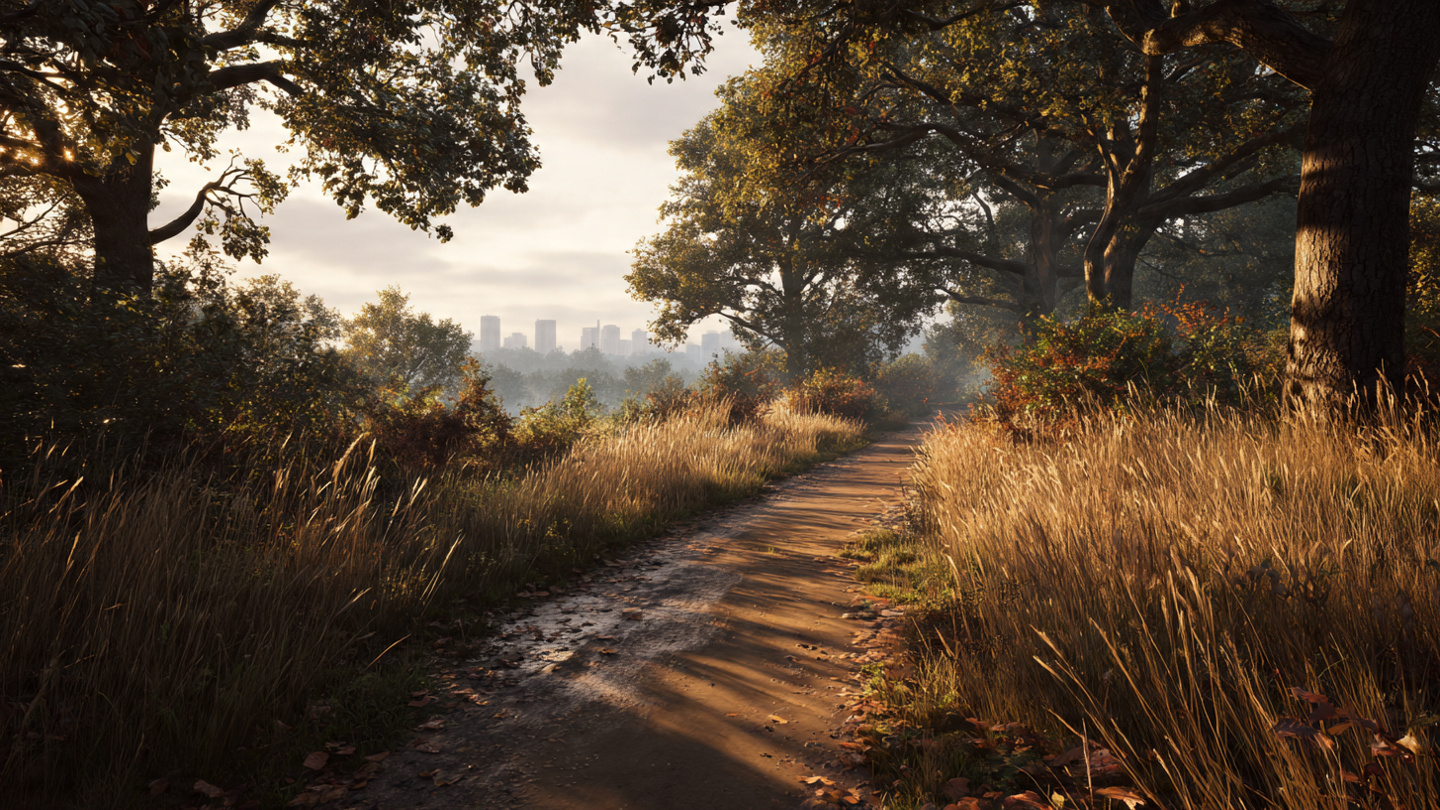
London nature walks provide something deeper than a simple park visit. From the very beginning, these routes shift the focus away from monuments and busy streets and toward trees, wildlife, and open sky. Instead of walking between attractions, you move through living landscapes where the environment leads the experience.
In other words, a true nature walk is defined by immersion. The trees feel dominant, the terrain feels organic, and the rhythm of the walk slows naturally. As a result, the city becomes background rather than center stage.
While this guide focuses specifically on immersive woodland, heathland, wetland, and riverside routes, these landscapes form part of a much wider green network across the capital. To see how these natural environments connect within the broader structure of the city’s most significant outdoor spaces, explore the complete overview in Parks in London.
Tree Canopy Creates Immediate Separation
One of the clearest signs of an authentic nature route is canopy density. When branches stretch overhead and light filters through leaves, the atmosphere changes instantly. Because visual contact with buildings reduces, the space feels enclosed by greenery rather than surrounded by architecture.
Moreover, mature woodland corridors soften harsh city edges. Oak, beech, and chestnut trees form layered textures that guide the eye upward and outward. Consequently, the experience becomes immersive instead of decorative.
Sound Reduction Shapes the Experience
In addition to visual separation, sound plays a powerful role. Traffic noise often defines urban walking. However, along true nature walks, that sound fades into the distance. Gradually, birdsong, wind through leaves, and subtle environmental sounds become more noticeable.
Although complete silence is rare in a capital city, effective buffering through woodland depth, open heathland, or surrounding water dramatically shifts perception. Therefore, the landscape begins to feel dominant rather than urban infrastructure.
Biodiversity Signals Ecological Authenticity
Another essential factor is visible biodiversity. A manicured lawn may appear beautiful, yet it rarely feels wild. In contrast, mixed terrain with undergrowth, ponds, meadow grasses, and varied plant life supports small ecosystems.
For example, you may notice squirrels moving through tree trunks, dragonflies hovering above water, or birds nesting along woodland edges. As these small interactions accumulate, the walk feels alive rather than staged. Consequently, biodiversity becomes one of the strongest indicators of genuine nature immersion.
Natural Terrain Adds Physical Engagement
Equally important is terrain variation. Straight, flat paths encourage quick movement. On the other hand, winding dirt tracks, gentle slopes, and textured surfaces invite slower exploration.
Because elevation shifts alter perspective, even modest hills create dynamic walking patterns. As you climb, the skyline opens. As you descend, woodland density increases. Therefore, movement responds to the land rather than forcing the land to conform to design symmetry.
Open Landscapes Expand Perspective
While woodland creates enclosure, open heathland and wetland routes create expansion. Wide horizons allow the eye to travel farther, which immediately changes spatial awareness. Instead of being surrounded by buildings, you feel positioned within a broader natural setting.
In particular, expansive grasslands and reservoir paths offer breathing space rarely associated with major cities. Consequently, these areas redefine expectations of what nature walks in London can feel like.
Seasonal Change Reinforces Authenticity
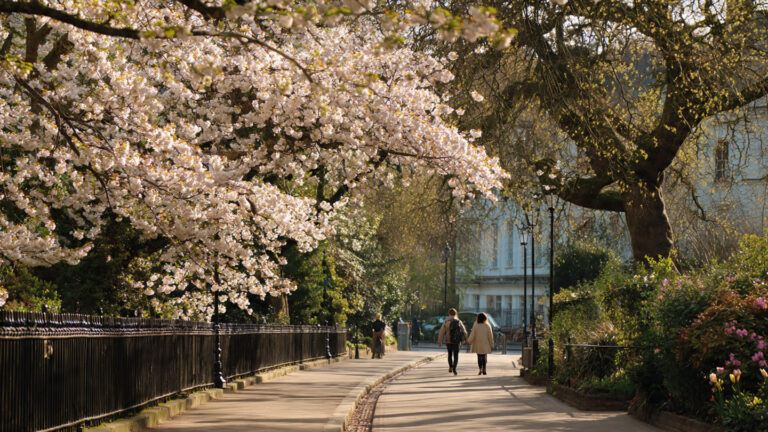
A defining quality of strong nature routes is seasonal transformation. During spring, fresh foliage and early blossoms brighten woodland edges. In summer, dense shade cools the air beneath thick canopy. Meanwhile, autumn introduces layered colors that shift weekly. Finally, winter reveals tree structure and longer sightlines through bare branches.
Because the environment evolves continuously, repeat visits never feel identical. Therefore, seasonal variation strengthens the identity of these walks as living landscapes rather than static spaces.
Distance From Crowds Deepens Immersion
Although many green areas sit near major landmarks, the most immersive sections often lie beyond the busiest corners. As you move farther from entrances and central lawns, foot traffic thins.
As a result, attention shifts inward. Instead of scanning for attractions, you begin noticing textures, light patterns, and subtle terrain details. Therefore, distance from crowd concentration often marks the transition from park visit to true nature experience.
Ecological Continuity Strengthens the Experience
Furthermore, some of the best routes extend beyond single park boundaries. River corridors, forest edges, and reclaimed railway paths create long, connected green systems.
Because these corridors allow uninterrupted movement, they feel sustained rather than segmented. Consequently, the walk becomes part of a broader ecological network instead of a contained urban feature.
Balance Between Accessibility and Wildness
Importantly, London nature walks maintain accessibility while preserving visible wildness. Paths remain safe and navigable. However, fallen leaves, exposed roots, meadow grasses, and uneven surfaces remind walkers that the environment is not artificially polished.
This balance creates comfort without erasing authenticity. Therefore, the experience feels natural yet welcoming.
Psychological Shift During Nature Immersion
As greenery becomes dominant, mental pace slows. Visual simplicity replaces commercial signage. Natural textures replace rigid architecture. Gradually, attention shifts from urgency to observation.
Because the sensory environment changes, breathing patterns and walking speed often adjust unconsciously. Consequently, the walk becomes restorative rather than task-driven.
Differentiating Nature Walks From Scenic City Routes
It is important to distinguish nature walks from scenic urban walks. While riverside promenades and historic streets can be beautiful, their focus remains architectural or cultural.
In contrast, London nature walks prioritize ecosystems over monuments. Water, trees, sky, soil, and wildlife define the experience. Therefore, the defining feature becomes ecological immersion rather than sightseeing.
Establishing the Framework for the Routes Ahead
Understanding these characteristics provides a clear framework for evaluating the best routes across the city. In the sections that follow, each location will be examined through these criteria.
We will assess canopy density, wildlife presence, terrain variation, seasonal transformation, and overall immersion. As a result, each featured route will not simply be listed, but carefully evaluated as a genuine nature experience within London.
Hampstead Heath: Open Meadows, Wooded Trails and Wild Ponds
A Landscape That Feels Untamed Within the City
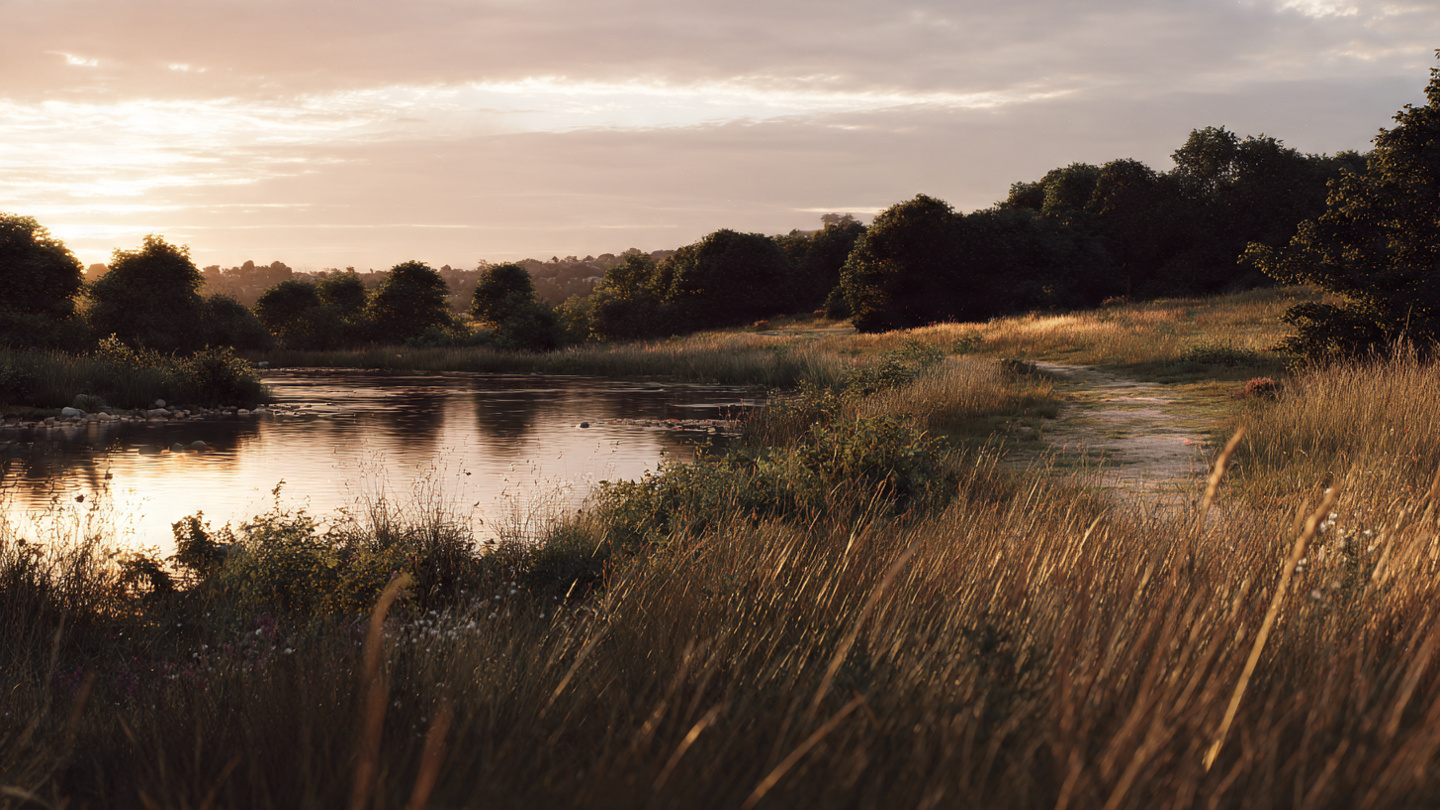
Among all London nature walks, Hampstead Heath stands out for its raw and expansive character. Unlike formal parks with symmetrical layouts, the Heath feels irregular and open. From the moment you step onto its rolling terrain, the structured city begins to fade behind tree lines and rising slopes.
Because the land was never reshaped into rigid design, the walking experience feels organic. Paths curve naturally, grasslands stretch without obvious boundaries, and wooded sections appear layered rather than landscaped. As a result, the environment feels closer to countryside terrain than urban parkland.
Rolling Meadows That Create Breathing Space
One of the defining features of Hampstead Heath is its open meadow landscape. Instead of tight garden beds or paved promenades, you encounter wide grass expanses that rise and fall gently. These undulating fields create a sense of movement even before you begin walking.
As you move across these slopes, your perspective shifts continuously. The skyline appears, disappears, and reappears depending on elevation. Consequently, the walk feels dynamic rather than linear. The terrain guides your pace, encouraging gradual exploration instead of direct routes.
Woodland Paths That Offer Shade and Quiet
Although the Heath is known for its openness, large woodland sections provide contrast. These tree-lined paths reduce visual contact with surrounding neighborhoods and soften city sounds. Once inside the wooded areas, the atmosphere becomes noticeably calmer.
Because the canopy filters light differently throughout the day, morning and late afternoon walks feel particularly immersive. In addition, fallen leaves and exposed roots add texture underfoot, reinforcing the natural character of the route. Therefore, the woodland sections balance the expansive meadows with moments of enclosure.
Parliament Hill and Elevated Natural Views
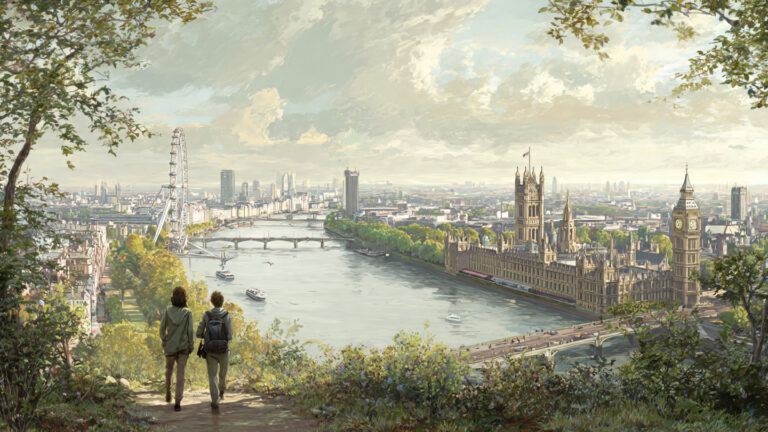
Parliament Hill offers one of the most recognized viewpoints in London. However, within the context of nature walking, the value lies not only in the skyline view but in the ascent itself. The climb across open grassland builds anticipation gradually.
As you rise, the environment opens dramatically. Wind patterns shift, and the sense of scale expands. Although buildings are visible in the distance, the foreground remains dominated by grassland and sky. Consequently, the view feels framed by nature rather than dominated by architecture.
The Wild Swimming Ponds and Water Ecology
Another distinctive element of Hampstead Heath is its series of ponds. These natural bathing ponds contribute ecological diversity to the landscape. Even for those who do not swim, walking around the water’s edge adds another dimension to the route.
Because ponds attract birds, insects, and plant variation, they create micro-ecosystems within the Heath. Reflections shift depending on weather conditions, and seasonal changes alter the surrounding foliage. Therefore, incorporating pond-side paths into a walk increases biodiversity exposure significantly.
If you want an easy starting point for this guide, use my London nature walk map to preview the main entrances and the two routes featured below.
Seasonal Transformation Across the Heath
Hampstead Heath changes dramatically throughout the year. In spring, meadow grasses brighten and woodland edges fill with fresh leaves. During summer, tall grasses sway across slopes while shaded paths offer relief from heat.
Autumn introduces layered color across trees, creating contrast between open fields and wooded ridges. Meanwhile, winter strips back foliage, revealing clearer views across the terrain. Because each season reshapes the landscape visually and atmospherically, repeat visits never feel repetitive.
Wildlife Presence Enhances the Experience
Wildlife contributes quietly but consistently to the authenticity of this location. Birds move across open fields, and squirrels navigate tree trunks along woodland paths. Near ponds, you may observe waterfowl and insect activity.
Although encounters remain subtle, their presence reinforces the Heath’s ecological vitality. As these small interactions accumulate, the walk feels active and alive rather than purely scenic.
Choosing the Best Route Across the Heath
Because Hampstead Heath is expansive, route choice shapes the experience significantly. A circular walk that combines meadow slopes, woodland sections, and pond-side paths provides the most balanced immersion.
Alternatively, walkers seeking elevation may prioritize the climb toward Parliament Hill before descending into wooded trails. By contrast, those preferring quieter atmospheres can focus on peripheral woodland loops. Therefore, flexible route planning allows visitors to tailor the nature experience to their preferred pace and intensity.
Distance, Terrain and Walking Comfort
The Heath offers both short loops and longer explorations. Gentle slopes make most routes accessible, yet certain inclines require moderate effort. Because paths vary between grass, dirt, and gravel, appropriate footwear improves comfort, especially during wet conditions.
Importantly, the terrain encourages unhurried movement. Instead of following strict signage, walkers often navigate intuitively. Consequently, exploration feels less structured and more personal.
Why Hampstead Heath Exemplifies London Nature Walks
Ultimately, Hampstead Heath embodies many defining qualities established earlier. It offers canopy density, terrain variation, biodiversity, seasonal transformation, and ecological continuity. Moreover, it balances accessibility with visible wildness.
Very pleasant stroll, good views from Parliament Hill and nearby Primrose Hill as sunset approached, latter full of young peoplez
Read more reviews at Tripadvisor.
For these reasons, it remains one of the strongest examples of immersive nature walking within the capital. While other locations may specialize in woodland depth or water corridors, the Heath combines multiple natural elements in one expansive landscape.
Richmond Park: Ancient Trees, Deer Habitat and Expansive Landscapes
A Landscape Defined by Scale and Space
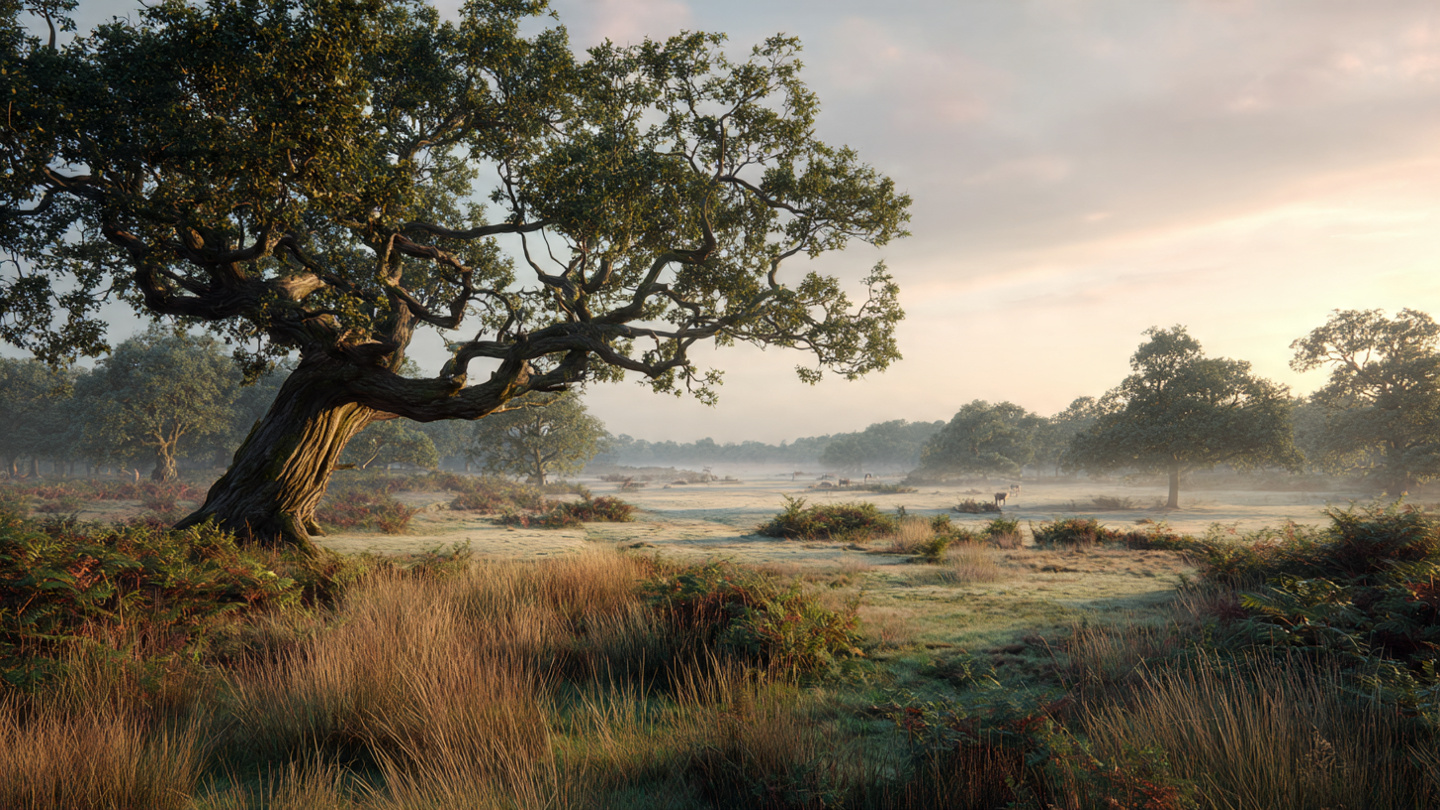
Richmond Park introduces a different dimension to London nature walks. Whereas Hampstead Heath feels rugged and elevated, Richmond Park feels expansive and grounded. The sheer size of the landscape immediately alters perception. As you enter, roads and surrounding neighborhoods seem to dissolve behind rolling grassland and scattered tree clusters.
Because the park stretches across vast open areas, walking here feels less confined than in most urban green spaces. The horizon extends farther, and the sky becomes a dominant visual element. Consequently, the sense of immersion grows through scale alone.
To plan your entry gate and choose a loop that fits your time, open the Richmond Park route map before you set off.
Ancient Oaks and Veteran Trees
One of the most remarkable features of Richmond Park is its ancient tree population. Many oaks and other veteran trees have stood for centuries. Their twisted trunks and wide canopies create silhouettes that feel timeless.
As you walk between these trees, the landscape feels layered with history. Unlike newly planted parkland, these trees carry ecological depth. They support insects, birds, and fungi that rely on long-established woodland systems. Therefore, the environment feels biologically mature rather than recently cultivated.
The Deer as Part of the Natural Rhythm
Richmond Park is known for its free-roaming deer herds. However, beyond their visual appeal, they contribute to the authenticity of the landscape. Seeing deer grazing across open grassland reinforces the impression of semi-wild terrain.
Because the deer move freely across large distances, they become part of the park’s rhythm. Walkers must remain aware and respectful, keeping safe distance. As a result, the interaction feels observational rather than interactive, preserving the ecological balance.
Open Grassland and Changing Light
The open grassland areas create subtle but constant variation in light. On sunny days, shadows from scattered trees stretch across the fields. On overcast days, the muted tones emphasize texture and depth.
Because there are fewer built structures interrupting sightlines, the weather plays a stronger role in shaping the experience. Wind becomes more noticeable across open ground. Cloud movement changes the tone of the landscape. Therefore, each visit can feel distinct even along familiar paths.
Woodland Pockets and Shelter
Although much of Richmond Park appears open, wooded pockets provide contrast and shelter. Entering these areas reduces wind exposure and creates a sense of enclosure.
The transition from open field to shaded woodland adds rhythm to the walk. Movement alternates between expansive views and intimate tree corridors. Consequently, the landscape never feels monotonous despite its scale.
Isabella Plantation and Managed Biodiversity
Within the park lies the Isabella Plantation, a more densely planted woodland garden area. While more curated than surrounding grassland, it still supports ecological diversity. Seasonal blooms, particularly in spring, add color without overpowering the natural atmosphere.
Because the plantation blends management with natural terrain, it offers variety without losing authenticity. As a result, walkers can experience a richer plant environment within the broader open landscape.
Long Circular Routes and Immersion
Richmond Park supports longer walking loops than many other locations in London. Circular routes that stretch several kilometers allow uninterrupted immersion.
Because distances are greater, walkers often settle into steady rhythms. Conversations quiet down. Attention shifts toward horizon lines, tree forms, and distant wildlife movement. Therefore, longer routes here encourage sustained engagement with the environment rather than quick visits.
Seasonal Variation Across Wide Terrain
Seasonal change transforms Richmond Park dramatically. In spring, new grass growth and budding leaves soften the landscape. Summer introduces golden hues across grasslands. Autumn brings deeper earth tones, while winter exposes tree structure and long sightlines.
Because open terrain reacts strongly to seasonal shifts, visual impact remains high throughout the year. Consequently, returning in different seasons reveals new textures and color palettes across the same routes.
Sound, Wind and Atmospheric Texture
Unlike denser woodland locations, Richmond Park allows wind to move freely across open areas. This creates a distinct atmospheric texture. The sound of wind through grass differs from rustling leaves in woodland.
Because of this openness, environmental conditions shape the sensory experience more directly. On calm days, the park feels expansive and quiet. On windy days, movement across grass and branches becomes part of the walk’s rhythm.
Choosing the Right Route Within the Park
Given the park’s size, route planning becomes important. Some walkers prefer perimeter paths that connect major gates and viewpoints. Others choose interior trails that weave between ancient trees and grassland.
Because the terrain remains relatively gentle, most routes are accessible to a wide range of walkers. However, longer loops require time and preparation. Therefore, understanding distance beforehand enhances comfort and enjoyment.
Why Richmond Park Represents Expansive Nature Walking
Richmond Park exemplifies the scale and ecological depth that London nature walks can offer. Its ancient trees, open grassland, wildlife presence, and seasonal transformation combine to create a landscape that feels larger than the city surrounding it.
If you want to understand how landscapes like this fit within the capital’s historic royal estates, the full context is explained in the guide to Royal parks of London.
If you are in London and love nature, this is the place to be. Avoid it on Sundays, too many kids runing around. I’d go mid-week. Visit Isabella Plantation. The place is special.Read more reviews at Tripadvisor.
While other routes emphasize woodland density or wetland calm, Richmond Park emphasizes space and horizon. For walkers seeking wide skies, mature ecosystems, and extended immersion, it remains one of the most powerful natural environments within the capital.
Epping Forest: London’s Ancient Woodland Escape
A Forest That Feels Far Beyond the City
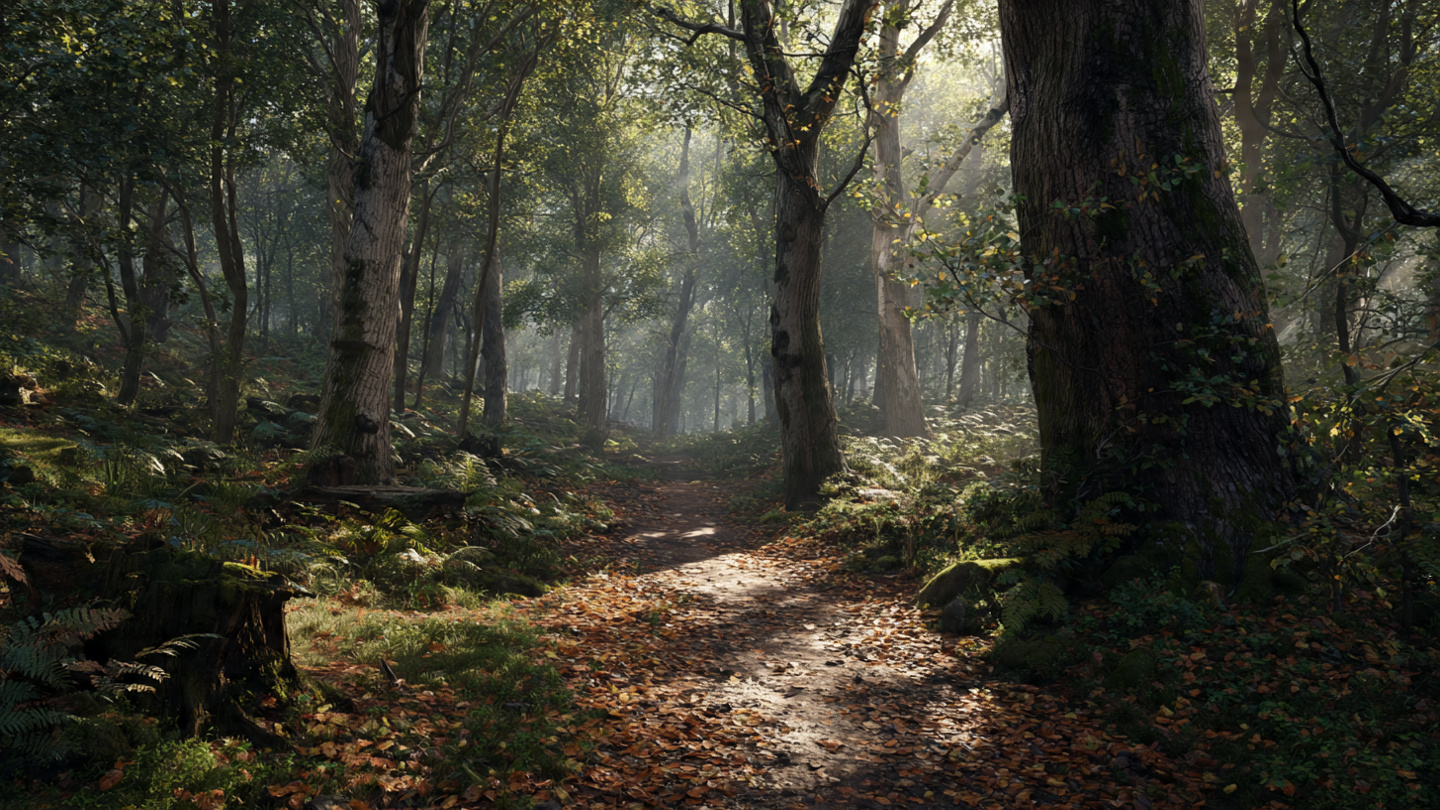
Epping Forest offers one of the most immersive environments among London nature walks. Although it sits within reach of the capital, stepping into its woodland feels like crossing into a different landscape entirely. The density of trees, the irregular terrain, and the depth of forest paths create immediate separation from urban life.
Because the woodland stretches for miles along London’s northeastern edge, it provides continuity rarely found in inner-city green spaces. Instead of moving between open lawns and paved routes, walkers enter sustained forest corridors. Consequently, the atmosphere feels layered, quiet, and expansive in a different way than open parks.
Ancient Woodland and Ecological Continuity
Epping Forest contains ancient woodland sections that have existed for centuries. Unlike newly planted tree areas, these woods support complex ecosystems built over long periods. Fallen trunks, moss-covered branches, and uneven undergrowth contribute to ecological depth.
As you walk through these sections, the forest floor feels textured and organic. Light filters unevenly through canopy layers, creating shifting patterns across the ground. Because of this long-standing continuity, the forest feels rooted in history rather than curated for appearance.
Narrow Dirt Trails and Organic Pathways
One of the defining features of Epping Forest is its network of narrow dirt trails. Unlike wide, manicured paths in formal parks, many routes here feel exploratory. Some weave gently between tree trunks, while others dip into shallow valleys or rise onto ridges.
Because these paths follow natural terrain rather than imposed geometry, the walking experience feels intuitive. You respond to curves, slopes, and textures instead of following straight lines. Therefore, each route carries a sense of discovery rather than predictability.
Moss, Ferns and Understory Detail
While large trees dominate the skyline, the forest’s character is equally shaped by its understory. Moss grows across fallen logs. Ferns spread along damp edges. Wild plants create layered ground cover that changes with moisture and light conditions.
As a result, close observation becomes rewarding. Instead of scanning distant views, attention shifts to small-scale detail. This intimate focus distinguishes woodland immersion from open grassland walking.
Sound Absorption and Deep Quiet
Because of tree density and ground cover, Epping Forest absorbs sound effectively. Traffic noise becomes faint, especially deeper inside the woodland. Even voices carry differently beneath thick canopy.
This acoustic softness reinforces the sense of distance from the city. In addition, subtle sounds like leaves underfoot or wind brushing through branches become more noticeable. Consequently, the environment feels self-contained and internally balanced.
Seasonal Transformation in the Forest
Seasonal shifts reshape Epping Forest dramatically. In spring, fresh green leaves create luminous canopy layers. During summer, shade intensifies and undergrowth thickens.
Autumn brings some of the most striking changes, as leaves turn gold and rust before covering the forest floor. Meanwhile, winter exposes tree structure and opens sightlines across woodland depth. Because these transitions are pronounced, returning at different times of year reveals entirely new atmospheres.
Wildlife Within Woodland Habitat
The forest supports birds, small mammals, and insects that rely on established woodland ecosystems. While sightings may be subtle, their presence contributes to ecological authenticity.
Bird calls echo between trees, and small movements in undergrowth hint at hidden life. Therefore, wildlife observation becomes part of the walking experience, even if it remains understated.
Terrain Variation and Gentle Elevation
Epping Forest is not flat. Shallow valleys, small ridges, and natural dips create elevation shifts that add physical engagement. Although inclines are rarely extreme, they break the monotony of level ground.
Because terrain responds to ancient landscape patterns rather than modern design, walking here feels less structured. You adapt your pace naturally, adjusting stride according to slope and surface conditions.
Open Clearings as Visual Contrast
Amid dense woodland, occasional clearings provide contrast. These open spaces allow more light and create brief visual expansion before the path returns to tree cover.
This alternation between enclosure and openness keeps the walk balanced. Without clearings, dense woodland could feel repetitive. Therefore, the interplay between forest depth and open glades maintains rhythm throughout longer routes.
Planning a Walk in Epping Forest
Given its size, route planning is helpful. Some walkers prefer shorter circular loops near accessible entrances. Others choose extended forest sections that provide deeper immersion.
Because terrain may become muddy after rain, appropriate footwear enhances comfort. Additionally, understanding starting points and transport access ensures smoother visits. Consequently, preparation supports sustained enjoyment without disrupting spontaneity.
Why Epping Forest Represents Deep Woodland Nature
Epping Forest exemplifies woodland-focused London nature walks. Unlike open parks dominated by grassland, this location emphasizes canopy density, forest floor texture, and ecological continuity.
For walkers seeking shade, quiet depth, and immersive tree corridors, it offers one of the most authentic woodland experiences available near the capital. Its ancient character and layered terrain reinforce the idea that nature in London can feel genuinely established and enduring.
The Parkland Walk and Urban Nature Corridors
Reclaimed Railway Turned Green Corridor
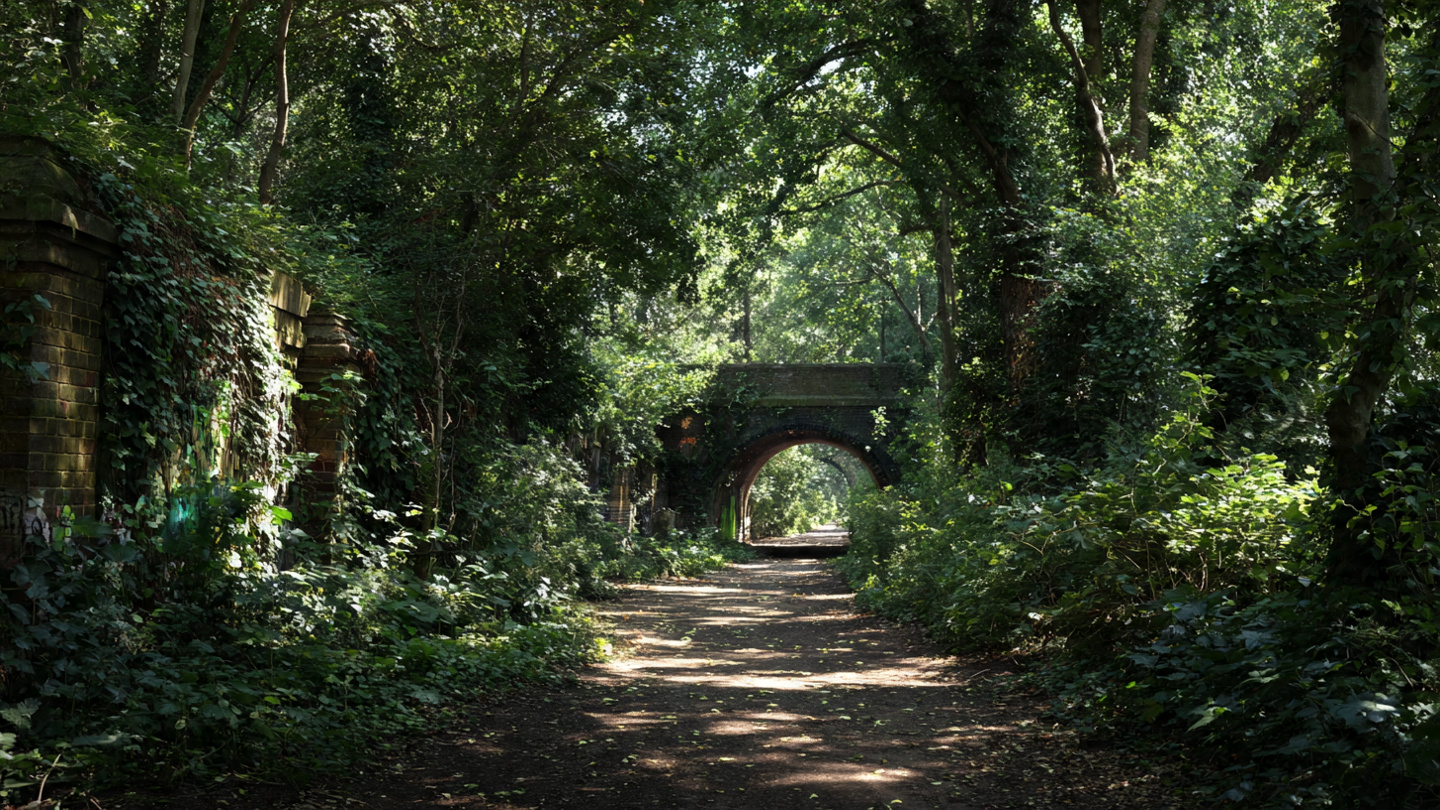
Among London nature walks, the Parkland Walk offers a unique blend of history and ecology. Unlike large open parks or ancient forests, this route follows the path of a former railway line. Over time, nature reclaimed the disused tracks, transforming the corridor into a linear woodland trail.
Because the route sits slightly elevated in places, it creates separation from surrounding streets. As a result, walkers experience a surprising sense of quiet despite being embedded within residential neighborhoods. The contrast between urban proximity and natural immersion makes this route distinctive.
Linear Woodland That Encourages Flow
Unlike circular park routes, the Parkland Walk stretches in a continuous line. This linear design encourages steady forward movement. Instead of looping back toward a central lawn or viewpoint, the path guides you through a sustained green corridor.
Because the trail is framed by trees and shrubs on both sides, visual focus remains inward. Buildings rarely dominate the view. Consequently, the walk feels contained and immersive even though it passes through populated areas.
Layered Vegetation and Natural Overgrowth
Over time, vegetation has grown thick along the former railway edges. Shrubs, vines, and trees form layered walls that soften the industrial origins of the space. In certain sections, branches arch overhead, creating partial canopy tunnels.
This organic overgrowth reinforces the feeling of natural reclamation. Rather than appearing landscaped, the environment feels self-formed. Therefore, the walk carries a subtle wildness that distinguishes it from more structured parks.
Wildlife Within a City Corridor
Despite its urban setting, the Parkland Walk supports birdlife and small mammals. Because the corridor remains relatively undisturbed by traffic, it functions as a safe passage for wildlife.
Birdsong is often noticeable along the trail, particularly in quieter stretches. Additionally, dense undergrowth offers habitat for insects and smaller species. As a result, ecological activity persists even within densely built surroundings.
Seasonal Variation Along a Narrow Route
Seasonal changes are particularly visible here because of the concentrated vegetation. In spring, fresh growth brightens the corridor dramatically. Summer brings dense greenery that encloses the path more tightly.
Autumn introduces falling leaves that carpet the trail, while winter opens sightlines through bare branches. Because the path remains narrow and defined, these seasonal transformations feel intimate and immediate.
Texture and Surface Underfoot
The trail surface varies between compacted earth, gravel, and occasional paved segments. After rainfall, damp patches may appear, adding to the sensory texture of the walk.
Because the path follows former railway alignment, it remains relatively level. Therefore, it suits walkers seeking moderate terrain without steep climbs. However, the natural surfaces still preserve the feeling of outdoor immersion.
The Psychological Contrast of Urban and Wild
One of the most interesting aspects of this route is the awareness of proximity to city life. Occasionally, glimpses of buildings appear through foliage. Yet these glimpses remain secondary to the greenery dominating the path.
This subtle awareness creates contrast rather than disruption. Instead of erasing the city entirely, the corridor demonstrates how nature can exist alongside it. Consequently, the experience feels adaptive and resilient rather than isolated.
Extending the Experience Through Connected Routes
The Parkland Walk connects to other green areas, allowing longer journeys through linked corridors. By combining this route with nearby parks or woodland sections, walkers can extend immersion beyond a single linear stretch.
Because of this connectivity, the corridor functions as part of a broader ecological system rather than a standalone attraction. Therefore, it supports the idea that London nature walks can unfold across multiple landscapes.
Ideal Pace and Time of Day
Early morning and late afternoon often enhance the atmosphere along this route. During these times, light filters softly through branches, and foot traffic remains lighter.
Because the path is enclosed by vegetation, midday sunlight can create dramatic shadow patterns. Meanwhile, evening walks offer quieter ambiance. As a result, time of day subtly shapes the emotional tone of the experience.
Why Urban Nature Corridors Matter
Urban nature corridors such as the Parkland Walk illustrate how reclaimed infrastructure can evolve into ecological spaces. While not as expansive as woodland or heathland areas, they provide sustained greenery within built environments.
For routes that feel even more secluded and less structured, you can explore deeper off-the-beaten-path options in Hidden walking trails in London.
For those seeking accessible yet immersive London nature walks without traveling far from residential districts, this route offers an excellent balance. It demonstrates that nature in the capital does not always require vast open land. Sometimes, it grows quietly along forgotten edges and transforms them into living pathways.
Walthamstow Wetlands and Open Sky Walking Routes
A Landscape Dominated by Water and Sky
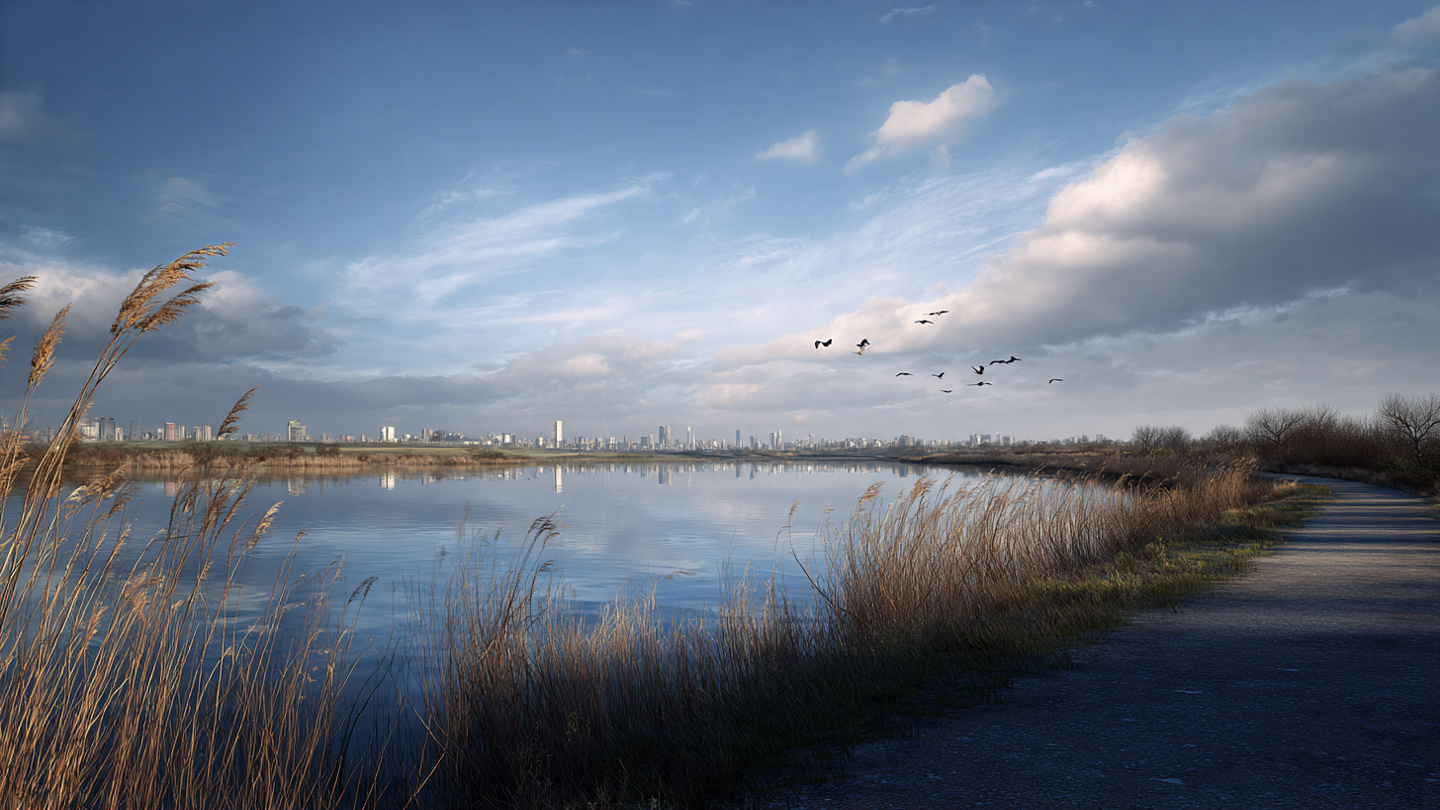
Walthamstow Wetlands introduces a different character to London nature walks. Instead of woodland density or rolling grassland, this landscape is defined by open water and wide sky. As you step onto the reservoir paths, the horizon expands immediately. Buildings recede into the distance, and reflections begin to shape the visual field.
Because water occupies such a large portion of the terrain, the atmosphere feels lighter and more spacious. The scale encourages slower movement and longer pauses. Consequently, the walk becomes less about navigating terrain and more about absorbing shifting light and open space.
Reservoir Paths That Create Steady Rhythm
The walking routes around the reservoirs follow long, gently curving paths. Unlike narrow woodland trails, these paths feel wide and steady. The surface remains relatively even, allowing comfortable pacing.
Because the route unfolds gradually along water edges, attention naturally alternates between near and far perspectives. You observe ripples close to shore, then lift your gaze toward distant tree lines. Therefore, the rhythm of the walk feels balanced and expansive.
Birdlife and Wetland Ecology
Wetlands support rich bird populations. Waterfowl, migratory species, and smaller birds frequently appear along the reservoir edges. Even without specialist knowledge, the presence of birds adds vitality to the environment.
Because water ecosystems attract diverse life forms, the area feels ecologically active. Insects skim across the surface. Reeds sway gently in the wind. As a result, the landscape feels dynamic rather than static. Wildlife presence reinforces the authenticity of the route as a true nature experience.
Wind, Weather and Changing Light
Open water magnifies the influence of weather. On calm days, reflections mirror the sky almost perfectly. On breezier days, ripples animate the surface and alter the texture of light.
Because the terrain lacks heavy canopy, cloud movement becomes highly visible. Sunlight shifts rapidly across the reservoirs. Therefore, atmospheric conditions play a central role in shaping the walk’s character. Each visit can feel visually distinct depending on weather patterns.
Contrast With Woodland Environments
Unlike forested routes, Walthamstow Wetlands does not enclose the walker. Instead, it opens outward. This contrast is significant within the broader spectrum of London nature walks.
Where woodland encourages introspection and close observation, wetlands encourage horizon scanning and panoramic awareness. Consequently, the experience feels more expansive and airy, offering a complementary alternative to tree-dense locations.
Seasonal Shifts Across Water Landscapes
Seasonal change affects wetlands differently than grassland or forest. In spring and summer, reeds and grasses along the water’s edge thicken and intensify in color. Bird activity increases, creating livelier soundscapes.
Autumn introduces softer tones across surrounding vegetation, while winter emphasizes minimalism. Bare branches and pale sky create stark reflections across still water. Because seasonal shifts alter both vegetation and bird presence, repeat visits offer evolving visual narratives.
Walking Comfort and Accessibility
The reservoir paths remain relatively level and well-maintained, making them accessible for a wide range of walkers. Long straight sections allow steady pacing, while gentle curves maintain interest.
Because shade is limited in open areas, sun exposure can be significant during warmer months. Therefore, timing and preparation enhance comfort. Nonetheless, the openness contributes to the distinct identity of this landscape.
Quietude Within a Wide Landscape
Despite being within the city boundary, the wetlands often feel surprisingly quiet. Open water absorbs some noise, and the lack of dense built structures reduces echo.
Because visual distractions are minimal, attention tends to settle naturally on movement across the water or distant bird activity. As a result, the walk encourages calm observation rather than constant directional focus.
Extending Wetland Routes Into Connected Green Spaces
The wetlands connect to additional green corridors along the Lea Valley. By extending the route, walkers can move from open water environments into adjacent parkland and riverside sections.
This continuity strengthens the sense that London nature walks can unfold across multiple ecosystems in one extended journey. Therefore, Walthamstow Wetlands serves not only as a standalone destination but also as part of a larger ecological network.
Why Wetlands Expand the Definition of Nature Walking
Walthamstow Wetlands broadens the understanding of what nature walking in London can involve. Instead of dense woodland or sloping heathland, it emphasizes water ecology, birdlife, and expansive sky.
For walkers seeking openness, light, and atmospheric variation shaped by weather, this location provides a distinct and compelling experience. Within the wider landscape of London nature walks, it represents the importance of aquatic environments alongside forests and meadows.
Greenwich Park, Blackheath and Southeastern Green Ridges
Elevated Green Space With Natural Contours
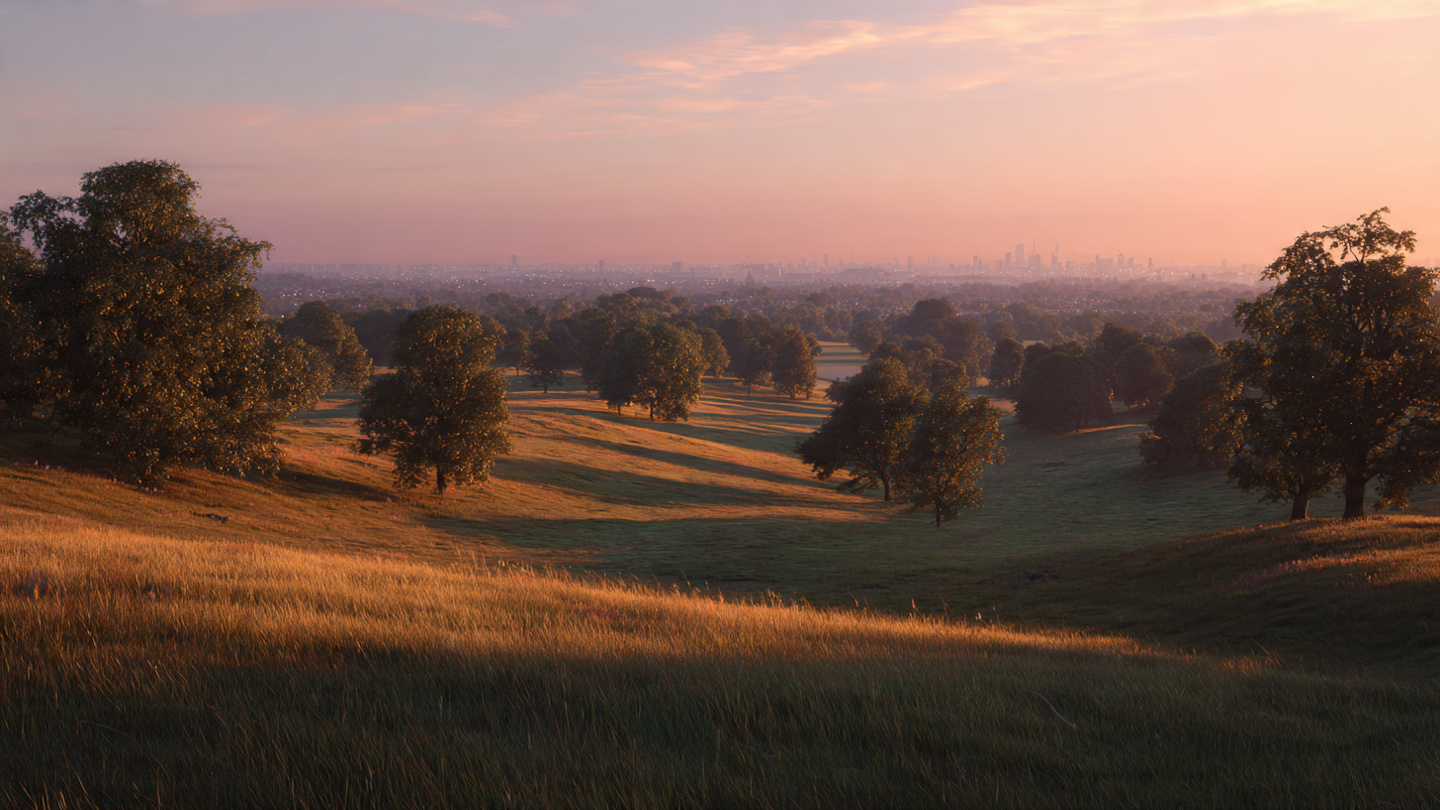
Greenwich Park introduces elevation and structured openness into London nature walks. Unlike flat reservoir paths or enclosed woodland corridors, this landscape rises gradually from riverside edges toward higher ground. The climb itself becomes part of the experience.
Because the terrain slopes naturally, movement feels intentional and progressive. As you ascend, sightlines widen. Although the skyline appears in the distance, the immediate foreground remains dominated by grassland, tree clusters, and rolling ridges. Consequently, the environment balances city proximity with natural presence.
Woodland Edges and Tree-Lined Slopes
While parts of Greenwich Park feel open, wooded sections line its slopes and outer edges. These tree corridors soften transitions between higher ground and surrounding neighborhoods.
As you follow shaded paths beneath mature trees, the atmosphere shifts noticeably. Light filters through leaves, and sound becomes more muted. Therefore, alternating between open slopes and wooded segments creates varied pacing within a single walk.
Blackheath and Expansive Open Ground
Adjacent to the park lies Blackheath, an open stretch of heathland that extends the feeling of space. Unlike manicured lawns, the terrain here feels less formal and more exposed.
Because tree density is lower in certain sections, the sky becomes a dominant feature once again. Wind moves more freely across the heath, and the sense of openness intensifies. Consequently, combining Greenwich Park with Blackheath creates a walk that alternates between structured greenery and broader natural ground.
Seasonal Color and Floral Variation
Greenwich Park transforms visually with the seasons. In spring, flowering trees and fresh grass introduce bright tones along pathways. Summer enhances canopy density and deepens shade.
Autumn layers the slopes with warm hues, particularly where trees cluster near the edges. In winter, reduced foliage opens views across the terrain and reveals architectural outlines in the distance. Because of these shifts, seasonal timing shapes the overall atmosphere significantly.
Wildlife Presence in Open and Wooded Areas
Although wildlife here may be subtler than in larger wilderness areas, birds and small mammals inhabit both parkland and heath sections. Trees provide nesting spaces, while open ground supports smaller ecological activity.
Because these habitats coexist within close proximity, biodiversity remains present across varied terrain. Consequently, the experience retains ecological authenticity even near historic surroundings.
Terrain Variation and Physical Engagement
The gradual slopes of Greenwich Park add physical rhythm to the walk. While not overly steep, the incline encourages measured pacing.
As you move upward, the shift in elevation alters perspective continuously. Descending toward lower paths introduces contrast in view and effort. Therefore, the terrain contributes actively to the immersive quality of the walk.
Blending Historic Surroundings With Natural Landscape
One of the distinctive aspects of this route is the subtle presence of historic architecture nearby. However, when focusing on the walking experience itself, the landscape remains dominant.
Because tree cover and open ridges frame distant buildings rather than surrendering to them, the environment maintains balance. As a result, walkers can appreciate both natural contours and distant silhouettes without compromising immersion.
Extended Routes and Connected Paths
Greenwich Park connects to additional green routes leading toward riverside paths and southeastern ridges. By extending the walk beyond central lawns, immersion deepens.
Because these connected areas reduce concentration of visitors, they allow quieter exploration. Therefore, planning a longer route that includes both park slopes and adjacent heathland enhances the overall experience.
Time of Day and Light Conditions
Early morning often offers softer light across sloping grassland, while late afternoon casts longer shadows from tree clusters.
Because elevation plays a role in how sunlight spreads across the park, different times of day produce varied visual effects. Consequently, returning at different hours can create distinct impressions of the same landscape.
Why This Area Expands the Nature Walking Spectrum
Greenwich Park and Blackheath expand the range of London nature walks by combining elevation, open heath, and woodland edges. While not as densely forested as Epping Forest or as vast as Richmond Park, this area offers balanced terrain and atmospheric variety.
For walkers seeking moderate climbs, open sky, and subtle ecological presence within reach of central districts, this route provides a meaningful addition to the broader landscape of nature walking in London.
Kew, Thames Path Nature Sections and Riverside Green Corridors
Riverside Landscapes That Blend Movement and Calm
Kew and the surrounding Thames Path sections introduce a river-focused dimension to London nature walks. Unlike enclosed woodland or elevated heathland, riverside walking unfolds horizontally along flowing water. The movement of the river creates subtle continuity, guiding both direction and pace.
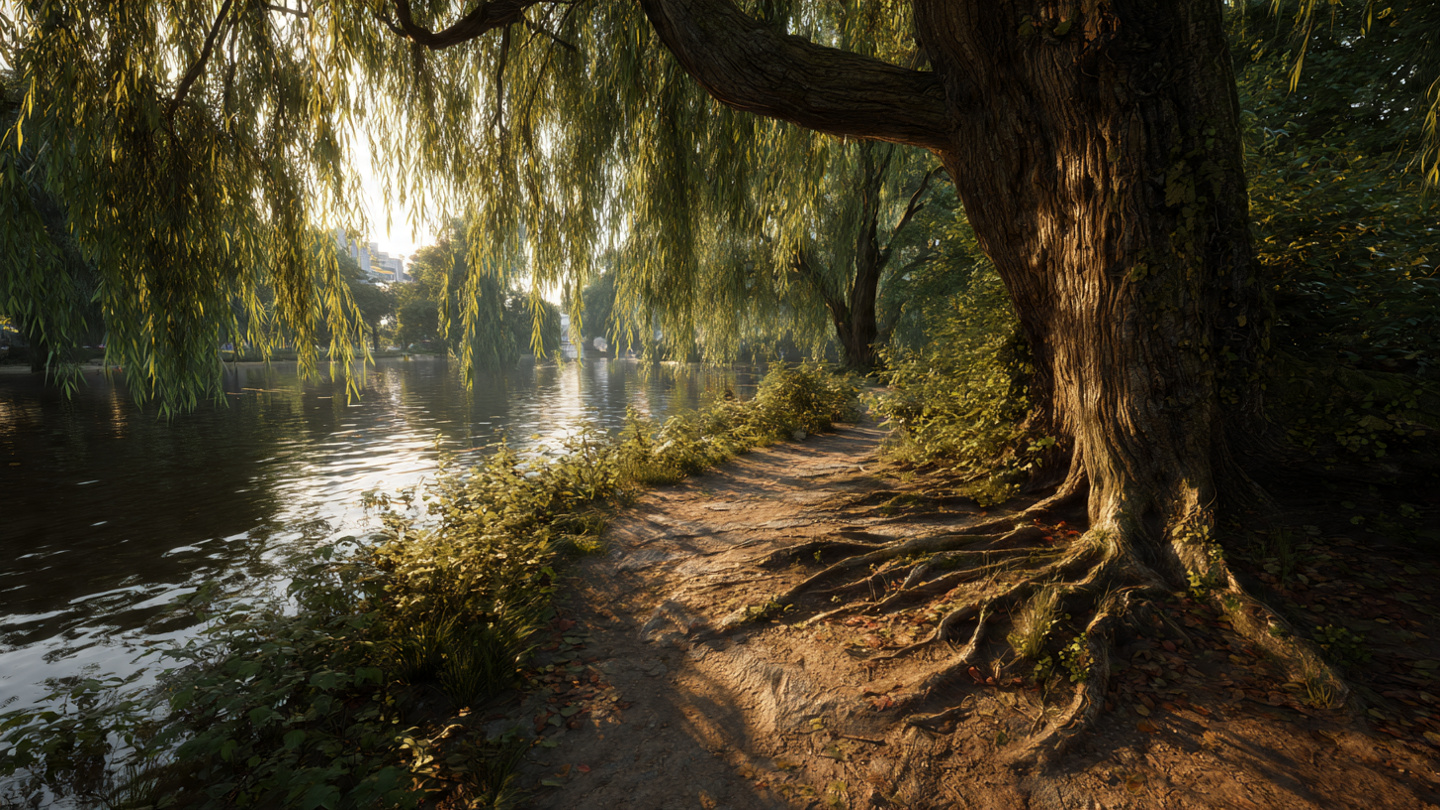
Because water reflects sky and surrounding foliage, light becomes a defining feature of the experience. On calm days, reflections stretch almost seamlessly across the surface. Meanwhile, gentle currents and passing ripples add texture. Consequently, the environment feels fluid rather than static.
Tree-Lined Riverbanks and Shaded Pathways
Sections of the Thames Path near Kew feature mature trees that arch toward the river. These tree-lined stretches soften the boundary between land and water.
As you move beneath leafy branches, shade creates a cooler microclimate, particularly during warmer months. Because the canopy follows the river’s curve, the path feels continuous and sheltered. Therefore, this combination of water and woodland edges creates a balanced and comfortable walking atmosphere.
Botanical Diversity and Varied Plant Life
The Kew area benefits from diverse plant species, partly influenced by the botanical heritage of the wider district. Even along public river paths, varied tree types and planted areas enrich visual interest.
Because plant diversity changes across short distances, walkers encounter shifting textures and colors. Shrubs, flowering plants, and riverside grasses contribute to ecological layering. As a result, the walk feels botanically rich without overwhelming the natural simplicity of the river corridor.
Water as a Sensory Anchor
Unlike inland routes, riverside walks include constant auditory and visual reference points. The sound of water moving gently against banks or passing under bridges adds a rhythmic backdrop.
Because the river remains visible for long stretches, it anchors attention and encourages steady pacing. Rather than focusing solely on terrain changes, walkers become attuned to light reflection, water movement, and passing birdlife. Consequently, the river shapes both mood and movement.
Seasonal Shifts Along the Thames
Seasonal transformation remains evident along river corridors. In spring, fresh foliage along banks brightens the path. Summer introduces dense greenery and deeper shade.
Autumn reflects warm tones across water surfaces, amplifying color through mirrored light. Winter opens sightlines along the river, revealing longer stretches of shoreline and skeletal tree forms. Because of these changes, each season alters the character of the route significantly.
Birdlife and Riverside Ecology
Riverbanks naturally attract birds and small wildlife. Waterfowl often appear along calmer sections, while smaller birds move through nearby trees.
Because water ecosystems support diverse species, ecological presence remains visible throughout the year. Even subtle movement across the water surface contributes to the sense that the landscape is active and evolving. Therefore, the river environment reinforces the authenticity of the walk as a nature-driven experience.
Extended Walks Through Connected Green Corridors
The Thames Path links multiple green spaces, allowing extended walking routes that stretch beyond a single neighborhood. By combining riverside segments with adjacent parkland or woodland areas, walkers can create longer immersive journeys.
Because of this connectivity, the route functions as part of a larger ecological corridor rather than an isolated destination. Consequently, London nature walks along the river can evolve into multi-hour explorations without repeating scenery.
Terrain, Surface and Accessibility
Riverside sections near Kew typically offer well-maintained paths with gentle gradients. The terrain remains relatively even, making it accessible for a wide range of walkers.
Because elevation changes are minimal, the experience emphasizes continuity rather than physical challenge. Therefore, this route suits those seeking sustained immersion without steep climbs.
Light, Reflection and Time of Day
Early morning often provides calm water and softer light, enhancing reflection across the river surface. Late afternoon introduces warmer tones that illuminate foliage and shoreline detail.
Because water amplifies changes in light, time of day strongly influences visual atmosphere. Consequently, revisiting the same stretch at different hours can produce noticeably different impressions.
Why Riverside Routes Complete the Nature Spectrum
Riverside walks near Kew and along the Thames complete the broader range of London nature walks by introducing water-dominated environments. While forests emphasize canopy and wetlands emphasize open reservoirs, rivers combine movement, reflection, and connected greenery.
For walkers seeking calm flow, botanical diversity, and extended continuity, these river corridors offer an essential dimension within the city’s natural landscape.
Choosing the Best Nature Walk Based on Season
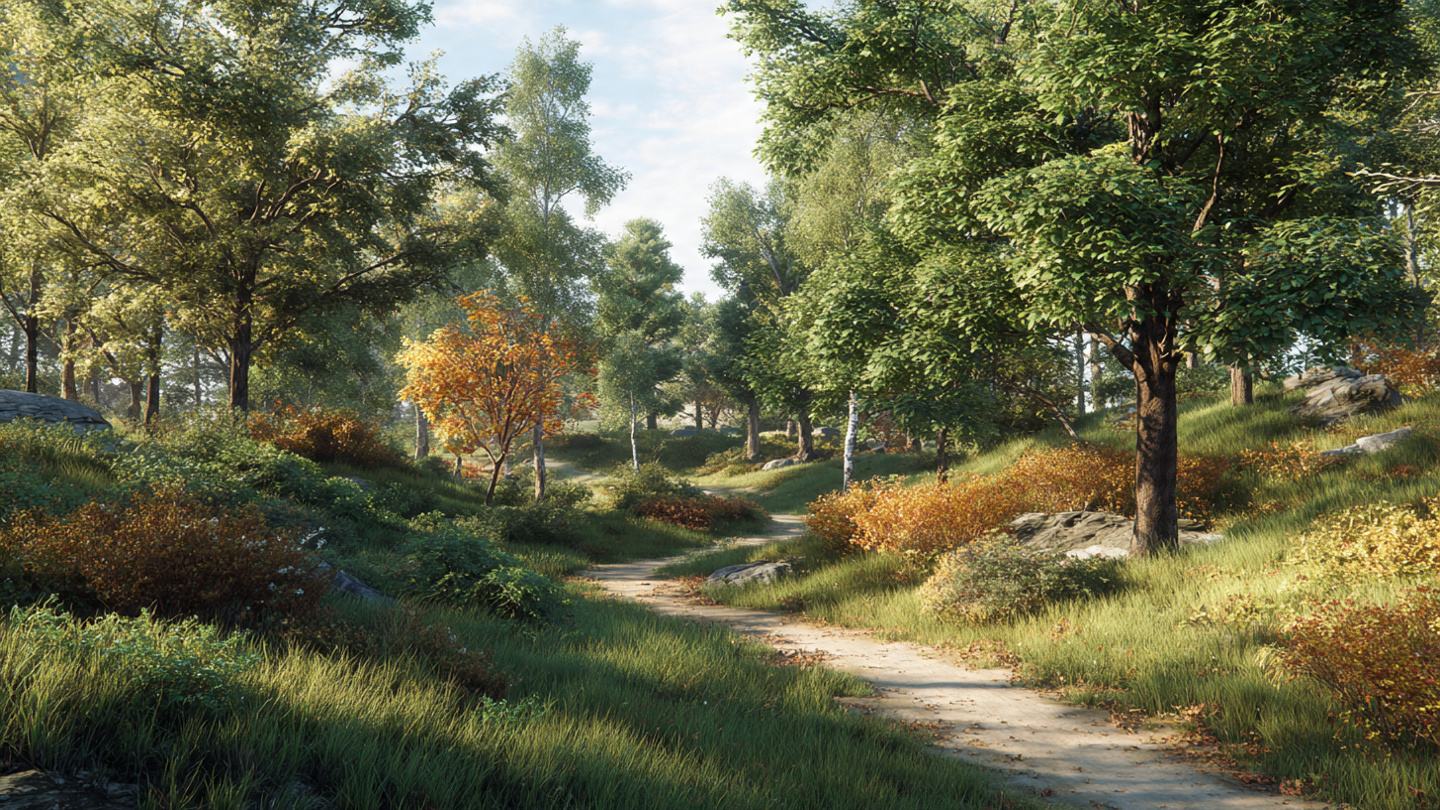
Why Season Matters More Than Location
When planning London nature walks, season often influences the experience as much as the route itself. The same landscape can feel completely different depending on temperature, light, foliage, and wildlife activity. Therefore, understanding seasonal patterns helps you choose the right setting for your expectations.
Because London’s climate shifts gradually across the year, each season reshapes woodland density, grassland texture, and water reflections. Consequently, timing becomes part of the walking strategy rather than an afterthought.
Spring: Fresh Growth and Expanding Light
Spring introduces renewal across parks, forests, and river corridors. Fresh leaves create bright green canopy layers, and flowering trees add visual contrast along woodland edges.
Because vegetation is still emerging, sightlines remain partially open while color intensity increases. Bird activity often becomes more noticeable during this period. As a result, spring suits walkers who appreciate balanced visibility and vibrant growth without dense summer foliage.
Summer: Dense Canopy and Long Daylight
Summer transforms many London nature walks into shaded corridors. Woodland areas such as Epping Forest or Hampstead Heath provide relief beneath thick tree cover.
Because daylight extends well into the evening, longer routes become more practical. However, open areas like wetlands and heathland may feel warmer under direct sun. Therefore, selecting routes with natural shade improves comfort during peak temperatures.
Autumn: Layered Color and Atmospheric Depth
Autumn offers some of the most visually striking conditions for nature walking. Leaves shift through gold, amber, and deep red tones before covering the ground in textured layers.
Because color variation becomes dramatic, woodland routes often feel especially immersive during this season. Additionally, cooler air enhances comfort for longer walks. Consequently, autumn frequently provides ideal conditions for extended exploration.
Winter: Minimalism and Structural Clarity
Winter simplifies the landscape. Trees shed foliage, revealing branch structure and deeper sightlines across parks and forests.
Because vegetation thins, architectural outlines and distant ridges become more visible. Wetlands and rivers reflect pale skies, creating quieter visual tones. While temperatures may be lower, the reduced foot traffic often enhances solitude. Therefore, winter appeals to walkers seeking calm and clarity rather than color intensity.
Weather Variation and Micro-Atmospheres
Beyond seasonal categories, daily weather conditions further shape the experience. Overcast skies soften colors and create even lighting across open terrain. Sunny days emphasize shadow contrast in woodland areas.
Because wetlands and river corridors respond strongly to wind and cloud movement, even small atmospheric changes alter perception. Consequently, flexibility in scheduling can enhance the quality of the walk significantly.
Matching Terrain to Seasonal Comfort
Different landscapes perform better in different conditions. Woodland routes provide natural cooling in summer but may feel darker in winter. Open heathland and reservoir paths offer broader light in colder months yet less shade in peak heat.
Therefore, selecting terrain based on comfort improves overall enjoyment. Matching seasonal conditions to landscape characteristics helps maintain immersion without physical strain.
Seasonal Wildlife Activity
Wildlife behavior also shifts with the seasons. Bird activity often increases during spring and early summer. In autumn, movement across woodland floors becomes more visible as leaves fall.
Because ecological presence fluctuates, those interested in wildlife observation may benefit from planning visits accordingly. Consequently, understanding seasonal patterns adds another layer of intentionality to London nature walks.
Repetition Across the Year
Revisiting the same route in different seasons reveals how dramatically landscapes evolve. A woodland that feels enclosed in summer may feel open and skeletal in winter. A reservoir that reflects bright sky in spring may appear muted and atmospheric in late autumn.
Because these shifts are significant, repetition does not lead to redundancy. Instead, it deepens familiarity and appreciation for ecological cycles within the city.
Choosing With Purpose Rather Than Habit
Rather than defaulting to the most famous route, selecting a walk based on seasonal conditions often leads to a more rewarding experience.
By considering canopy density, openness, elevation, and exposure, walkers can align expectations with environmental reality. Therefore, season becomes a strategic factor in planning rather than a background detail.
Practical Guidance for Experiencing Nature Walks in London

Planning Your Route With Intention
Before setting out on London nature walks, basic route awareness improves the overall experience. Although many green spaces are well signposted, larger landscapes such as Richmond Park or Epping Forest benefit from preliminary orientation.
Because these areas cover extensive ground, identifying entry points and approximate distances prevents unnecessary backtracking. Consequently, planning ahead allows the walk to feel relaxed rather than uncertain.
Understanding Distance and Time
Nature routes in London vary significantly in length. Some corridors, such as sections of the Parkland Walk, can be completed in under an hour. Others, including extended loops in Richmond Park or forest sections in Epping, may require several hours.
Because terrain influences pace, estimating time realistically ensures comfort. Gentle slopes and level river paths support steady movement, while woodland terrain with uneven surfaces may slow progress. Therefore, aligning time availability with route length improves enjoyment.
Choosing Appropriate Footwear
Surface conditions change across seasons and landscapes. Woodland trails can become muddy after rain, and fallen leaves may conceal uneven ground. Open heathland paths may remain firm yet uneven in texture.
Because footwear directly affects stability and comfort, supportive walking shoes enhance the experience. While specialized hiking boots are not always necessary, grip and cushioning reduce fatigue during longer routes.
Dressing for Weather and Exposure
London’s weather can shift quickly. Open wetlands and heathland areas expose walkers to wind, while dense woodland may feel cooler and shaded.
Because exposure varies between landscapes, layering clothing offers flexibility. Carrying light rain protection is often wise, especially during transitional seasons. Therefore, preparedness supports sustained immersion without discomfort.
Respecting Wildlife and Natural Habitats
A core principle of nature walking involves minimizing disturbance. Observing wildlife from a distance preserves ecological balance. Feeding animals or approaching too closely disrupts natural behavior.
Because several areas, such as Richmond Park, include protected species, maintaining awareness becomes especially important. Consequently, responsible behavior ensures that London nature walks remain sustainable for both visitors and ecosystems.
Timing to Avoid Crowds
Although many green spaces attract visitors, certain times offer quieter conditions. Early mornings often provide calmer atmospheres across parks and wetlands.
Because weekends and peak hours increase foot traffic, adjusting timing enhances immersion. Therefore, choosing less crowded periods allows the environment to feel more natural and uninterrupted.
Combining Routes for Extended Immersion
London’s interconnected green network allows creative route combinations. For example, a riverside section can transition into adjacent parkland. Woodland corridors may link to open heath areas.
Because of these connections, walkers can extend their experience without repetition. Planning multi-section journeys transforms shorter walks into more immersive half-day explorations. Consequently, flexibility adds depth to the overall experience.
Pacing and Mindful Observation
Nature walking differs from destination-driven sightseeing. Instead of focusing on reaching a specific landmark quickly, pacing should remain steady and unhurried.
Because attention shifts to subtle details such as light patterns, bird activity, and terrain texture, slower movement enhances perception. Therefore, allowing space for pauses enriches the experience beyond simple distance covered.
Safety and Awareness
Although London nature walks are generally safe and well-maintained, situational awareness remains important. Staying on established paths reduces risk of slips or accidental disturbance of fragile habitats.
Because weather conditions can change surfaces quickly, especially in woodland, attentive footing prevents minor injuries. Consequently, simple awareness preserves both safety and enjoyment.
Embracing the Diversity of Urban Nature
Finally, experiencing nature in London requires openness to diversity. The city does not offer remote wilderness in the traditional sense. Instead, it presents layered environments where woodland, heathland, wetlands, and rivers coexist alongside urban districts.
Because each landscape carries distinct characteristics, embracing variety enhances appreciation. Rather than comparing one environment to another, recognizing their complementary roles strengthens understanding of the city’s ecological richness.
Concluding Reflection on London Nature Walks
Across woodlands, open grasslands, riverside corridors, and wetlands, London nature walks reveal a quieter dimension of the capital. While the city is known for history and architecture, its natural terrain offers equally meaningful exploration.
By choosing routes intentionally, respecting seasonal shifts, and walking with awareness, visitors and residents alike can discover immersive green experiences without leaving the metropolitan boundary. In doing so, the city becomes not only a cultural center but also a living landscape shaped by water, trees, sky, and time.
To see how woodland trails, wetlands, riversides, and parkland fit into the city’s wider outdoor structure, explore the broader framework of Green spaces in London.
Frequently Asked Questions
Planning and Preparation
Some of the strongest locations include Hampstead Heath, Richmond Park, Epping Forest, Walthamstow Wetlands, and riverside sections near Kew. Each offers a different natural environment, ranging from woodland and grassland to wetlands and river corridors.
Walking time depends on the route. Shorter linear trails can take under an hour, while larger parks and forest routes may require two to three hours for full immersion. Planning distance in advance helps match time availability with terrain.
Yes. Most routes are well-maintained and accessible. Some woodland trails may include uneven terrain, but overall the difficulty level remains moderate. Choosing level riverside paths or open park routes is ideal for beginners.
Seasonal and Timing Questions
Spring and autumn are often considered ideal due to comfortable temperatures and strong visual variation. However, each season offers a distinct atmosphere, from summer canopy shade to winter clarity and quiet.
Early morning typically offers quieter conditions and softer light. Wildlife activity may also be more noticeable during these hours, especially in woodland and wetland areas.
Wildlife and Environment
Yes, although sightings are often subtle. Birds, squirrels, deer in Richmond Park, and wetland species near reservoirs are commonly observed. Maintaining respectful distance ensures safe and sustainable interaction.
Many routes provide strong separation from urban noise through canopy density, open heathland, or water landscapes. While London remains nearby, the walking experience can feel surprisingly natural and expansive.
Practical Concerns
No specialized gear is required. However, supportive walking shoes and weather-appropriate clothing improve comfort, particularly in woodland or wet conditions.
Most parks, forests, and public green corridors are free to enter. Certain botanical areas may have entry fees, but the majority of nature-focused walking routes remain publicly accessible.
Yes. Many green corridors connect with adjacent parks or riverside sections. Combining routes creates extended walking experiences without repeating scenery.